Dissecting Tickled
Me & the whole Tickled team break down how we made our documentary.
Hi,
Tickled was one of the craziest things that ever happened to me (and I feel like a lot of crazy things have happened to me).
So ahead of the Webworm popup and Tickled screening in New Zealand on July 13, I thought I’d write about how we made that film and what I learnt along the way. I want to do more behind-the-scenes / workshop stuff here on Webworm — similar to how I broke down the making of Flightless Bird:
 David Farrier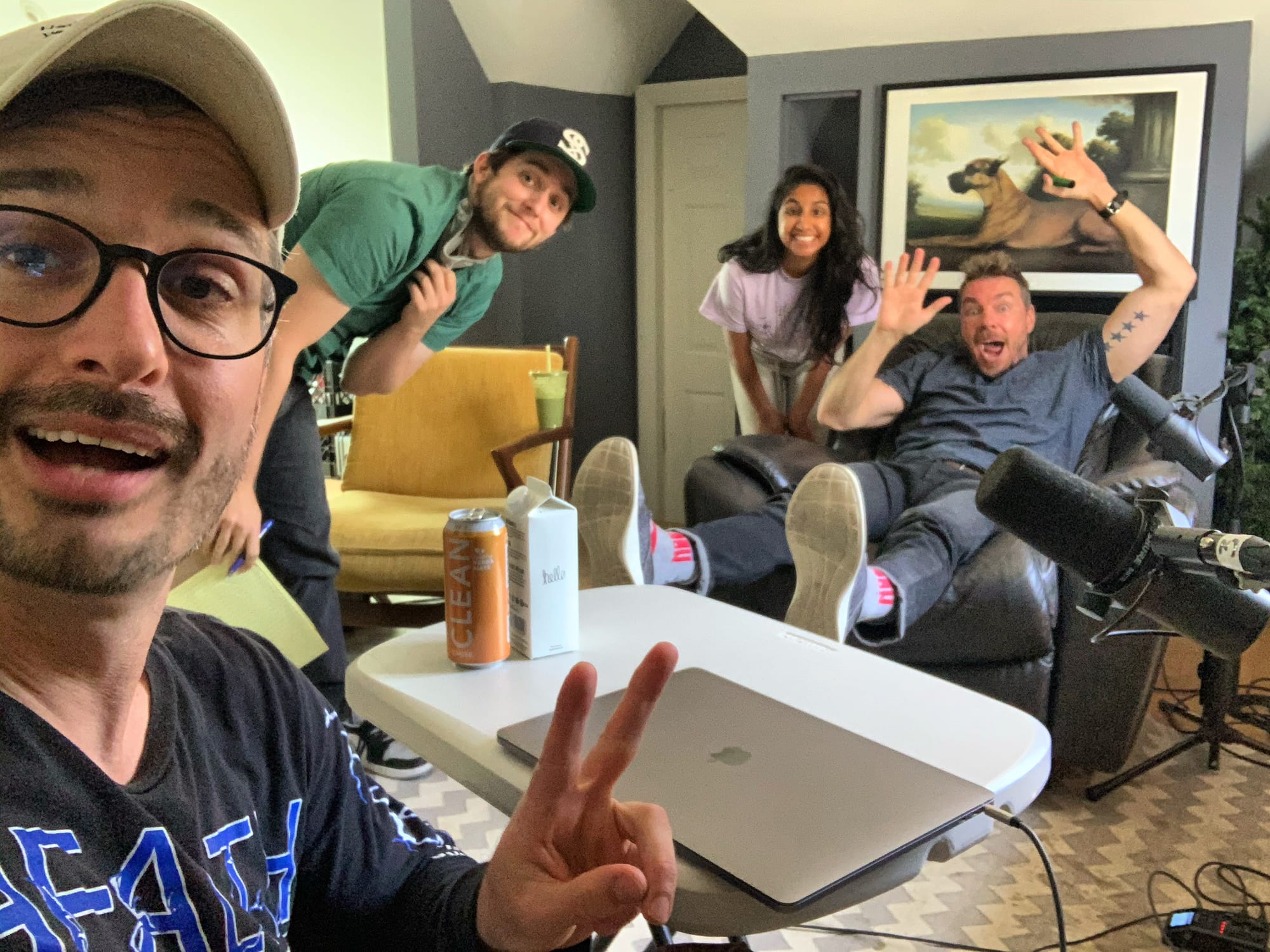
It’s my hope there’ll be some small takeaways here for everyone — whether you’re a fan of films, a student just starting out, or a documentary maker yourself.
Like any advice on “making stuff” you can take it or leave it! I still feel like I barely know what I am doing, and haven’t even made all that much stuff.
I’m still learning.
To add some meat to this documentary sandwich, I’ve also gone and gathered advice from the key players behind Tickled — asking them to explain their process a little. It wasn’t just me that made this documentary. I would have failed miserably if it wasn’t for the dream team I had around me.
So I’ve talked to my co-director Dylan Reeve, producer Carthew Neal (who’s also behind other films like Hunt for the Wilderpeople), DP Dom Fryer (who also shot Dark Tourist and Mister Organ), editor Simon Coldrick (Dark Tourist, Kim Dotcom: Caught in the Web), and executive producer Justin Pemberton (Escaping Utopia, Web of Chaos).
Major spoilers for Tickled ahead, btw.
I’ll be hanging around in the comments to answer any questions you might have about any of this — so fire away. I’ll answer as best as I can, as long as it doesn’t get me into trouble with Tickled’s lawyers!
My 10 Bits of Advice for Making a Feature Documentary
1. Absorb Other People’s Stuff
It sounds kind of obvious, but I think if you want to make documentaries, you should watch a lot of documentaries.
And really watch them.
There are a million ways to tell a story, and I think it’s important to see how other people are telling theirs. Right now I’m obsessed with a young documentary maker called Lance Oppenheim. He’s making documentaries unlike anything I’ve seen before — part doc, part surreal narrative-esque nightmare. Some Kind of Heaven and Spermworld made me a fan, and his new 3-part series Ren Faire made me a mega-fan. I love what he’s doing and elements of his work will definitely influence my own ideas.
Watching docs while keenly analyzing how they’re made will detract from the joy somewhat, but you just have to. Take notice of how they’ve been put together, and why the filmmaker has chosen to tell the story in this particular way.
Whose perspective is the story told from? Is there a narrator? Does the story unfold in real time with actual footage, or is it all retold with beautifully shot recreations? How often is there music guiding your emotions? Could this have just been a podcast? Are there twists and turns, and if so, when do they happen and how often? How long is it? Did it feel long? What do you like or hate about it? Does it follow the 3-act structure I outline in (7)? Was there much sound design involved? How were the interviews shot? Did it feel alive and new, or was it re-telling an old story?
Compare what you think to what other people think. Go and get an account on Letterboxd and start logging what you watch, and see what other people think of the same thing. Letterboxd is full of fun, smart people so I loved seeing what they think of something like Ren Faire. Plus you discover new docs to learn from.
Take what you like, throw away what you don’t. When I made Tickled, I had three things firmly in my mind: The Staircase, The Imposter, and King of Kong. I also thought a lot about Foxcatcher — for its tone, reflections on power and control, and homoerotic subtext.
Foxcatcher isn’t a documentary, it’s a narrative film — which brings me to my last point. Documentary and narrative are both films. They’re both telling stories. When you’re making a doc, remember you’re making a film. It’s not some poor cousin to narrative. And so be motivated by films.
2. Make Sure It’s a Film
Make sure your story is a film. Why isn’t it a written piece? Why isn’t it a podcast? Film is a visual medium and so by golly it better justify being a film. Does it have a world that needs to be illustrated by pictures? Does it have characters that will be compelling on camera? Will the story hold for 90 minutes? Is it a mood? (I’m thinking Ren Faire again). You are competing with people’s attention — people who wanna watch Marvel films — so make sure the story is best told in documentary form. You’re about to embark on a hell process so make sure the story and characters justify the format!
3. Only Story Matters
Sure, other things matter like characters (who drive the story and emotionally make you give a shit) but everything you do when making a doc is in service to the story. Story is king, story is the champ, story trumps everything else.
And so it’s important to know that the story you have has legs, and enough legs to sustain a 90 minute runtime (feature docs should all be 90 minutes — if it’s longer, cut it back. If it’s shorter, then you don’t have enough story).
When I came across “competitive endurance tickling”, and that New Zealanders were being flown business class to LA to get tickled, I knew I had a story. But not enough for a film. So I wrote about it for a blog I used to write for my old newsroom at TV3.
As I wrote, I discovered more story, which included me getting sucked into the shady world of tickling when legal threats turned up. Dylan Reeve (an internet buddy I’d only met once IRL) was doing some digging on his own, and we landed on a very important name early on: David D’Amato. We had no proof, but we suspected he was behind things.
So we now had this enticing hook (OMG tickling!), a mystery (why homophobic? who’s funding it?), conflict (everyone is scared! we’re getting sued!), history (this crazy world stretches back 20 years, so let’s get into that backstory), and a giant mystery (who is behind it?). All this could be structured to create a 90 minute film.
4. Research the Fuck Out Of It AKA Go In Knowing As Much As You Can
Before you start filming you need to know as much as you possibly can about the story you want to tell. You need to have an idea of how it begins, what happens in the middle, and yes — how it ends (even though this will probably change).
Good documentaries might feel organic as if every single thing happened with zero planning, as some kind of “shock” to the protagonists — but I guarantee you so much planning went into things ahead of time. Even those best kind of docs that start in one place then take a wild bend in the story — chances are the filmmakers suspected things would pivot. There’s a reason they started filming in the first place.
Having a plan and an “ideal plot” mapped out isn’t to say it’s fixed (it will change!), but I like to go in with a clear plan of how all the pieces will fit together. And you do this by researching the hell out of things. This takes many forms, but can include stuff like doing internet deep dives, making calls to those you’re going to interview, or hiring private investigator to do some leg work ahead of time (like checking police records or tailing a subject).
You go in to filming with a master plan for three main reasons:
- So when things change, you can clock they’re changing and how this will affect the overall story. It’s not just a confusing unchecked mess.
- When you’re shooting a scene or interviewing someone, you have an idea of what’s going to have come before in the film, and what’s coming after. This affects how you conduct interviews and shoot everything, really. It’s sort of a confusing thing to explain, but sometimes when filming your knowledge will be way ahead of where it’s going to be when shown in the documentary. Simple example: When we started shooting Tickled we were 90% sure it was David D’Amato. But I wasn’t making all our interview subjects talk about David D’Amato, because from a story perspective we’re not meant to know he exists yet.
- You can make a very tight shooting schedule so you save time and money. Gear is expensive. AirBnBs are expensive. Shoot smartly and stick to a schedule.
95% of what you see in Tickled we shot over three weeks in America. We knew exactly what we needed to hit on each day, and we hit it. We could do that because we researched the fuck out of things.
If things change, that’s OK — but have a backup plan. We had an interview in New York fall over, but we knew somebody else important was in Philadelphia — so we hit the road and made it happen in those 6 hours spare. Thank God we did because Debbie became a really important character who perfectly complemented the other journalist, Hal. We could ping pong between their stories which made the edit more riveting and compelling, each of their stories building on the other.
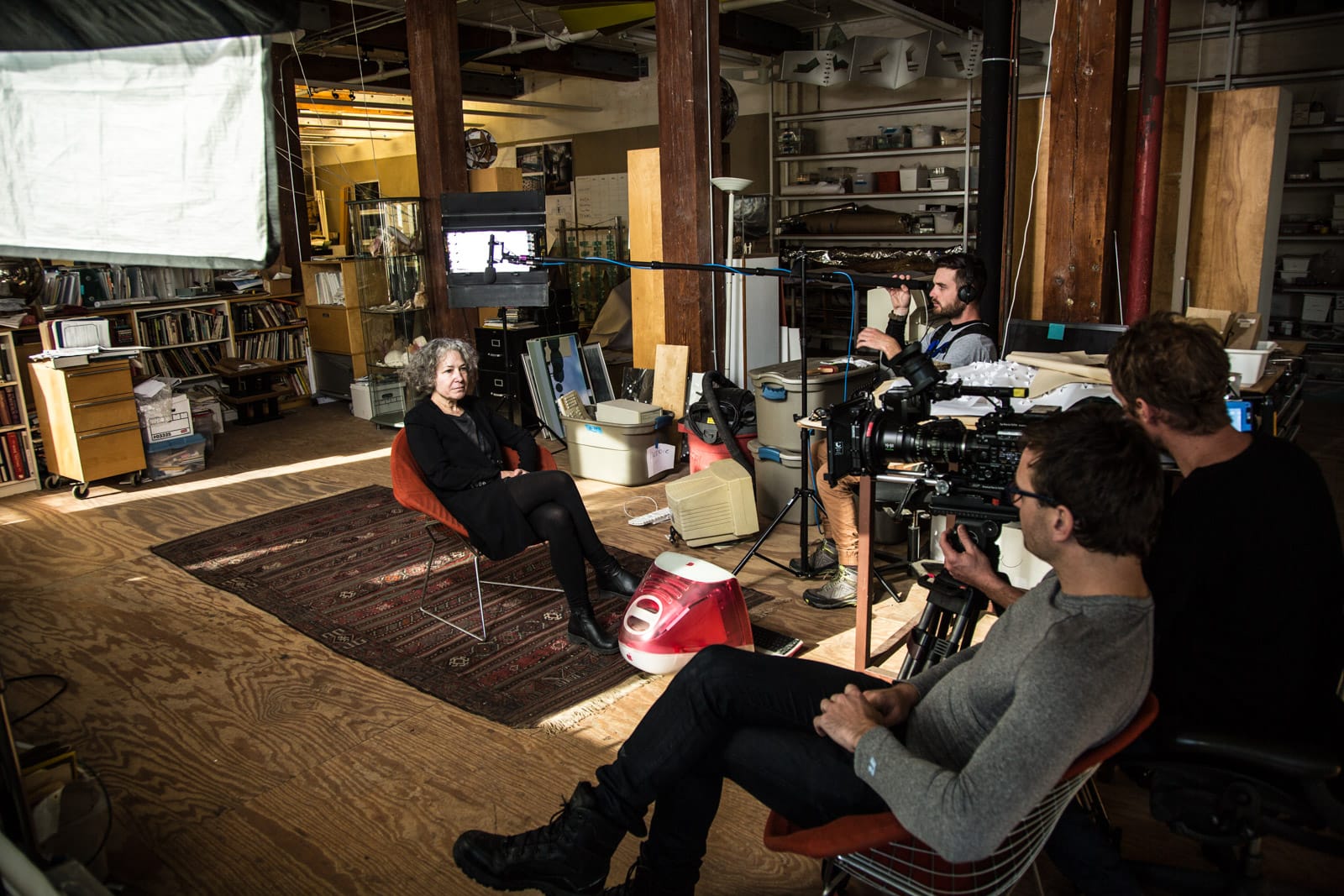
Having a story mapped out ahead of time can just help in a variety of key ways, and I have a really specific example on Tickled.
As I said earlier, we were pretty confident going into this thing that David D’Amato was behind everything. Early on in the shoot, we interviewed a man called David Starr who’d produced tickle porn in the 90s, and while Starr had never met D’Amato, he was also convinced D’Amato was behind it all. When I interviewed Starr about the mystery mastermind, he kept saying “he”.
“He”, “him”, “a guy”.
But I knew that in the film I was making, where Starr fitted in, I needed the audience to be in the mindset of “this is a woman pulling the strings.” Having Starr referring to a “he” all the time made no sense from a story perspective. So I had to keep stopping to remind Starr to put himself in his shoes back in the 90s when he did think it was a woman running the ship.
If I hadn’t known where Starr was doing to fit in the structure of Tickled, I would have gone to the edit with nothing but references to a male and it would have made editing his story pure hell. Would have probably had to cut him out altogether.
5. You Can’t Do This Alone So Surround Yourself With Talent and Enthusiasm
Speaking of editing (we hear from Tickled’s editor and secret sauce Simon Coldrick soon), it’s really vital you surround yourself with an amazing crew. I knew fuck all coming into Tickled. I’d spent about eight years making 2 - 3 minute stories for the news, and that was about it.
And so it’s really important you find your people. Find an amazing DP, find editors, find a good producer. Unless you’re great at financing things and dealing with numbers, a producer will be everything. Find people who are way better at you. Find people who can lift you up out of your own incompetence and stupidity.
You will also want to quit multiple times along the way (remember this is going to be a two to five year nightmare you’re embarking on) so it’s important you have others in the team to turn to, who will go, “Don’t quit yet you fucking idiot.”
6. Don’t Do That Thing Where Subjects Start Their Interview by Sitting Down on Their Fucking Chair
You know how it is: There’s a static shot of a chair. The interview subject wanders in, sits down, adjusts on their seat. They look to the camera, a bit shy, before saying something like, “Are we ready?” or “Are we rolling?”
See also: A clapper board comes in and claps.
See also: A microphone is adjusted on a collar.
Don’t fucking do this! I don’t know why we’re all doing this! At one point I guess it was breaking the fourth wall, and that was cool? I dunno. DON’T DO THIS!
7. Back to Story: Remember a Documentary is a FILM
There are a million ways to tell a story, but I think it’s important to remember that a feature documentary can use the same tricks as the best thriller, drama, action film, or comedy.
You are asking someone to sit there for 90 minutes and watch a thing you’ve made. And so you have to engross them. The story has to move. There has to be cliffhangers. In all the seriousness, you have to laugh. This relieves the pressure, and comedy is also a great way to convey information (it’s why Michael Moore’s films are so compelling!)
Most importantly, you need to see characters change as the story goes on. With Tickled you had me as one key character, who went in terrified and knowing nothing — and came out “sticking up to the bully” and unmasking the villain. And then you had the central bad guy, who started as this mystery woman, and ended as this millionaire New York man.
I hate to say it, but read Save The Cat! by Blake Snyder. It’s basically a “how to write screenplays for dummies”, but it really helped a dummy like me see how all the pieces of your story can fit into a coherent narrative that moves. Once you’ve read it, you’ll never watch movies in the same way again — and you’ll see how most stories that drag you in are told in a very similar way (including Tickled).
Here is the basic 15 part Beat Sheet that book lays out, and I have filled in where Tickled fits in.
ACT 1
- Opening Image
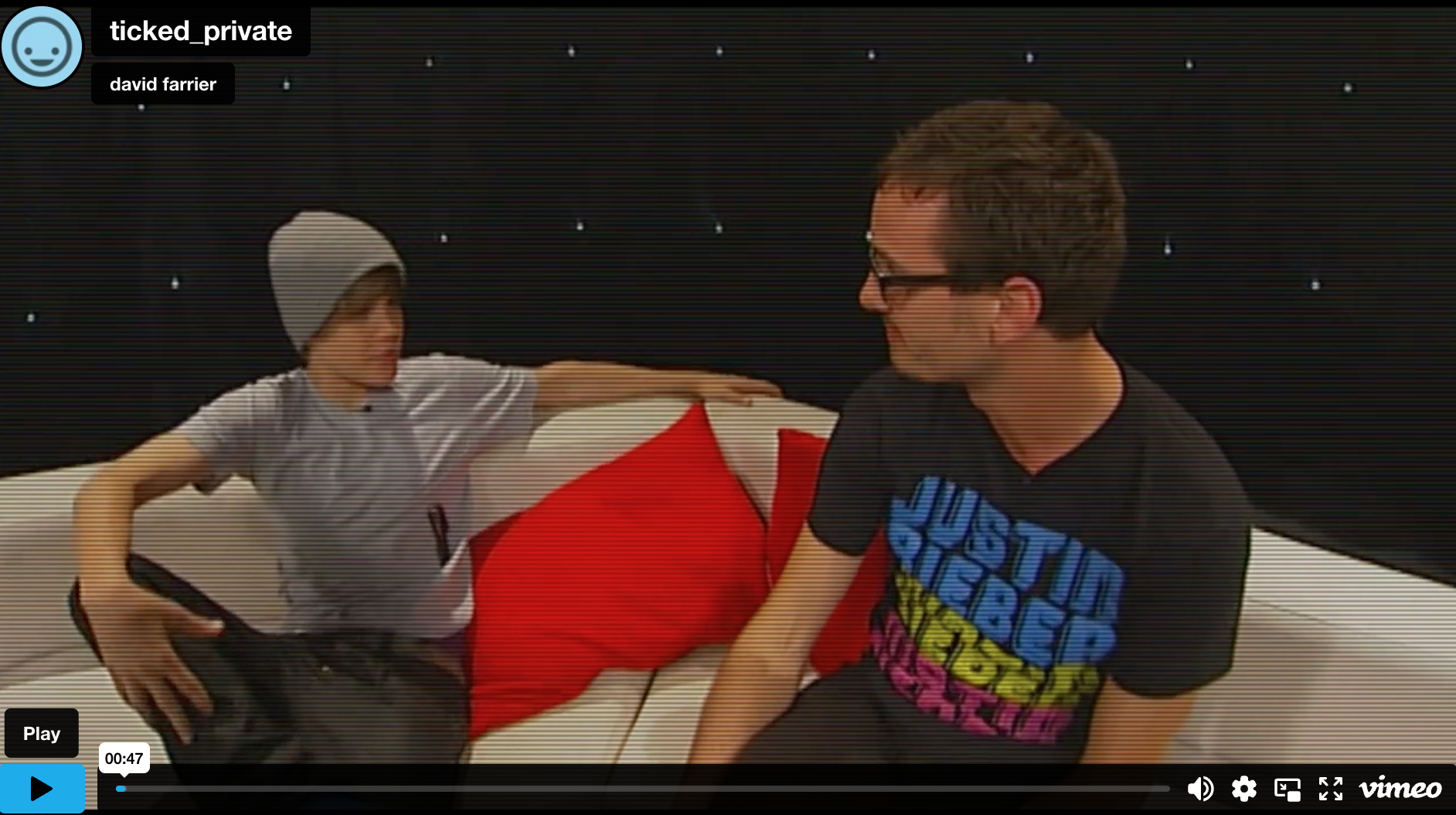
This gives the audience a starting point. In the case of Tickled, me, introduced in a montage of news stories as a pop-culture journalist who deals with light and fluffy bullshit, like me on a couch with a very young Justin Bieber.
- Theme StatedTickled is essentially about power and control, and this is cemented in the tickling we see early on: Young dudes restrained while others mount and tickle them. Here you also have this central question — “what the hell is Competitive Endurance Tickling”.
- Set-upYou have to grab viewers here or they’ll turn off. In Tickled, I start getting homophobic abuse and threats from lawyers. Things went from 0 to 100.
- CatalystThis is life changing shit that seems VERY BAD at the time. For me and Dylan it was, “Holy shit, they’re flying lawyers from New York to Auckland! This suing shit is real, are we going to get killed”.
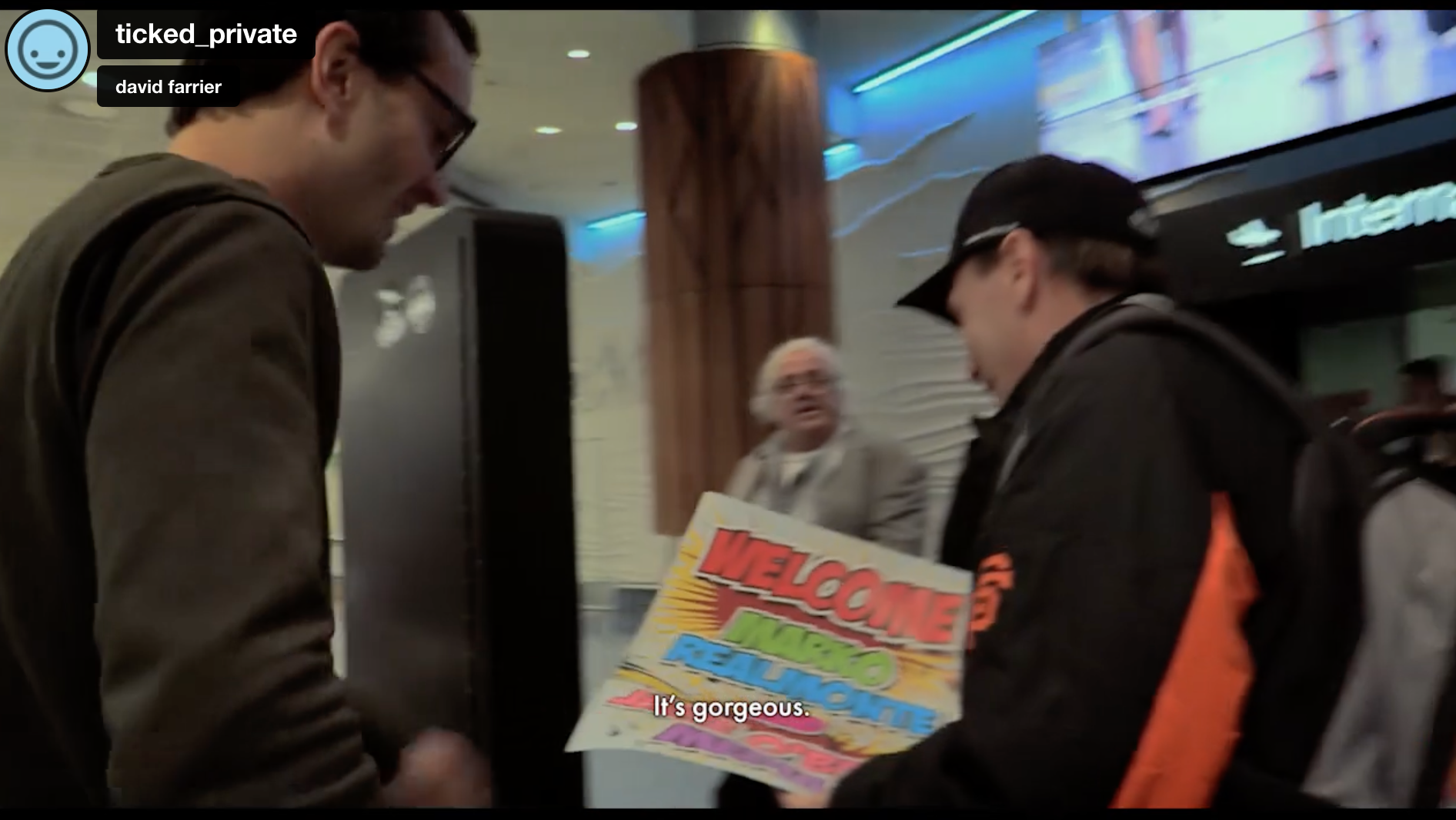
- DebateThis is where the “hero” of the story (me and Dylan, in this case) has to decide whether they go through with it or not. In Tickled this was literally a debate between me and Dylan. I was a coward, he was ballsy! In the end we went “Fuck it, let’s go!”
ACT 2
- Break into TwoBreaking into the second act is where the whole world changes, for the hero and the audience. In Tickled this saw us leaving the peace of New Zealand behind for the craziness of America — straight into the world of tickling we’d been warned against. There’s no going back! As Snyder puts it, “the old world is gone”. We rush in and stake out a tickling shoot and discover that yes, it’s all real.
- B StoryThis B story comes in because the audience needs a fucking break. It’s been moving quickly to this point and we need a breather. In Tickled we went and met
the “good” tickler, Richard Ivey. We got to just sit in the world of what tickling was, and what it meant. Of course Richard also laid breadcrumbs in revealing the identity of the mastermind behind it all.
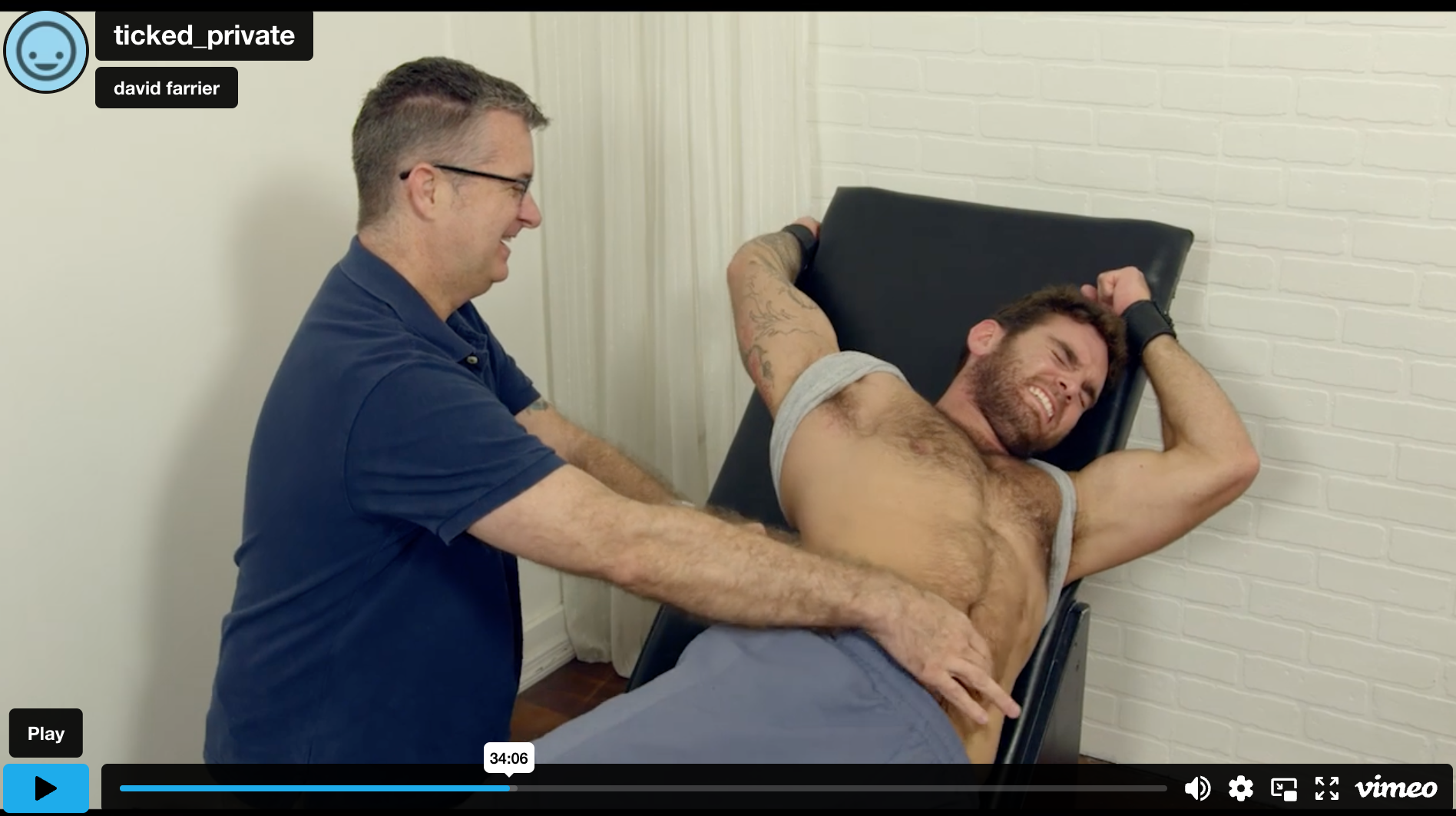
Fun and Games
We see someone being strapped to a tickled chair. We meet old producer Dave Starr with the NASA cap.
Midpoint
The midpoint in Tickled is meeting journalists Hal Karp and Debbie King, who were basically doing what I was doing 20 years ago. It’s a HIGH — in that together they lead me to a name: David D’Amato! Also I checked, and they literally turn up at the midpoint of the film:
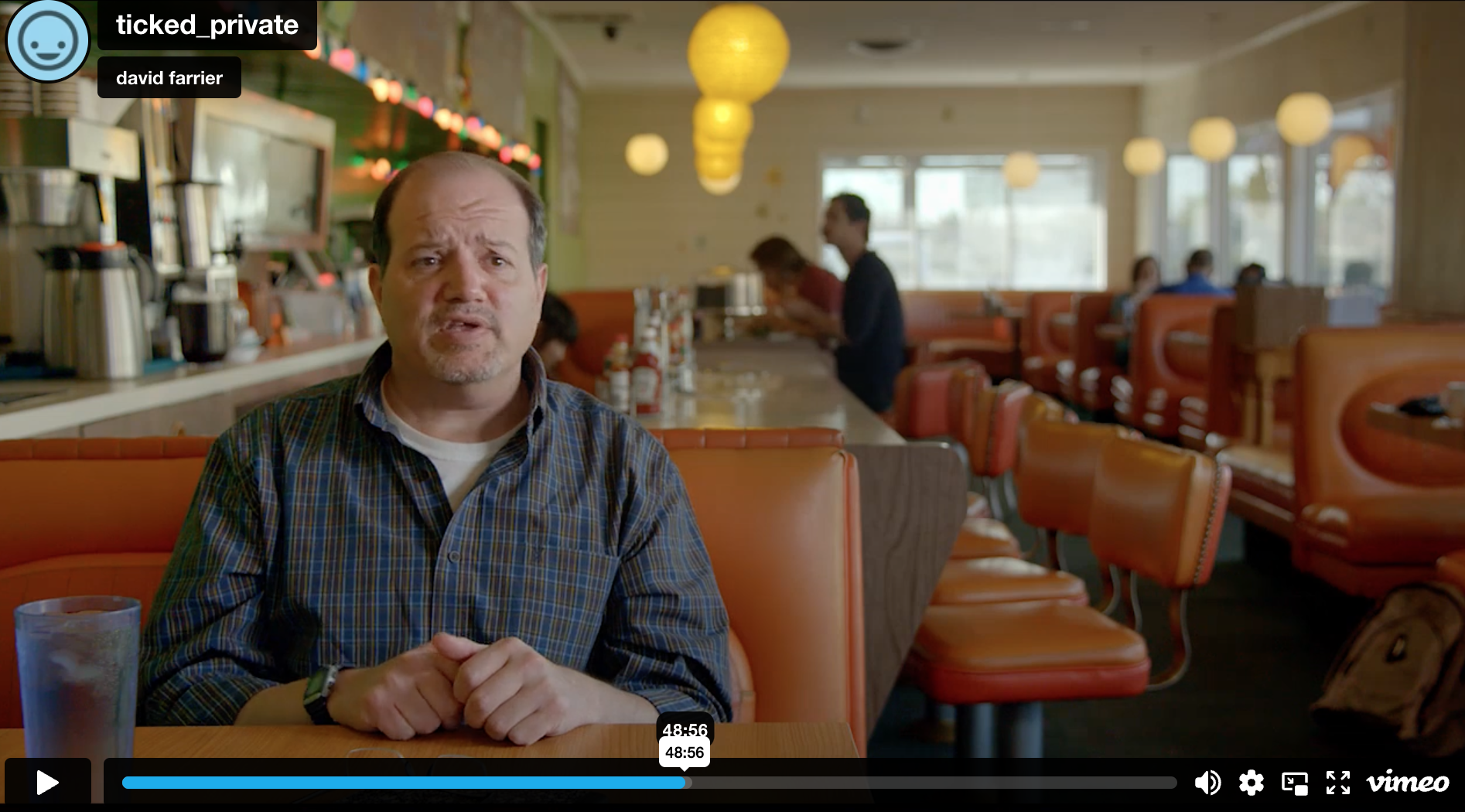
See! Half way! Where the midpoint should be. Bad Guys Close In
This part of the story has the hero feeling pretty good (I was!) but then, uh oh, the bad guys are back. In Tickled we head to Muskegon and find out the tickling network is much, much bigger than we thought — and legal threats are back.
All Is Lost
This is in every good story: Everything’s gone wrong and the hero is going to fail! In our case, we were in a freezing New York with no David D’Amato in sight, plus our producer told us due to legal threats, even if we did find him we weren’t allowed to confront him.
Dark Night of the Soul
This is where the protagonist/s grapple with what to do. Me and Dylan are hopeless. What do we do? What can we do?
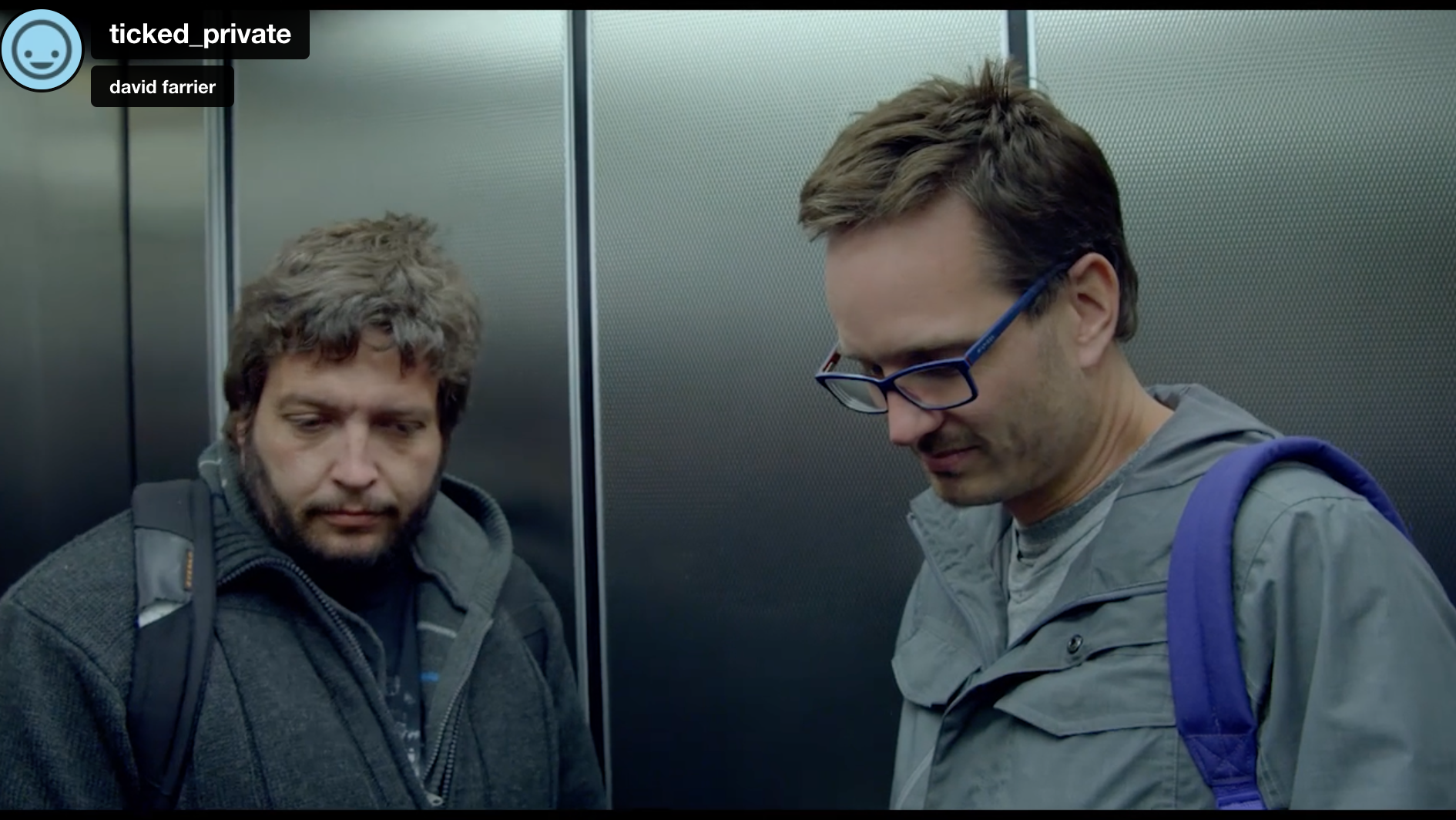
Our expressions are saying “dark night of the soul.”
ACT 3
- Break into ThreeThis is where the protagonist finds a solution — and for us, it was D’Amato emerging from his building and taking us on a slow speed pursuit. We decided to go “fuck it!” to everyone else on the team being scared!
- FinaleThis is where everything gets wrapped up. We confront D’Amato, before finding out the contents of his hard-drive. Satisfaction for all.I’d note some viewers were not satisfied, wanting more of a finale here: D’Amato being locked up or the FBI slamming him to the pavement.
- Final ImageThis is the opposite of where we started. It shows the change that’s happened. When Tickled started you saw me in a montage of idiotic stories that meant very little. I am bubbly and excited with Justin Bieber. In the final images of the doc, I look the opposite to where we started. 90 minutes ago I knew nothing, now I know everything, as D’Amato’s relative gives some final tragic details of his life.
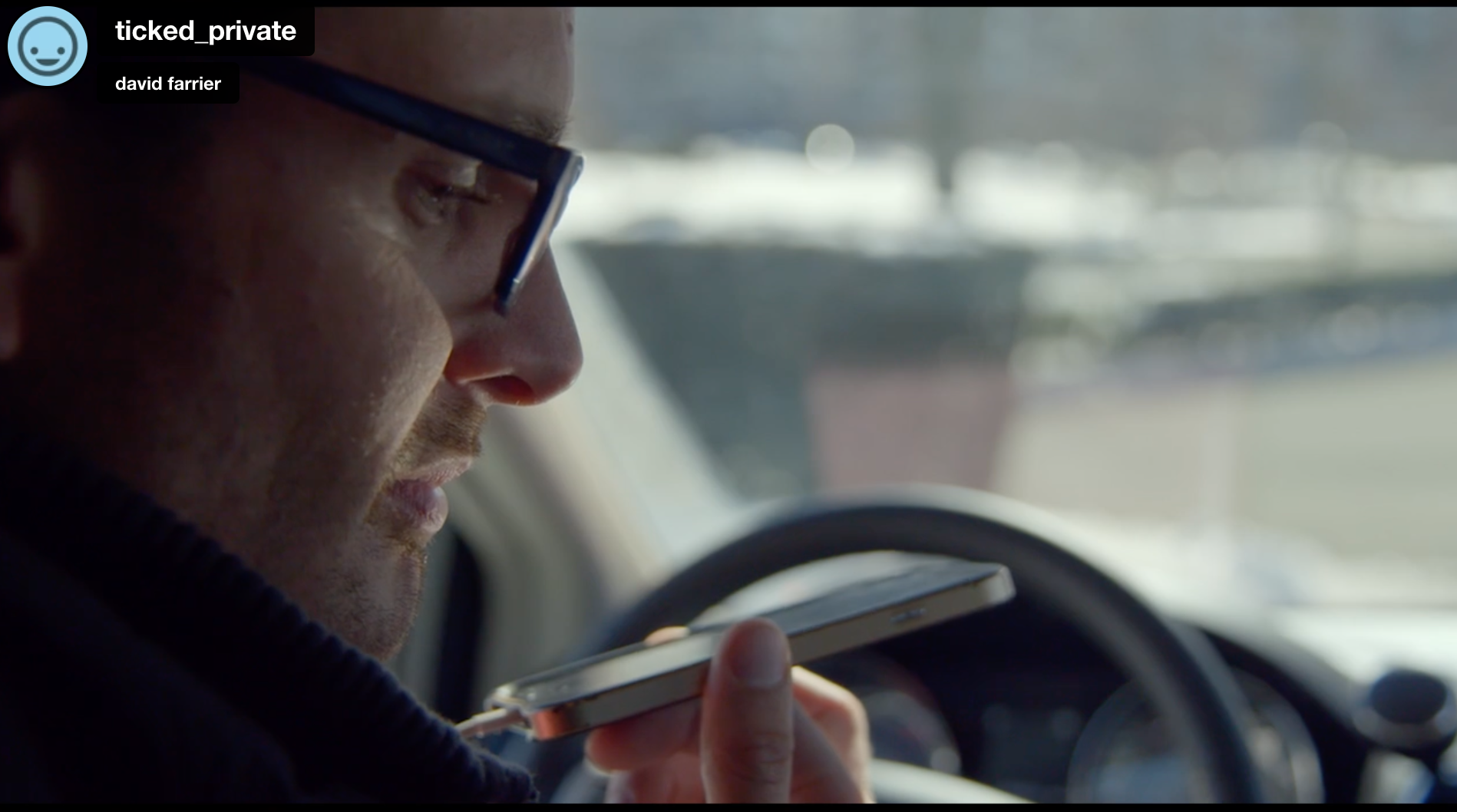
8. Be Very Specific About Look and Style
As I said earlier, this is a film. There’s a reason it’s not a written article or a podcast. So — how is it going to be shot? What cameras? What lenses? What aspect ratio? What colour palette?
This is a whole other mad area that I won’t drill into here (and it’s not my strong point — see what DP Dom Fryer says about this this stuff below!) — but whenever I’ve made a documentary I combine two main styles: Sit-down feature interviews (shot from a few angles so they can be cut and edited) — and then actuality/observational.
The actuality is always following me from behind, so the audience is with me as I go into a situation. It’s not like the camera is ahead of me inside someone’s house before I get there. You’re always following me.
The sit down interviews are important, as they are easier to cut. They can be placed throughout the documentary in various ways, and can sew the whole thing together. Actuality is much harder to cut and intersperse.. the scene happens, and it’s over. Next scene.
I don’t really do re-creations as I hate them, so I don’t really have advice on them. If you want to watch recreations, watch any Netflix true crime series for inspiration.
9. Music
Music is so, so important. It’s scattered through so much of Tickled, and especially the big moments. Giant thanks to Rodi Kirk and Florian Zwietnig for their work on this doc.
Often you won’t even notice it, but it’s there — guiding the audience’s emotions. The film’s editor (read what Simon has to say later on) will be informed and inspired by music. Music helps drive the edit.
Your budget will define whether you use factory music from a music library, or can get someone to score the whole thing. Or (less ideally, imo) a combination of both.
Ideally — get someone to score it and bring them in early.
Oh, and don’t place in music from giant artists you love that you don’t have cleared. You WILL become attached to it, and when it’s ripped out and replaced, the scene will NEVER feel as good to you as it once did. That said — that’s mainly a problem for you and no-one else.
10. Once the Movies Done, You’re Not Done
This is just a friendly reminder that once you’ve made the film, the job’s not over. Now comes selling the film, screening the film, finding a home for the film, promoting the film. This is where a producer can come in very handy. But yeah — this is a whole other wild journey. And like making the documentary, it’s filled with wonderful highs and terrible lows. Yay!
As I’ve looked back at this thing we made almost ten years ago, I wanted to share some words from director Richard Linklater.
Please know that I am not comparing myself to the legendary director (the Before trilogy! Boyhood! School of Rock! Dazed and Confused! A Scanner Darkly!), but he said something that really hit me when talking about his older work:
“When you were asking — and it’s a poignant, important question — What’s your relationship now to the work back then? Are you as passionate? I really had to think about that. My analysis of that is, you’re a different person with different needs.
A lot of that is based on confidence. When you’re starting out in an art form or anything in life, you can’t have confidence because you don’t have experience, and you can only get confidence through experience. But you have to be pretty confident to make a film. So the only way you counterbalance that lack of experience and confidence is absolute passion, fanatical spirit.
And I’ve had this conversation over the years with filmmaker friends: Am I as passionate as I was in my 20s? Would I risk my whole life? If it was my best friend or my negative drowning, which do I save?
The 20-something self goes, I’m saving my film! Now it’s not that answer. I’m not ashamed to say that, because all that passion doesn’t go away. It disperses a little healthfully. I’m passionate about more things in the world. I care about more things, and that serves me.
The most fascinating relationship we all have is to ourselves at different times in our lives.
You look back, and it’s like, I’m not as passionate as I was at 25. Thank God. That person was very insecure, very unkind. You’re better than that now. Hopefully.”
I share those words just so say that something really special happened with Tickled in that we all threw ourselves into that film with reckless abandon. I made so many mistakes, but somehow in that passion and somewhat fanatical spirit I think we made something cool. I think Dylan would agree with me. He was way braver than me going in, because he had a family to worry about!
And if you’re new to this whole documentary thing, I really believe that if you have passion and drive and you fucking know the story needs to be told or you’ll fucking explode — then you’ll get it done, insecurities and lack of experience be damned.
Those aspects of you being an inexperienced idiot may even help the film.
Now, over to my colleagues (those smart people who lifted me up!)
The Tickled Crew Weighs In!
Dylan Reeve - Tickled’s Co-Director
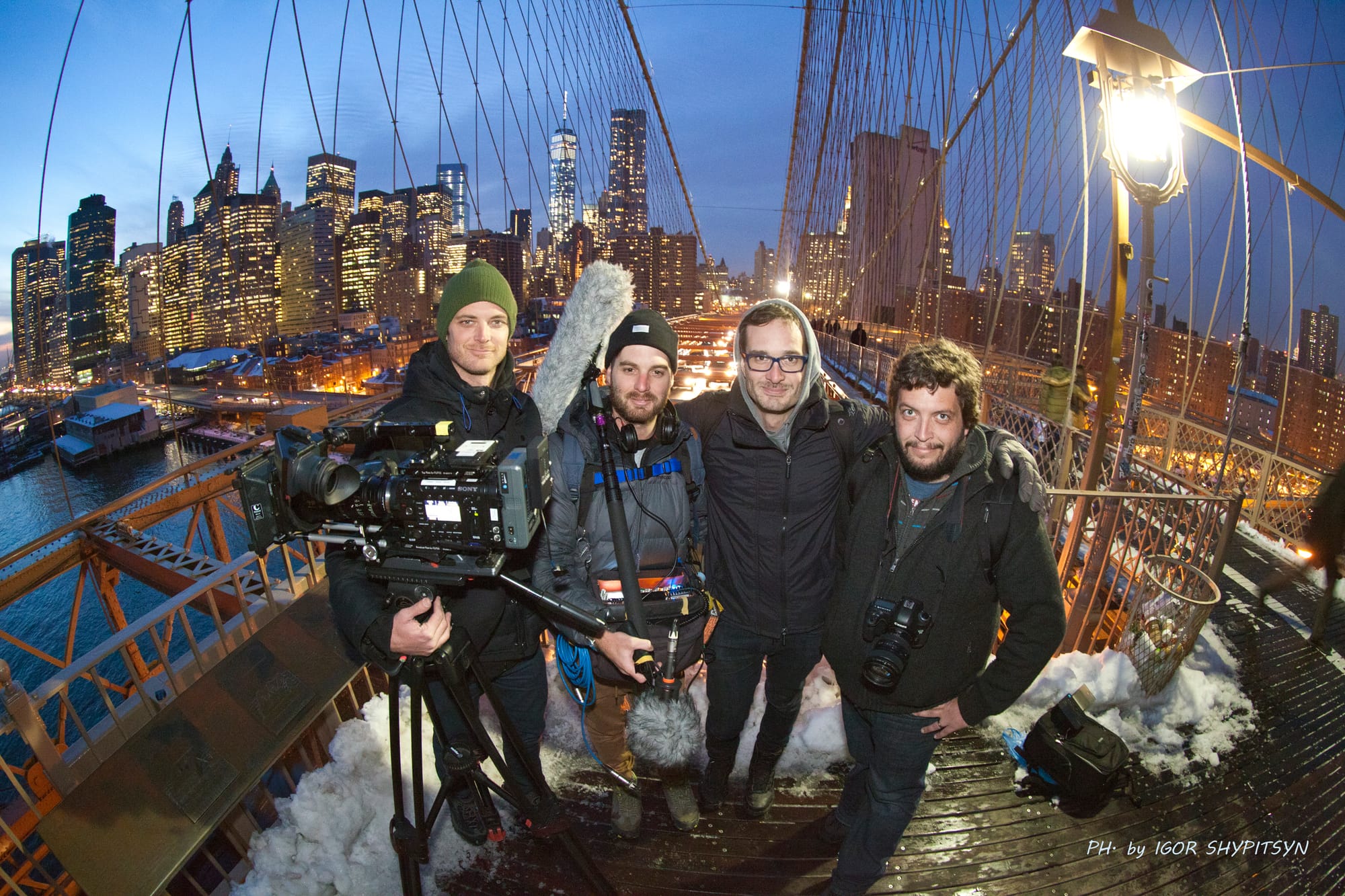
The thing about Tickled is that we really only managed to make it because we didn’t know any better.
When David fell into the story and started posting about it on Facebook, I was immediately intrigued. I love a weird online mystery, and started digging into it.
Soon a meeting was arranged over pizza and we talked about a documentary. David knew journalism, I knew (in theory) how to make a documentary, and so off we went!
What I now know about documentary filmmaking is that you have to create treatments, and go through development processes, and secure funding, and so many other time-consuming things.
What I thought I knew back then about documentary filmmaking was that you just needed to get money for the hard costs (airfares, rental cars, hotels) and go! And that’s what we did.
We launched a Kickstarter to raise the funds we needed to chase the story. It transpired that, because of the lack of the time-consuming things, we actually ended up biting off more than we could chew.
As our Kickstarter money ran out, we realised the story was much bigger than we had imagined, and we were either going to need to find more money, or tell half a story.
Thankfully we managed to do the first thing, and as a result we could tell a full story (or as close to it as was possible).
-Dylan Reeve.
Carthew Neal - Tickled’s Producer
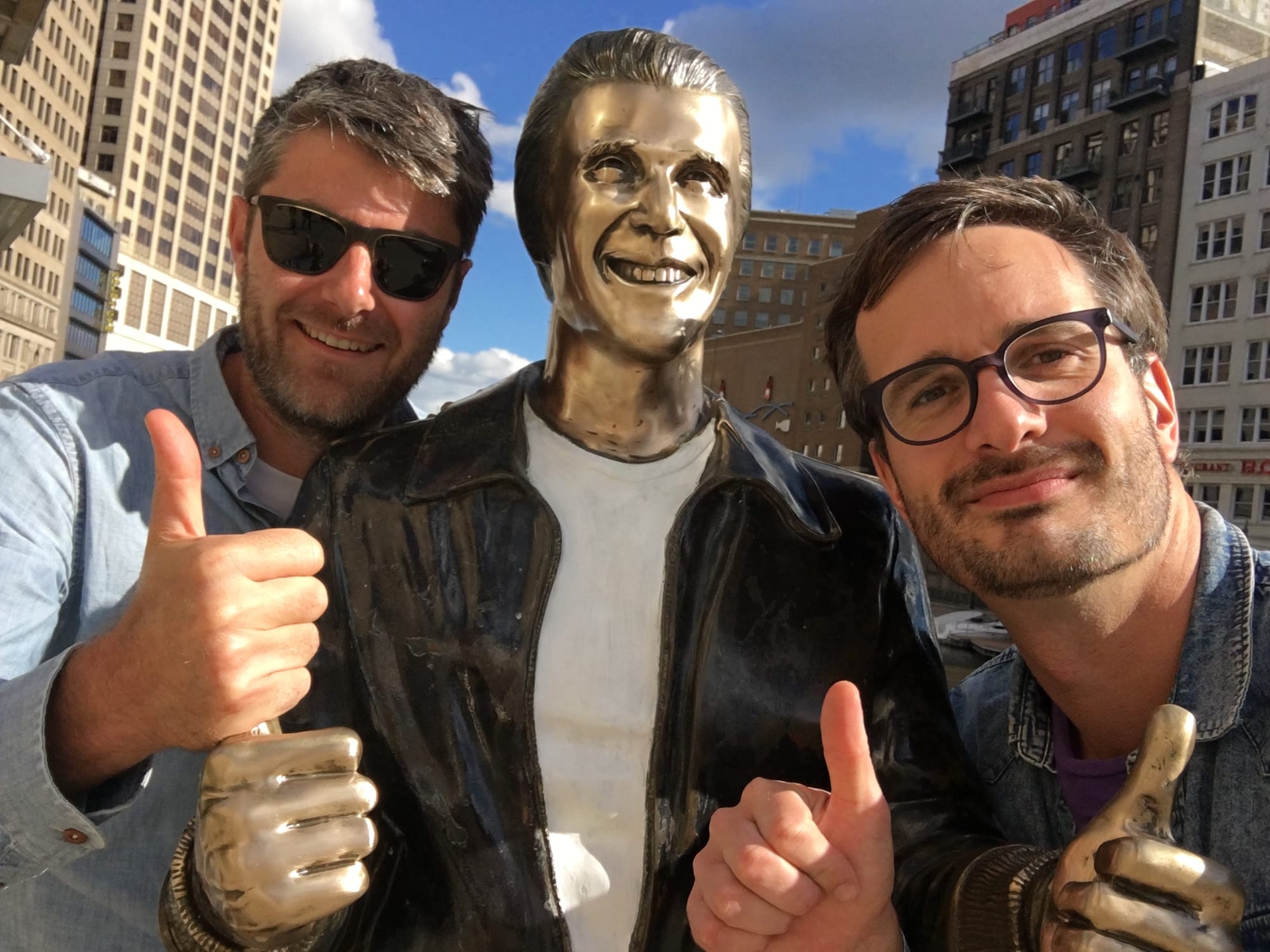
I equate producing much like parenting. Every kid is different, like every film. You have to respond to the project and team and that dictates what you end up focusing your time on.
Tickled was unlike any project I’d worked on before, and I did quite a few things I hadn’t done before — and haven’t done again. But if you are telling a story about someone who or something that doesn’t want a story told about them there is lots in here for you!
1. Crafting the story
When I came on board, the story had already started unfolding, and gonzo journalism style David and Dylan had already captured some crucial scenes and met many of the participants.
There was footage of their trip to the US, their attempts to find who was behind the ticking empire, including a clip that wasn’t included of David sort of chickening out of confronting who they thought was behind it (editor’s note: Dylan and I are looking for this clip on a variety of hard drives!)
Our challenge was to weave this existing footage into a cohesive narrative arc.
We meet at Dylan’s house after dinner with the smell of spaghetti bog in the air and children almost in bed. On large paper we mapped out the film as if we were writing it as a scripted film, with David and Dylan plotting in the points of the story already.
An example of this is putting Richard Ivey, AKA “the good tickler”, where a normal B storyline would happen after the 2nd act turning point.
Even though much of the story we were retelling, we wanted the documentary to feel present and engaging, so we worked on ways to ensure the interviews were in present tense. With this plan in place we were able to create a tight shooting schedule with the most suspenseful part of the film, confronting the head of the ticking empire, for the last three days of the shoot.
2. Building a Dream Team
David was a very experienced journalists and Dylan had worked in TV post productions for years, but they were new to the world of long-form documentaries. As a producer, my role was to elevate their project by assembling a strong supporting team. Three key collaborators stand out:
Dominic Fryer, Director of Photography: Dominic brought a beautiful eye for visuals and a thoughtful approach to storytelling. He helped us create stunning interview scenes and capture the live action with multiple cameras. Dylan was of great assistance with his technical skills.
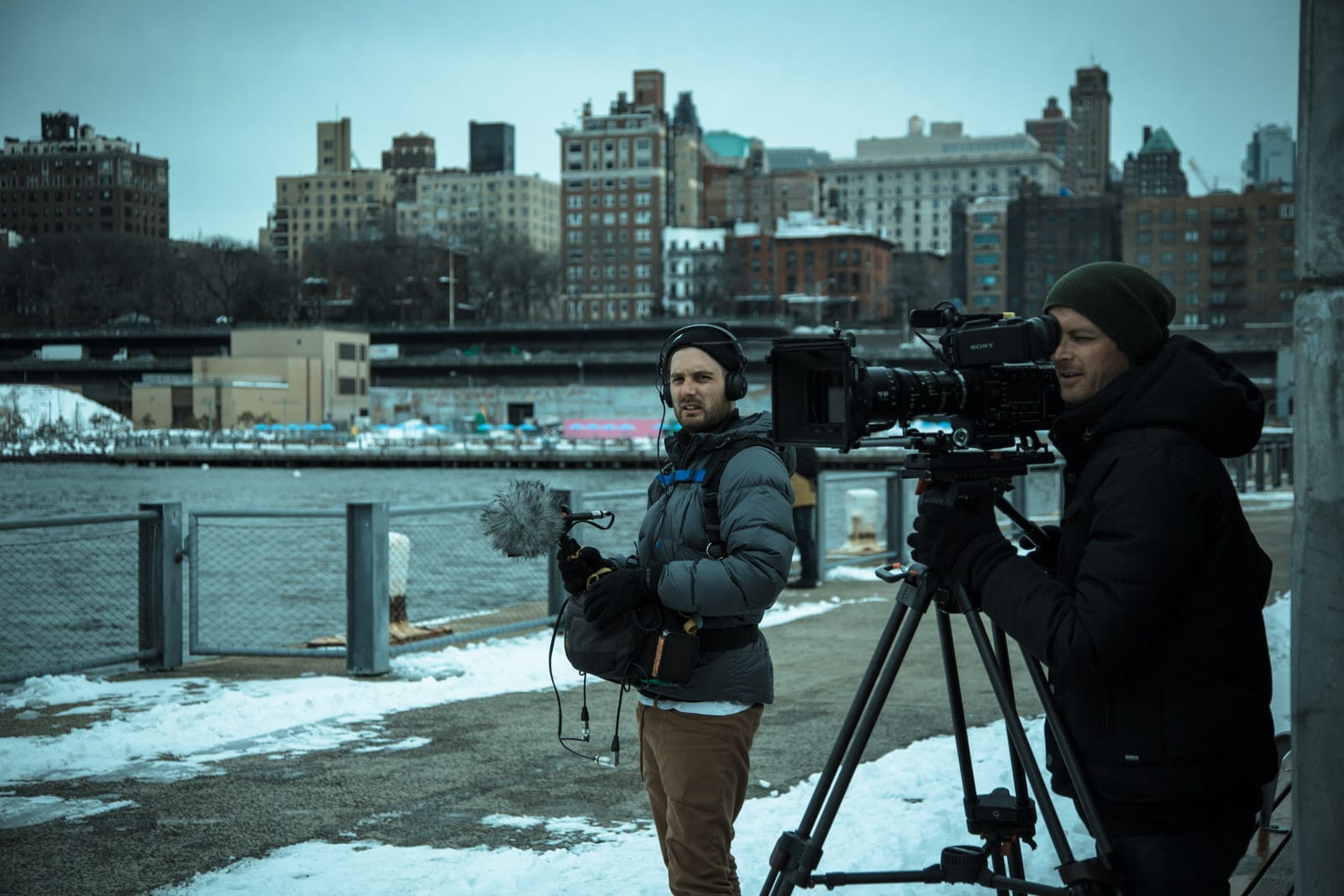
Shooting GVs in New York: Dom Fryer DP, sound operator Cameron Lenart Simon Coldrick, Editor: This brilliant editor, a master at uncovering layers within a story, was a perfect match for our project. Their skills in editing were instrumental in building the film’s dramatic tension.
Justin Pemberton, Executive Producer: Justin coached David on developing a new interviewing style to effectively draw out every beat of the story rather than the short form interviews he was most used for. He also provided invaluable guidance during the editing process making a key adjustment to the timing of reveals in the film.
3. The Legal Labyrinth
We secured a coveted spot at an A-list film festival, Sundance, but a major hurdle emerged: securing insurance to protect us, the festival and distributors. The documentary focused on someone who didn’t want to be involved, and navigating the legalities proved challenging. Again — Tickled was unlike any project I'd worked on before.
This is where I learned a ton about fair use and the intricacies of storytelling within the American legal system.
Thankfully, the incredible lawyer Chris Perez at Donaldson Callif Perez in Los Angeles and Peter McKnight and Ali Romanos helped us understand our rights and ensure we had the necessary materials to back up our position.
The cost of insurance ended up being almost as much as the entire film production, but it was crucial to get the film released.
Special thanks to Dave Gibson, then-CEO of the New Zealand Film Commission. His unwavering support of us and the film itself was a constant throughout the entire process.
4. Release
The release of the documentary was exhilarating and nerve-wracking. I’ve never hired armed security for a premiere nor had a financier meet me in the car outside the screening and say things like, “It only costs a couple of thousand dollars to get someone to break your legs”.
We had the security of our legal groundwork, but there were still attempts to block the film. Another fantastic lawyer, Cam Stracher, proved instrumental in fending off these challenges. His wit and talent were unmatchable.
It was a wild ride, but with a great team and determination we got this incredible story out.
It was inspiring to work with David and Dylan who never dropped the ball and put all of themselves on the line to push back against a bully. I can’t believe David is still talking about it, but maybe that’s what a good documentary does. Never dies.
-Carthew Neal.
Dom Fryer - Ticked’s Director of Photography:
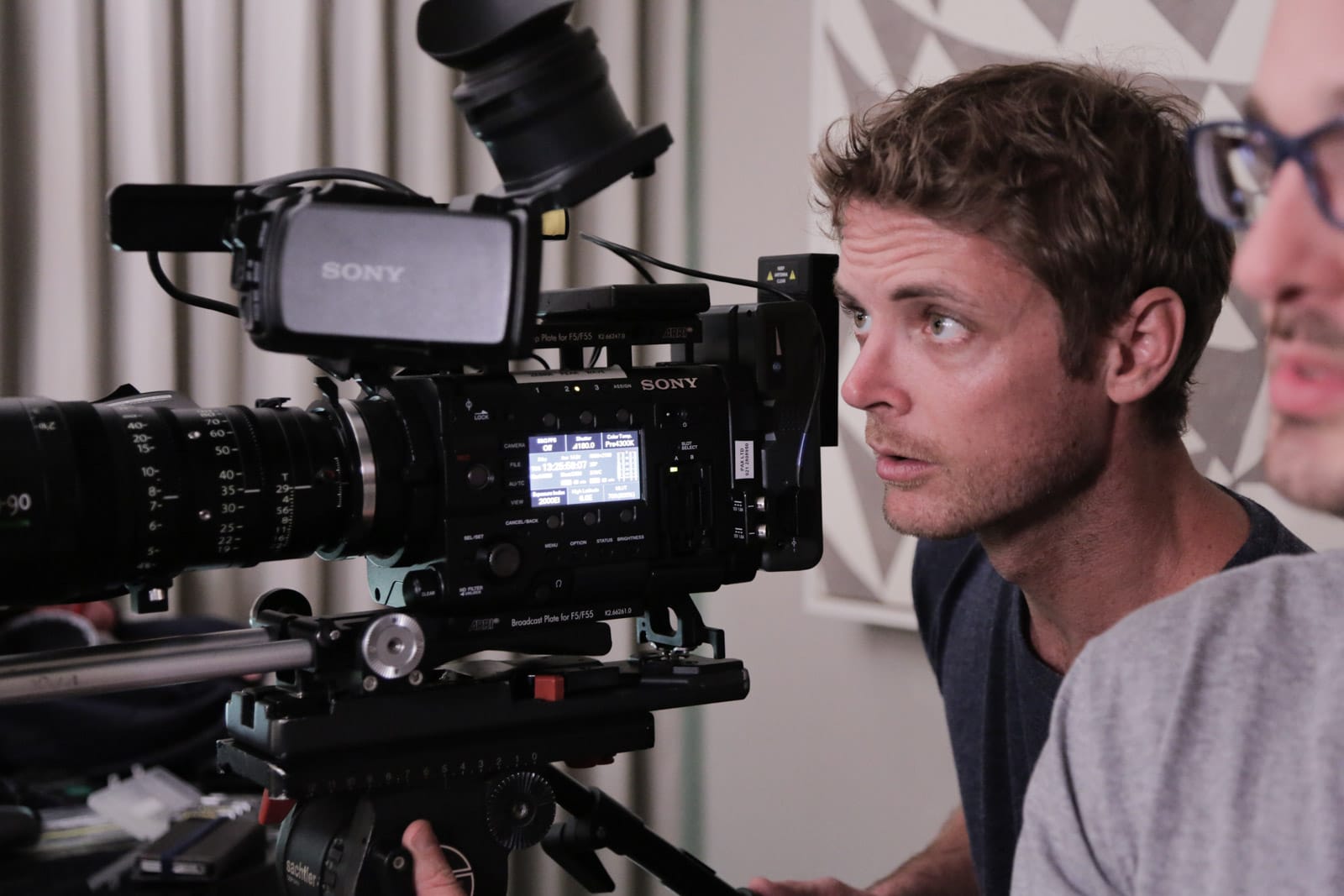
I shot Tickled on a Sony F5 with Fujinon Cabrio 19-90mm T2.9 zoom lens. I also had a set of Zeiss Super speed prime lenses.
I covered all the observational content mainly with the zoom, which gave me a lot of versatility. Then the prime lenses for b-roll or situations where I needed a small size set up. Inside a car for example.
We wanted to shoot Tickled in a quirky way to fit the weirdness of the story. I used a lot of center framing inspired by Wes Anderson.
The interviews were maybe the hardest element to shoot, as I used minimal lighting. Mainly due to keeping things quick. Going into locations for the first time and making the best of it with what we had.
Eight years later things have changed for me, cameras are smaller, lighter. Lights are smaller and more powerful. Things are becoming less expensive. Which makes documentary cinematography much easier than when we shot Tickled.
My style has evolved, and I’ve found myself using primes more for observational scenes. A prime lens makes me think more, move more. I don’t always like to rely on the ease of a zoom. It’s a harder way of shooting, but in my opinion it’s creatively better.
Every shoot I like to have myself covered with a range of zooms and a set of primes. I judge each location, shoot, story, and talent differently. It’s all become quite instinctual to me after 17 years. The more time on a camera for documentary shooting the better.
Light is very important too, learning to shoot with natural light takes time. I always think going into a location where the light source is.
For me the most important thing about being a documentary DP/shooter and shooting Tickled is listening and being aware of your surroundings, not just what you see through the lens.
Be aware that any moment things can change and go with it. Adapt. Keep calm. Being relaxed, getting along with talent and making them feel as comfortable as possible is key.
-Dom Fryer.
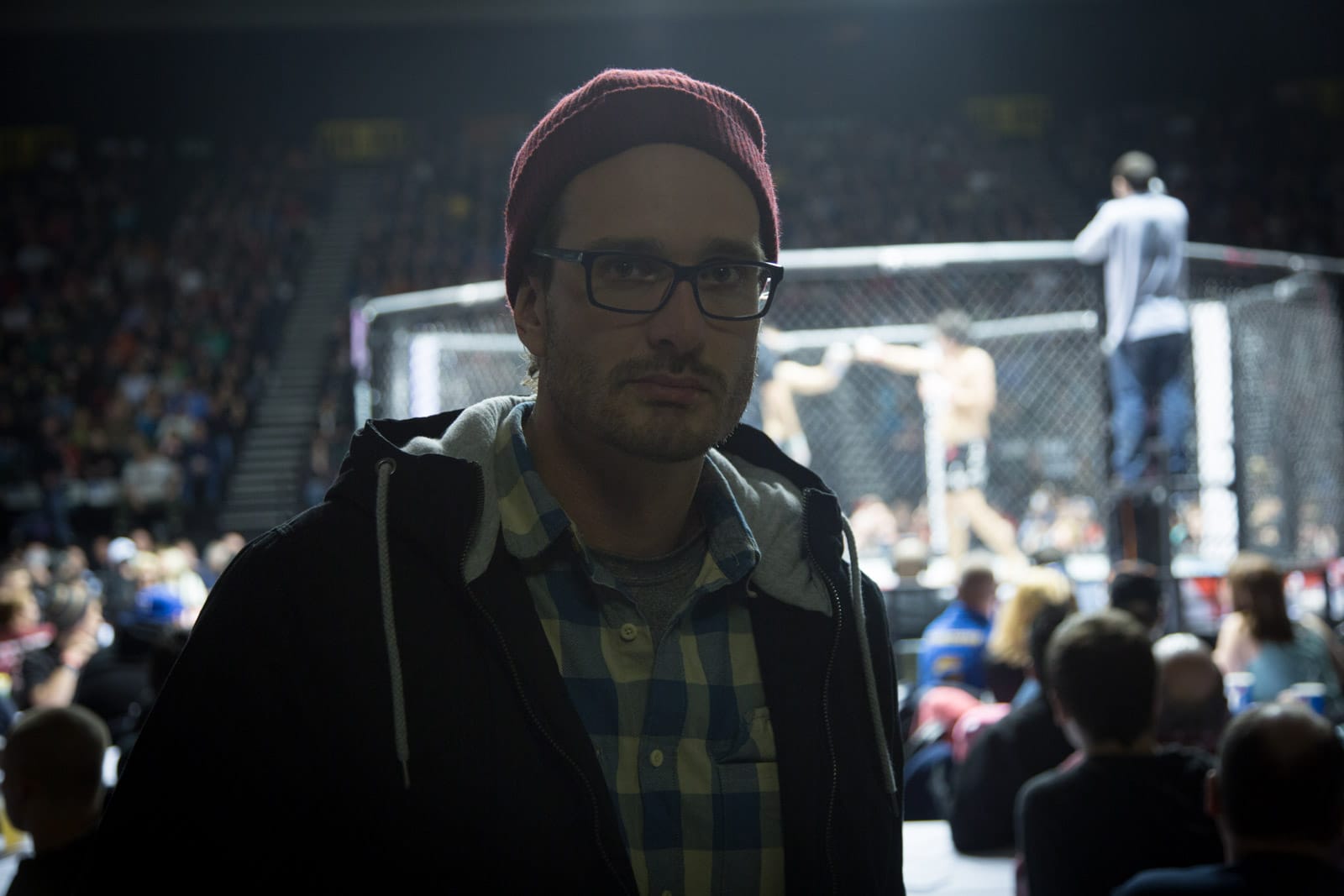
Simon Coldrick: Tickled’s Editor
When I was approached by David and Carthew about editing Tickled, I had just completed work on possibly one of the saddest documentaries of my career on the Christchurch earthquake, through the eyes of people on the ground as it happened. It still makes me cry and was a million miles from what Tickled would be. But I was chuffed to be asked, if not a bit bewildered.
Editors are often the last people to come onboard a project as you have to wait for the footage to be gathered before you can start, which sounds obvious.
When an editor begins, they are often on the outside of what has happened and last to the party — and Tickled was no different. David and Dylan had already filmed the majority of the story, and while it’s easy to get swept up in the enthusiasm of their anecdotes, I couldn't possibly understand what they went through or what they had captured.
Some productions just don’t give you the time to get up to speed, but it’s so important before trying to cut anything. So the first job is to literally sit down and watch all the material — while making notes, forming ideas, and figuring out how all this footage can become a coherent story.
It was great to be able to do this process with David in the edit suite: It’s important to get inside the director’s head as early as possible in the process, so you can help deliver their vision. Every day he would turn up with my soy flat white — something he remembered from our initial encounter. We spent weeks watching and I would get more insight around the events and story until I felt I had been with the team from day one.
I also encourage directors to make daily notes on the shoot, and David was already doing that including thoughts, feelings, and why things happened. These are so helpful, especially if months have elapsed and the memory needs jogging.
Sidenote: I hadn’t told David I’d stopped drinking soy milk as it started to play havoc with my digestion. I don't know why, but for four months I carried on drinking the soy flat whites he generously supplied.
(Editor’s note: Fucking hell, Simon!)
With all this footage and information, we needed to plot the way the story would unfold. There is an understandable misconception that everything happens in the order it was shot. This almost never happens, as the filmmaker usually has unraveled the mystery early on! Interview subjects might open doors to new information late in the piece, and it’s cheaper to shoot everything in one location at a time.
We knew we wanted Tickled to start light and go dark pretty quickly and shift the audience with twists and turns leading to the final encounter. Although this is a digital medium, we worked with whiteboards, index cards and post-it-notes. This really does save time in the edit as it gives us the ability to work through ideas and shuffle the order before committing the order in the edit.
I like to then approach the edit like a radio show — using only the interviews, conversations, and maybe rough chunks of archive as placeholders to create the best story through audio.
The bells and whistles need to wait.
Martin Scorsese said, “If you don’t get physically ill seeing your first rough cut, something is wrong.” Maybe that's a bit dramatic for Tickled, and he’s talking about multi-million dollar movies, but when you start an edit with hour and hours of material that can seem unconnected and without the benefit of a shooting script, it can be a daunting undertaking.
And so for much of the 17 week edit we’d be staring at incoherent incomplete scenes, clunky transitions, and illogical story progression.
I think that’s where an editor needs to be a confident, reassuring voice: You really have to trust the process. With each pass of the “radio edit” comes more coherence, better ideas out of our whiteboard sessions, and the elements of the thriller story we were after. But again — the bells and whistles still need to wait.
Once everyone was happy with the shape of the story, then for me it’s fun all the way with those bells and whistles. Crafting scenes, making the clunky transitions feel effortless, and adding sound design and music that also helps shape the feel and vibe of the film. Despite a modest budget, David had convinced some cool composers, Rodi Kirk and Florian Zwietnig, to write the bulk of the score.
It’s in the last few weeks of the edit that a film emerged.
When you watch a movie, every shot is carefully considered and has a purpose, be it a character’s point of view, or giving the audience clues. Rarely are they redundant in terms of storytelling.
When you watch TV, more often than not images are peppered like wallpaper — often to cover cuts to an interview. Documentaries by nature are often shot on the run, but I always try to think in terms of the approach in movies, and what an image can offer the audience.
With David's covert coffee cup interview, it was a deliberate decision to use all the wobbly and badly framed shots, including a long shot of Kevin’s groin.
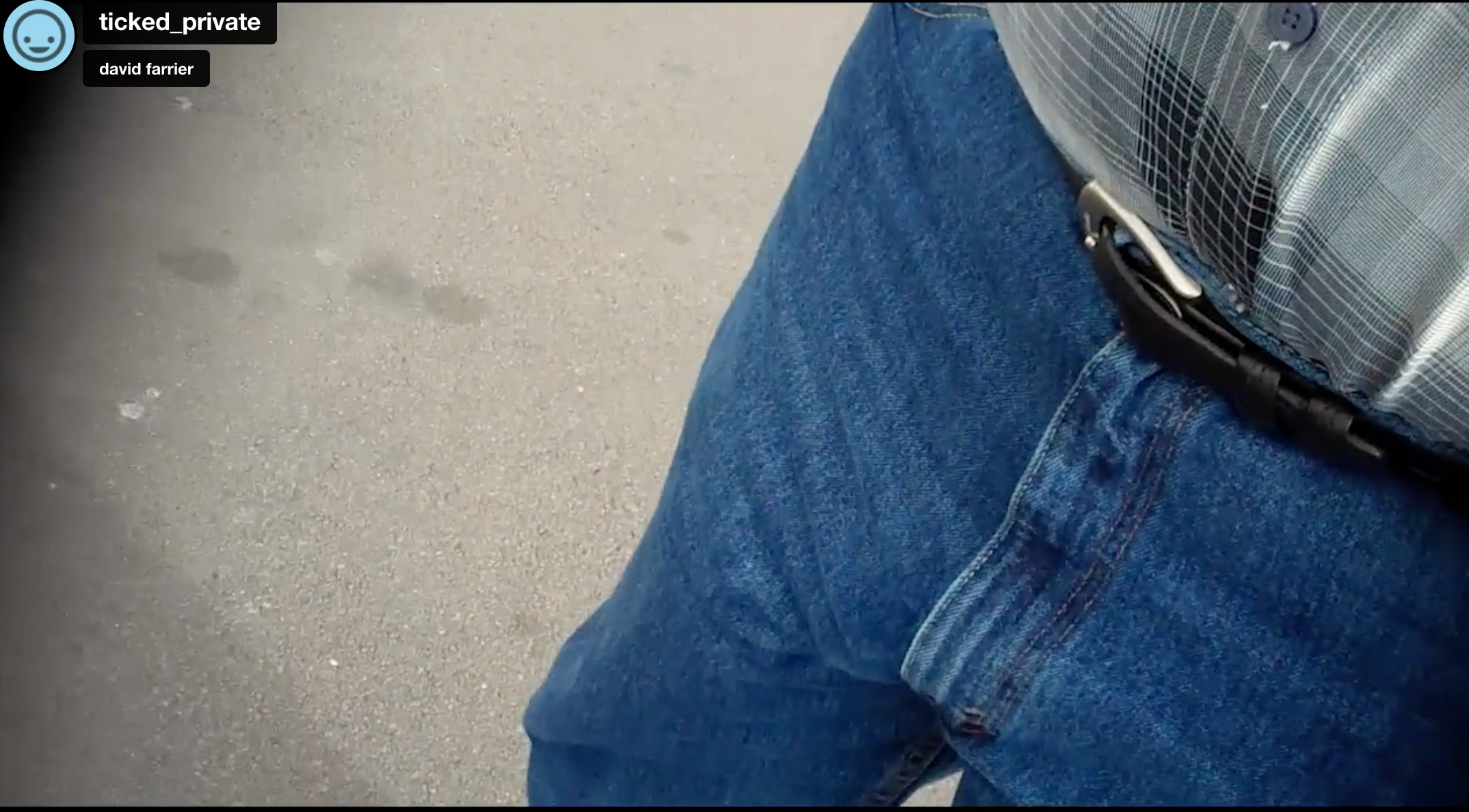
The result was intended to be funny, but it was a not-very-subtle reminder that David lacked any undercover field craft and was out of his depth. The tracking shot of street entertainers trying to earn a dollar on Hollywood boulevard marries with the idea that David Starr is on the fringe of the entertainment world.
There were so many opportunities thanks to the amazing footage that cinematographer Dom Fryer captured — some used in a subtle unconscious way and some more on the nose, but they are all there for a reason.
The bleak snow covered images in Michigan perfectly illustrated the poverty and crime. The speeding underground in New York as David gathers clues offers momentum visually and in the story. The film is about a predator and the hawk flying off with its kill is a reminder of the peril David and Dylan find themselves in. Blink and you’ll miss the all seeing eyes on a billboard in the steaming streets of New York.
A flight filled with people glued to their screens as we learn about the tickle videos… driving past the car crash after a disastrous encounter with one of the protagonists… I could go on, but I’m still kicking myself that I couldn't make some of Dom’s amazing shots of alligators at feeding time work in the cut!
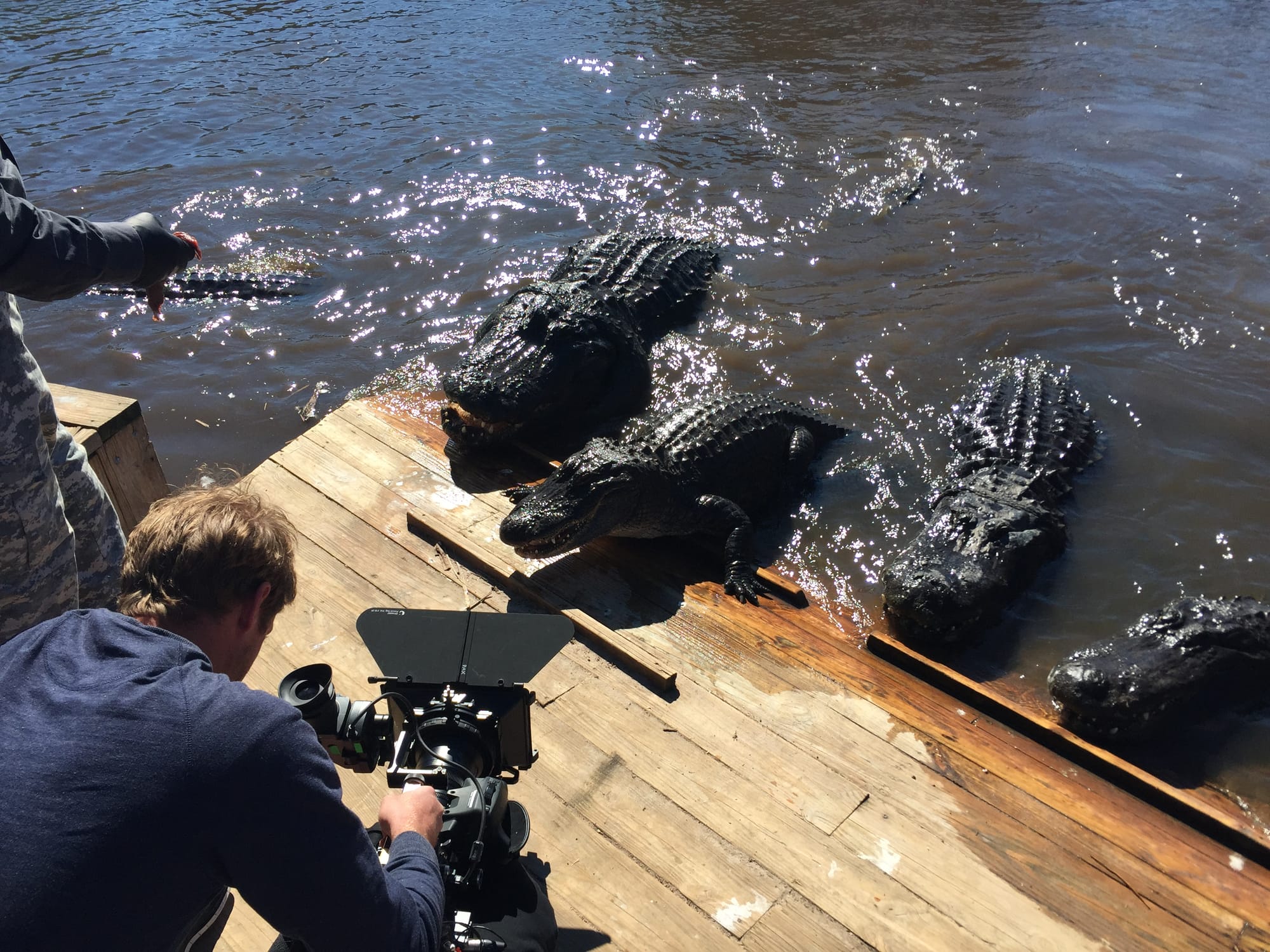
With that in mind, I should add that at some point in any edit you have to “murder your darlings”. It’s an accepted part of the process that you will have to cut out scenes or shots that you have held onto till the bitter end, because they are beautifully framed images, or a scene is bat-shit crazy.
Ultimately you let go as they add little to advancing the story, or they just slow things down. But then there was another level in this process that led to a bit of heartbreak, when the lawyers stepped in. An important part of completing a contentious documentary is ensuring that it’s factual accurate and there is a limited level of legal exposure, with a litigious protagonist the risk of halting the release of Tickled was very real. So on a hard-drive in a lock-up is an unseen version of Tickled that I think is more crazy and jaw dropping, but will never see the light of day. With that I think I have said far too much!
One last, but important part of the process, is the test screening. It’s a chance for a selected audience to watch the film and give feedback on what they liked, or maybe didn’t understand. It’s a good chance to experience when jokes land... or not. And to see if the tension you hoped was there results in collective gasps. From the feedback, you can then make final tweaks.
After working for months staring at small screens it is also an opportunity to see how the cut works for a theatrical release. With all that screen real estate in a cinema, the way you pace cuts is different to watching TV, the eye takes longer to take in all the information — so I always use the experience to reevaluate the pace of certain cuts — sometimes slowing them down to do justice to some of the stunning footage.
After that, you lock your film.
All of the editing work was done from the safety of a room in the backstreets of Auckland, far, far away from the threats and legal danger that David and Dylan had courted when they undertook this story. The only time I had experienced anything resembling these levels of concern and paranoia was on my next project, a documentary on the internet pirate Kim Dotcom. It was a film about his battle with the US government, subsequent over-reach by the New Zealand government and illegal practices by the police following the raid on his mansion that was likened to the takedown of Osama Bin Laden.
During the edit, many phone calls between the filmmakers and myself were subject to strange clicks and crackles and eerie echoes. Something that we were sure was surveillance, ironically one of the film’s subjects. It was only then that I truly appreciated what David and Dylan were going through!
-Simon Coldrick.
Justin Pemberton: Tickled’s Executive Producer
The title of Executive Producer is super varied — it can mean anything from helping finance the film (some rich people get ‘vanity’ EP credits just for contributing money) through to actually being involved in the creative process.
As a documentary filmmaker myself, I was the latter.
I remember Carthew telling me the story one night, and I was so intrigued that I was thrilled when he asked if I’d be keen to work with David and Dylan as a creative exec.
The job is one step removed from actually making the film happen, so it’s all big vision, blue sky stuff. I think as a director, it’s easy to feel bogged down by details and logistics, so having someone who can see the film from afar can really help.
With his TV journalism background, David had been used to making fast-turnaround snappy stories, so we focussed on slowing down the shooting process with the art of a long interview (we’re talking hours).
In a feature film the magic lies in the nuance, and contributors need time to ‘relax’ into the conversation. Take time on camera to get to know them, let them get comfortable, and say what they want to say. When they’re ready, they’ll share more. And don’t be afraid to circle back later if you feel like you need to go deeper.
Another big thing we thrashed out was how to play with the timeline. As a filmmaker, you’re in control of how and when the audience learns crucial bits of the story, so be strategic with this.
A documentary isn’t an encyclopedic explanation, but a captivating unfolding narrative that builds. Sometimes it’s good to hold back information, seek out contradictions, and beckon the audience with an enigmatic dance that keeps them intrigued right to the end.
-Justin Pemberton.
David here again. I hope this was helpful, or at least a little bit interesting.
A long one, right? And I feel I only covered about 2% of what I could. With that in mind — any questions, you know what to do:
I’ll be in the comments to answer any questions you might have — about Tickled specifically, or documentary in general. I will help if I can!
Or if you’re in New Zealand, come ask me in person at the popup, or at the Tickled screening! Seriously, come down, it’ll be fun.
David.
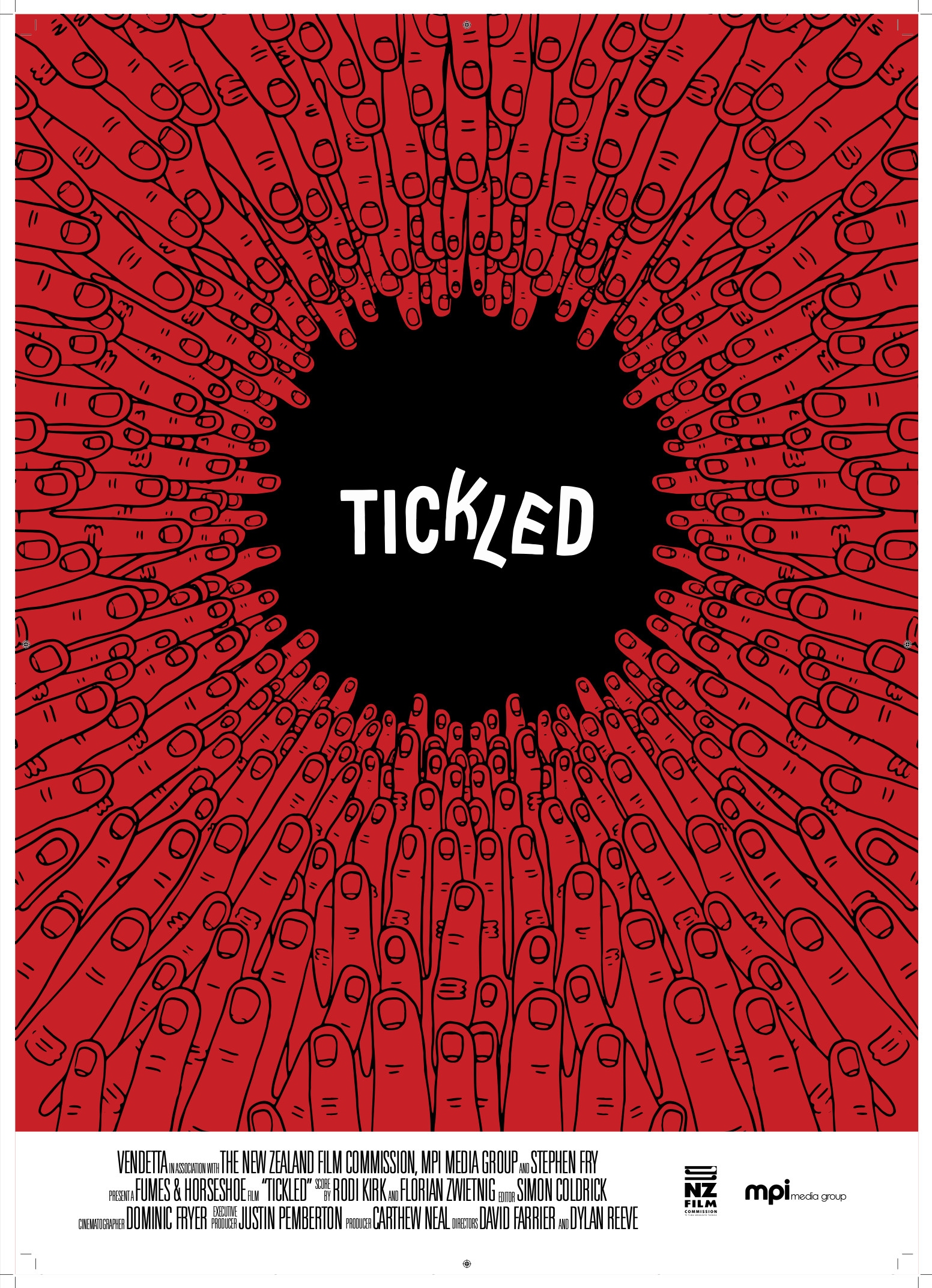
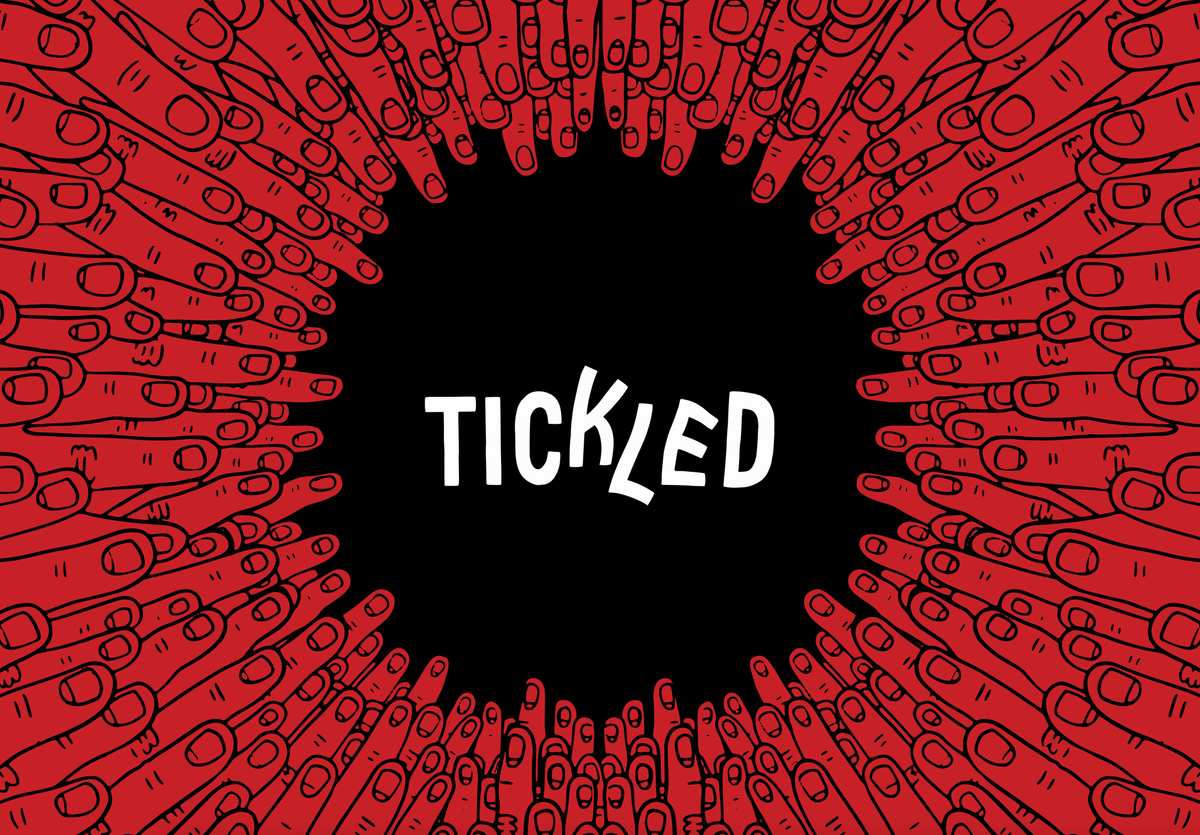
PS: This is an alternate poster for Tickled that Toby Morris designed. I really love it, and have never shown it to anyone before. It looked really good BIG as a one-sheet! (To see all our other poster designs, I posted them here).