My First Autopsy
Handed a pair of pruning shears, I wondered what to do.
In saying that - if you've been reading Webworm for a while, you hopefully trust me by now to navigate things in a sensitive manner.
Hi,
The sun is just beginning to rise as I complete my first autopsy.
I'm not sure if "complete" is the right word. No single word can sum up what's taken place since my alarm went off at 4.30am – but over several hours, I have watched and observed a body opened and emptied; examined and dissected. A family wanted answers, and they'd paid thousands to get them.
I stand in a room that slowly fills with the smell of iron, my mouth the taste when you floss too hard. My hands are sweating inside a pair of blue surgical gloves. It isn't all just me gawping: I'm handed a long pair of pruning shears and told to cut through some ribs.
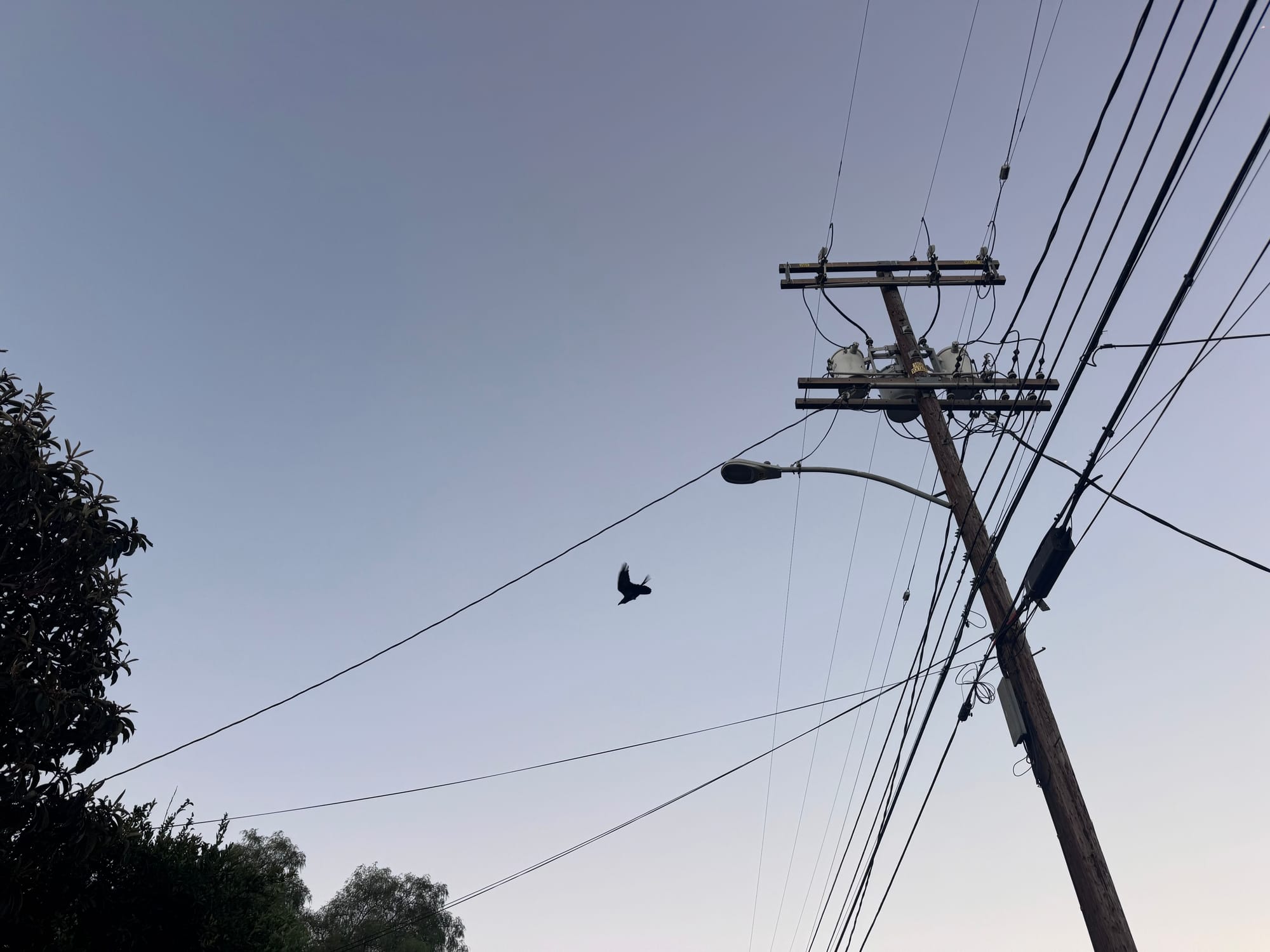
When I leave, the birds are just waking up. I sit in my car trying to figure out how I feel about all of this. I notice my glasses are dirty, and I wipe off a speck of dirt.
"Dirt." That's not quite the right word, either.
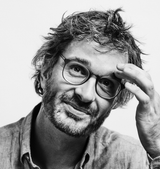
 David Farrier
I've long been fascinated by death, probably because I'm terrified of it. I grew up believing in Heaven and Eternal Bliss, and when that belief left me – I was left with the cold hard reality of it all just ending. The fact we die has never felt normal or sane to me: It feels as awful and inhumane as an execution by firing squad.
I watch horror films and read Stephen King novels to be entertained, but to also flirt with the idea of death a little. I make things like Dark Tourist, and interview morticians like Caitlin Doughty of The Good Death here on Webworm. All of this, I think, is to try and come to terms with what's coming for me.
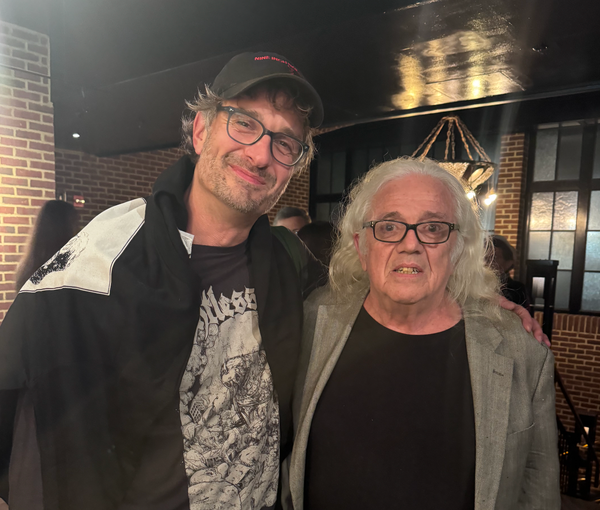
Over the last two months, I've gotten closer thanks to 74-year-old Vidal Herrera.
I reached out to Herrera several months ago because he runs Los Angeles' busiest private autopsy business. He didn't want to go on record at first – I think we were both trying to figure each other out. One of the first things he did was complain about the attire of a journalist he'd once talked to. I looked down, realising I was in t-shirts and shorts, with bright pink Crocs.
That's not to say Herrera isn't also prone to some obnoxious flare. The clues were there the second I walked into his office – a signed Grateful Dead record proudly hanging on the wall: "Like Jerry Garcia from the Grateful Dead says, what a long, strange trip it's been," Herrera quips.
Later, he will go on the record, explaining that he's been comfortable with death ever since he saw his first dead body.
“I was about nine years old. There was a Pinewood Derby contest, where cars would cut corners. And an individual, he fell. He was in the gutter and his head was leaning against the curb. He had saliva coming out of his mouth. So that was the first time.
Then later, my grandmother.
Then later on in East LA, there were parties – and I remember a guy got his head cracked with a crowbar. There were gang fights, so all that stuff was second nature to us.”
Herrera tells me that he was a "typical little kid", riding his bike, selling newspapers and shining shoes. As a young adult he would spend a year hitchhiking around the United States, returning to LA to work as a dishwasher at a restaurant. His dream was to own a diner. Then one day as he was washing dishes, a colleague suggested an unusual life hack.
“He told all the kids, ‘If you wanna make something in your life, you gotta go to college.'
Well, back then in the 60s and during the Vietnam War, the large majority of inductees going to the military were Blacks and Latinos. The fatality rate was higher for them, and that's not what I wanted to do.
And so he says, ‘The best place to work is in the county morgue.’ I said, ‘Are you crazy, with fucking dead bodies?’ He says, ‘Let's think about it: You sit there by yourself, there's nobody to distract you. You could do your homework.’
So I took his advice, and that's what I did.”
He got a job as an orderly at a local hospital, moving from department to department. Then he saw an advert for the coroner's office: 'On the job experience! No training necessary!' He volunteered 20 hours a week for two and a half years, qualifying to become an autopsy technician. His dream of running a diner had been replaced with a dream of death.
“I became an in-house crime scene photographer, and then a crime scene investigator. It just blew my mind. It's like, ‘Wow, this is incredible. The human body is incredible! Why do people do these things to one another?’
And I just wanted to find the truth. And I felt so behind – I barely graduated from high school – but it was the doctors that saw something in me, my work ethic, that they encouraged me. They mentored me, and they loaned me their books. They told me what chapters to look at, what pages to look at.”
He passed all the exams, and became a coroner investigator. Now, decades later, he works in private practice at "The Bod Shoppe".
The Bod Shoppe
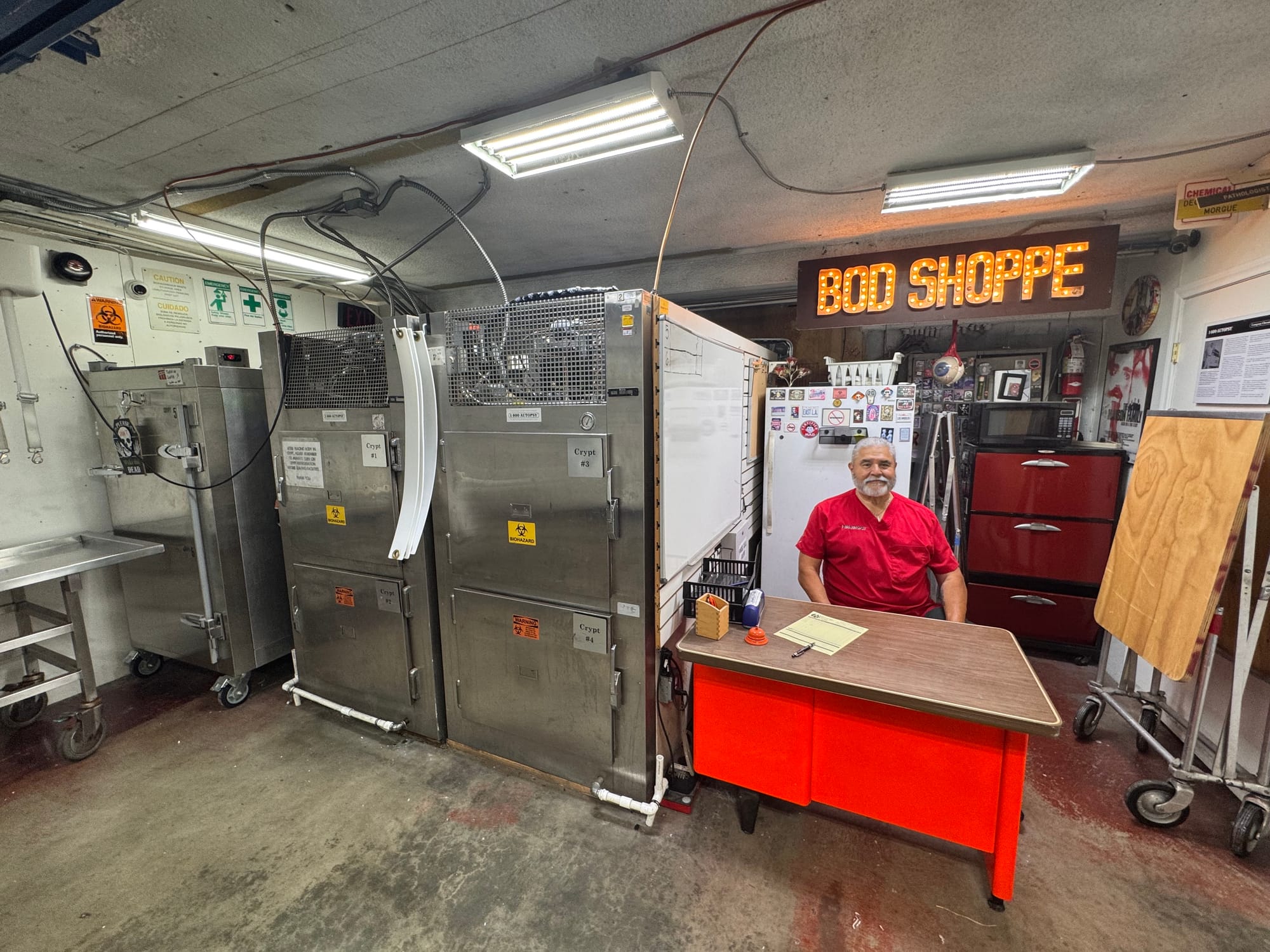
"I've had this company for the past 40 years," Herrera tells me. "We do about 600 autopsies per year – sometimes three or four a day."
Herrera sits behind a small red table, which sits next to five large industrial crypts. Behind him, a fridge and microwave.
He tells me he sustained a nasty back injury decades ago (he ruptured three discs in his spine lifting a dead body), ending his job with the coroner's office. He took his skills and started his own autopsy business in Los Angeles. This is America, where everything is privatised – including the death industry.
"Hospitals are no longer required to do autopsies, so now that falls on the shoulders of the medical examiner's office. And they don't have the resources, they don't have the manpower, nor do they have the facilities to accommodate all these bodies."
He’s right. Back in 2019, just before Covid hit, the Center for Medicare and Medicaid Services (CMS) changed the fine print, stating hospitals no longer needed to have an autopsy program to qualify for Medicare reimbursement. They claimed the old requirements were “obsolete or excessively burdensome”, something heavily contested by the medical community.
This isn’t the first time a ruling body has deemed autopsies are too expensive to bother with. During the 50s and 60s, if hospitals in the USA wanted to keep their accreditation they had to perform autopsies on 25% of their patients who died under their care. According to the Yale School of Medicine, when that requirement was dropped in 1971, the autopsy rate dropped dramatically.
"In the 1950s, hospital autopsy rates stood at about 50%, meaning half of all people who died in the hospital received an autopsy. By 1972, that rate had dropped to 19.1%. Today, pathologists estimate the rate to be as low as 5%."
It's not like other developed countries are cracking 50%. In New Zealand, around 12% of deaths receive an autopsy – but that's more than double what the US offers.
Herrera tells me it's only going to get worse. This past July, a new law passed in around 40 US States meaning nurses can now sign death certificates. While taking pressure off of doctors, it also means it's far less likely a death will result in an autopsy, because the case is opened and shut so quickly. “They're going to just rubber stamp the cause of death. We're not even seeing the patient. That's not right."
Herrera obviously has skin in the game, in the form of 600 bodies that pass through his facility every year. But in a field that's prone to gross negligence, ripping people off and preying on grief, Herrera strikes me as having his heart in the right place.
"We provide services for families, answers when a death occurs. The hospitals are no longer providing that. So we've been providing that."
The Horror Show
The first time I visit 1800-AUTOPSY (the official business name of 'The Bod Shoppe') I pull down an alleyway and creep along until I see a giant black gate adorned in razor wire. I text their office, and the gate slides open.
Inside, the first thing that strikes me is that this is not your average medical facility. It feels more akin to the Museum of Death on Hollywood Blvd, every inch of wall space filled with memorabilia about death. It's more teenager's bedroom than the crisp white walls I was expecting.
Framed posters of Hannibal, Friday The 13th and the Saw franchise greet me as we wind down corridors and ascend staircases. The walls and shelves are cluttered with a vast array of bric-à-brac that makes my head hurt. It strikes me as bad taste somehow, considering the serious work they do. Or maybe I'm just overly sensitive about death – making some arbitrary rule that death fiction and death fact must remain a healthy distance apart.
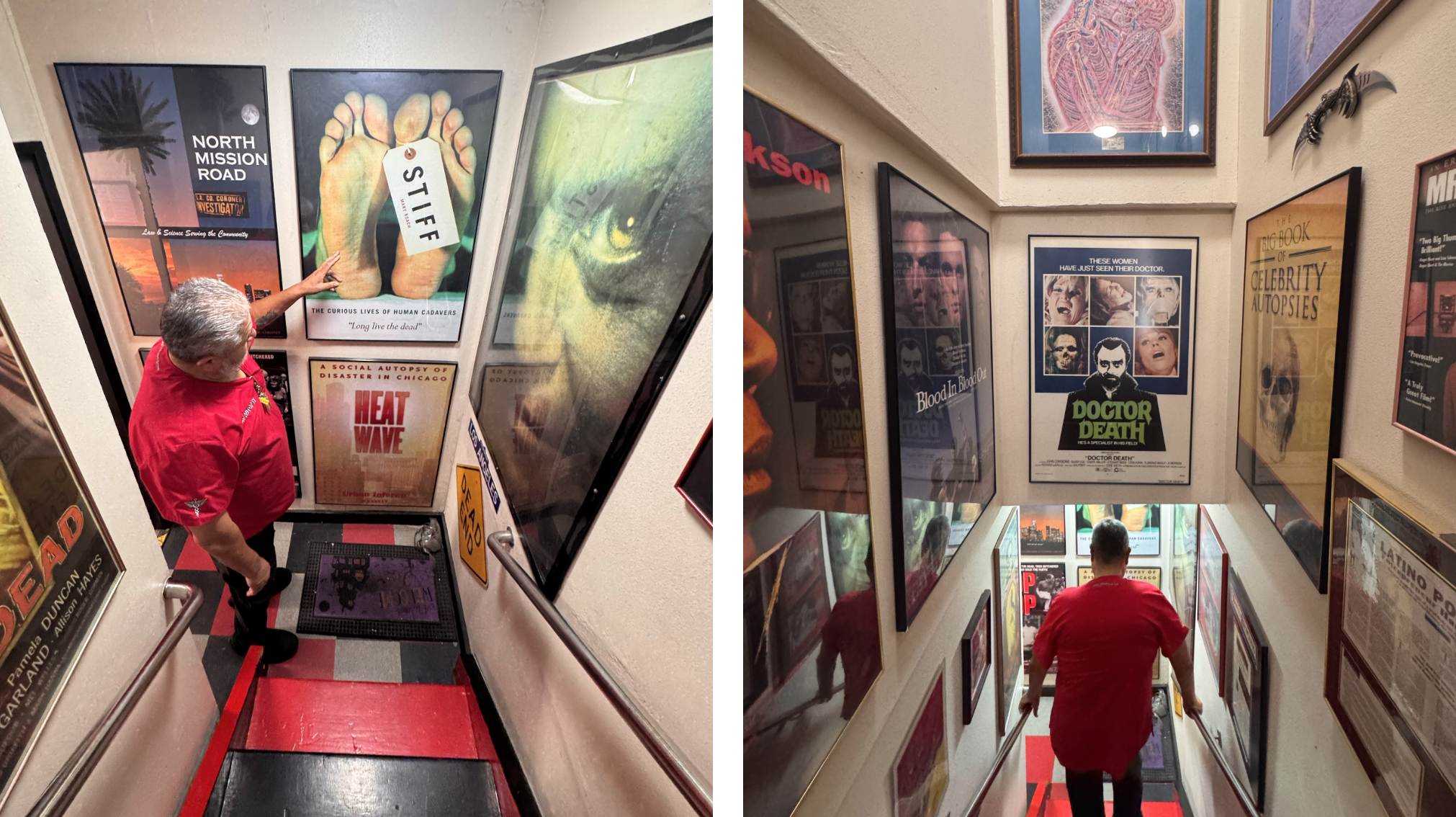
At 74 – and with a back injury – Herrera walks slowly and stiffly. When he sits to reflect on the last 40 years, he speaks with a careful intensity.
"It's been an extremely challenging experience," he says of his career. He tells me he originally grew his autopsy business out of Brentwood, one of the most affluent neighborhoods in LA. His PO Box happened to be across the street from the Mezzaluna, a restaurant famous for its links to the murders of Ronald Goldman and Nicole Simpson.
"Behind my PO Box was where Ron Goldman lived! So every day for 12 years, I would go to my mailbox to get the mail. And then when the OJ Simpson story broke out, I got a backlash because my company did all the autopsies for Johnny Cochran for years."
Cochran led the so-called 'dream team' that successfully defended OJ Simpson – and while Herrera didn't work the OJ Simpson case, his links with the attorney were enough to irk some locals.
"They were saying, 'Why don't you go back to East LA, we don't want you here.' So they keyed my car, they broke my windows, flattened my tires – and I told my wife, it's time to get out of dodge."
They purchased a property in Tujunga, but the same thing happened: "Go back to east LA where you belong, we don't want you here." I ask him if this was just racism, or if his line of work played into the vitriol as well. He pauses and wipes his brow. "It was a combination of both, but primarily it was because of race" .
He moved back to his childhood stomping ground of east LA, where we now sit.
"I went and asked my neighbors – a Chinese noodle company and custom shirt company – 'Do you have any objections?'
'No.'
So I got approval from the city, the county, and the state licensing to open this facility. So I've been here for 29 years."
He says he's had the same mission statement the entire time.
"When I started, one thing I learned reading business magazines – you have to stand for something. You have to have a mission statement. I didn't even know what a mission was!
So then I thought about it further. So our mission statement since 1988 is: 'The deceased must be protected and given a voice. Without a witness, they will be forgotten.'
We give them their voice, and we provide that closure, that information to the family:Why did the person die?"
A Grand Tour
I leave his office, and he shows me around the building. At the end of one corridor he proudly shows me all the old autopsy equipment he's collected over the decades. He tells me the tables used to be much smaller back then. "Bodies were smaller then," he claims.
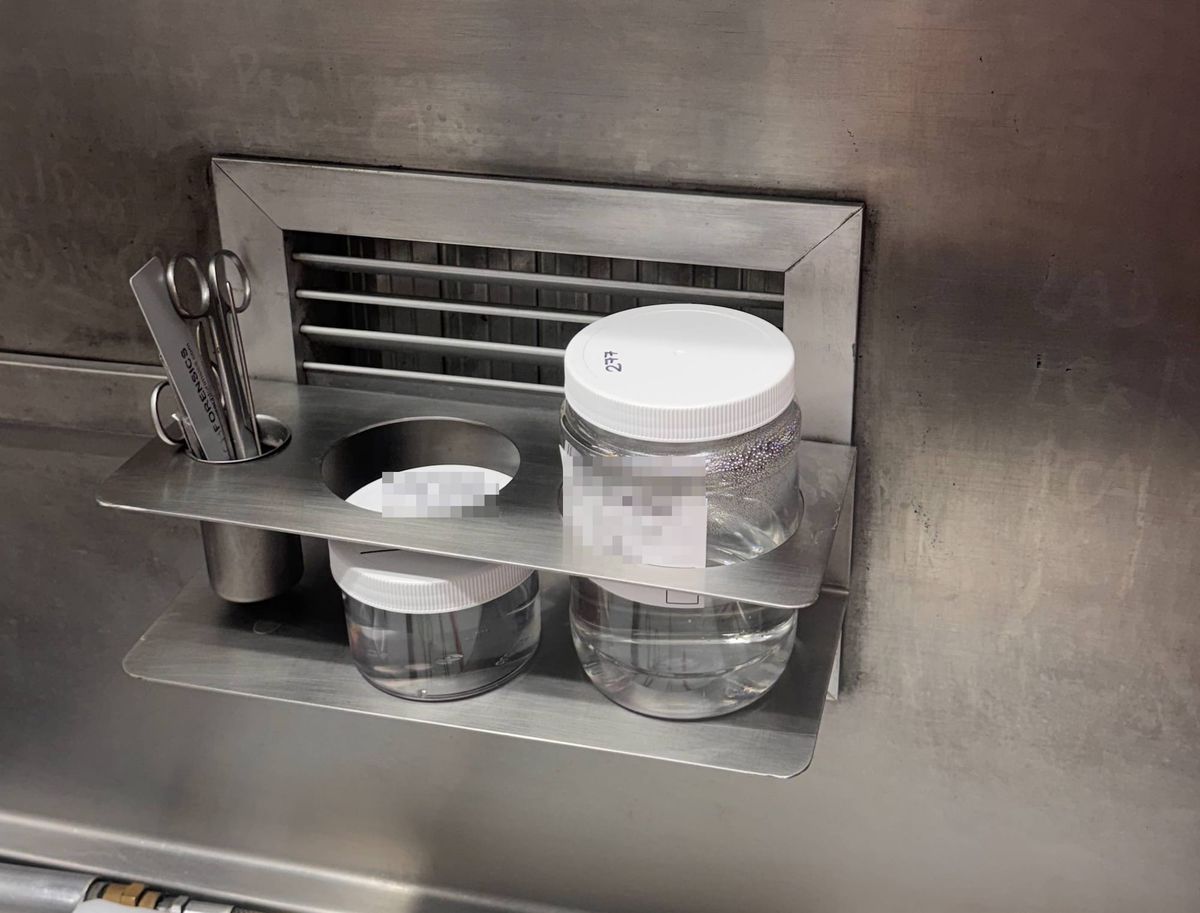
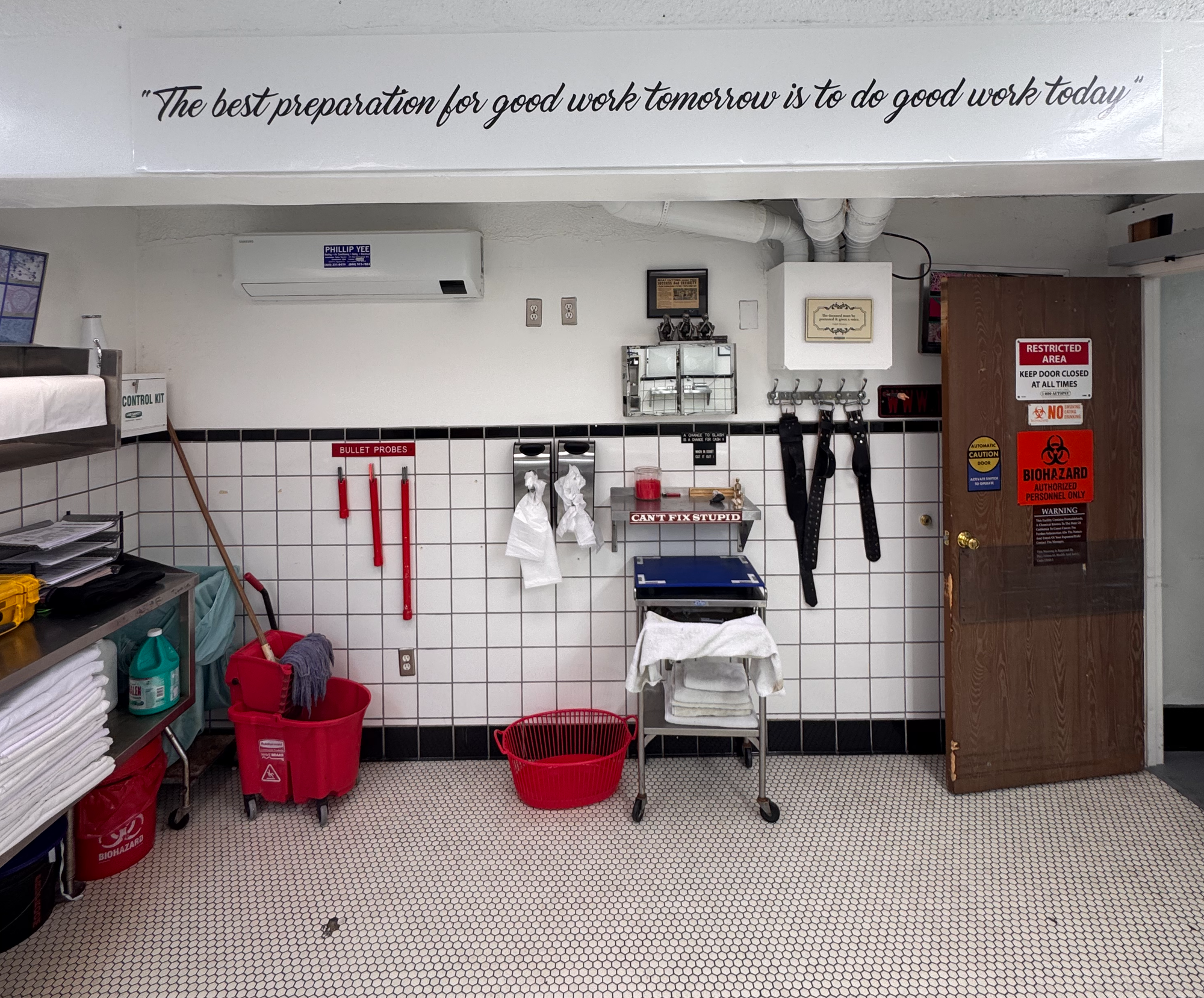
Down a flight of stairs and around a bend, and we end up in what I assume is the autopsy room. It looks just like a Hollywood set, bottles of coloured liquid adorning the shelves, samples of flesh bobbing in jars. Turns out, it is a Hollywood set used by productions who need an autopsy on screen. I wonder if he's making up for lost time: He tells me that in the late 90s a producer faxed him a script for a new show called CSI.
"They wanted to hire me as a technical consultant and I said, 'Thank you, but no thank you. I do real autopsies and I don't have the time.'"
Moving into the actual autopsy room, I'm hit in the face by the smell of chemicals. My eyes sting and I immediately start coughing. Herrera tells me some staff had just refilled some bottles of formaldehyde, and some must have gotten on the floor. The place is spotless. Most of the autopsies take place in the morning, and so at 2pm we're the only bodies in here.
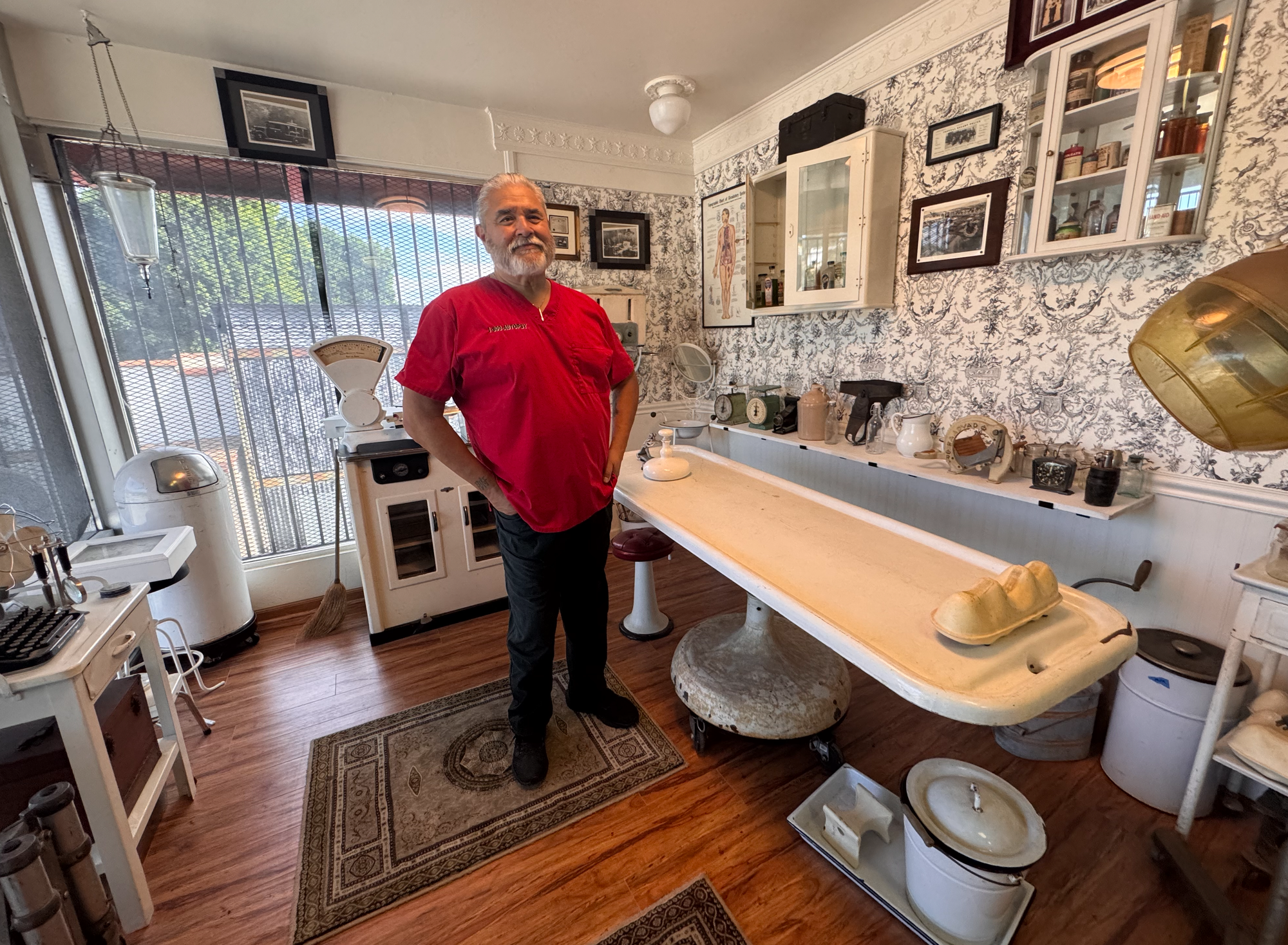
Herrera is never not talking.
"The first official forensic autopsy was Julius Caesar. He was stabbed. So they were able to determine the cause of death. So all throughout history, autopsies have played a crucial role in the advancement of medicine, tuberculosis, polio, all these things."
He tells me the worst cases are always children, before recounting a particularly harrowing child autopsy he took part in. He tells me, "There's a lot of charlatans out there. They do not know what they're doing. They don't have my experience, my knowledge." He tells me what "bullet probes" are (they help map the trajectory a bullet takes through a body) and about how quickly maggots can get out of hand. And then we move onto Covid.
"When Covid happened, they didn't know what it was. And when it came, the world was not prepared. The first official autopsy was done in Spokane, Washington. The second official autopsy in this country. We did it here in East Los Angeles."
I look online, and it checks out – a whole other complicated side story of how the US managed Covid that could (and has) fill a whole other feature.
A discussion about Covid deaths takes him back to a topic he keeps returning to: This idea that it's harder and harder to get an autopsy in the US. Again, I'm aware he has a business to sell. And again, I think he has a point: If the State is reluctant to check on the complications that led to someone's death, somebody has to fill that gap.
"720,000 people die every year as a consequence of medical malpractice. Well now that is swept under the rug and nobody knows about it. Now if you add that up – from 2019 to now, if you combine the deaths of World War II, the Korean War, Vietnam War, Afghanistan, you can even throw in 9/11.
Each year, with those combined, the death rate has increased. So from 2019 to now, if you add that up, that's 5.6 million Americans that have died as a consequence of medical malpractice, and nobody knows this. That is what the importance of autopsy is."
He says that often when a body arrives, it comes with a family who wants certain answers. They hope to explain away a suicide, or to blame a death on a certain individual or institution. Each autopsy costs between $4500 and $6000 ("we have bodies shipped from out of state, so a lot of it is just based on traveling logistics"). – and with that comes a certain level of expectation.
"Well, as we always say, everybody's different. Everybody has different issues. The family, they give us a lot of information. They tell us what they want us to hear. And we tell them, 'We don't need medical records. The body will tell us what happened.'
So as we begin opening the body systematically, we begin photographing everything, collecting the tissue. And obviously, when you see a heart that's 800 grams, when a regular heart's only 400, there's a heart condition. You see adhesions in the pleural cavity and right there, that's cancerous tissue. The person died of pneumonia."
The families who order the autopsies are not always pleased with the answers they get back.
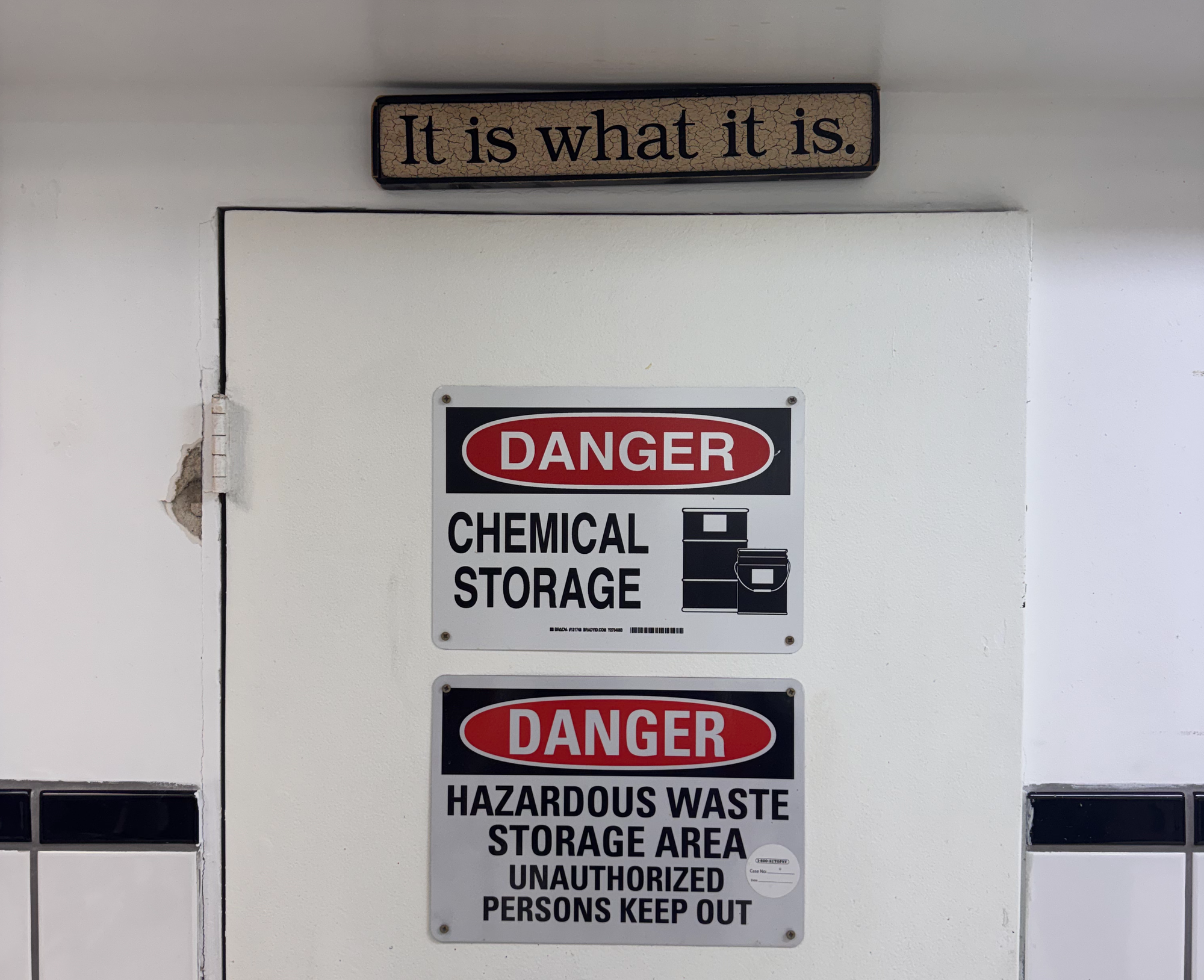
"Yes, many times they're very upset to the point where they actually cancel the credit card and stuff like that. We have to go to a small claims court! And as the judge says, 'They filled their contractual obligations. They provided you with an autopsy, they gave you the report. You may not like the findings, but as they say, it is what it is. You have no case.'"
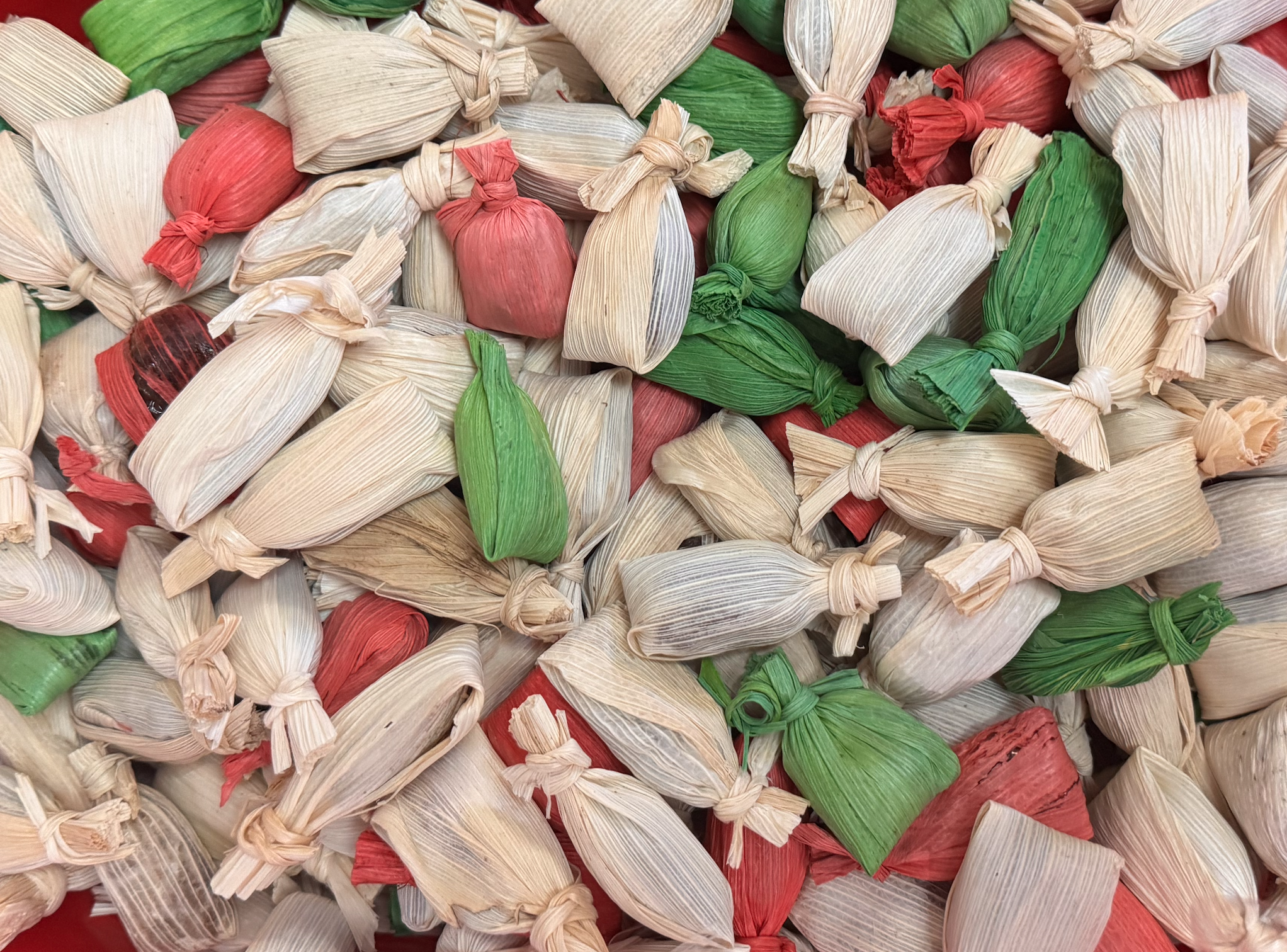
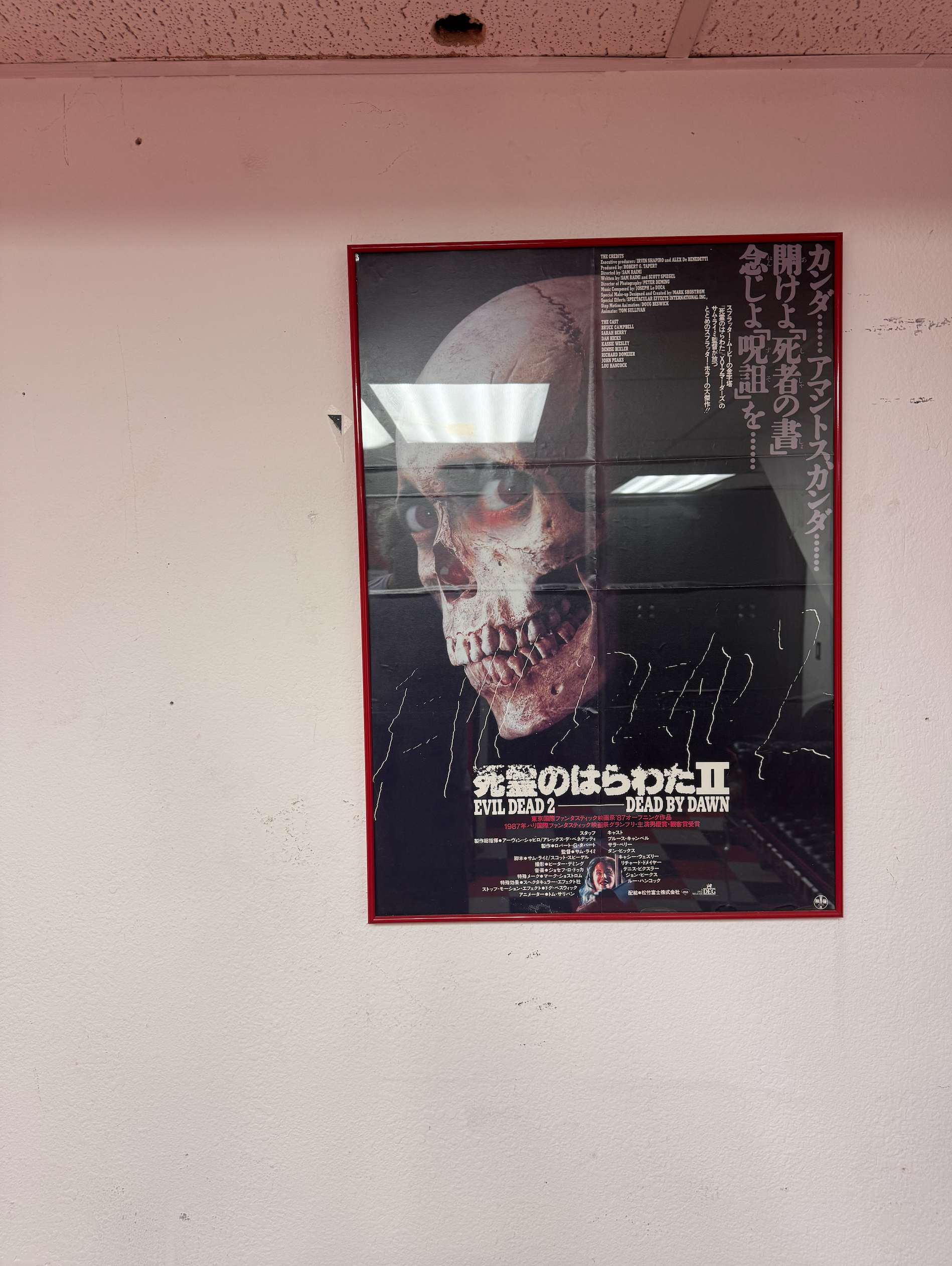
He tells me he sees legal action against him around five or six times a year (it's manageable, and he wins) before leading me into another room, where he's preparing to pack local Halloween candy in coffin-shaped cardboard boxes. He proudly points out an international Evil Dead 2 poster staring at us from the wall.
I decide that a tour of 1800-AUTOPSY is experiencing a form of whiplash: Death one second, candy the next.
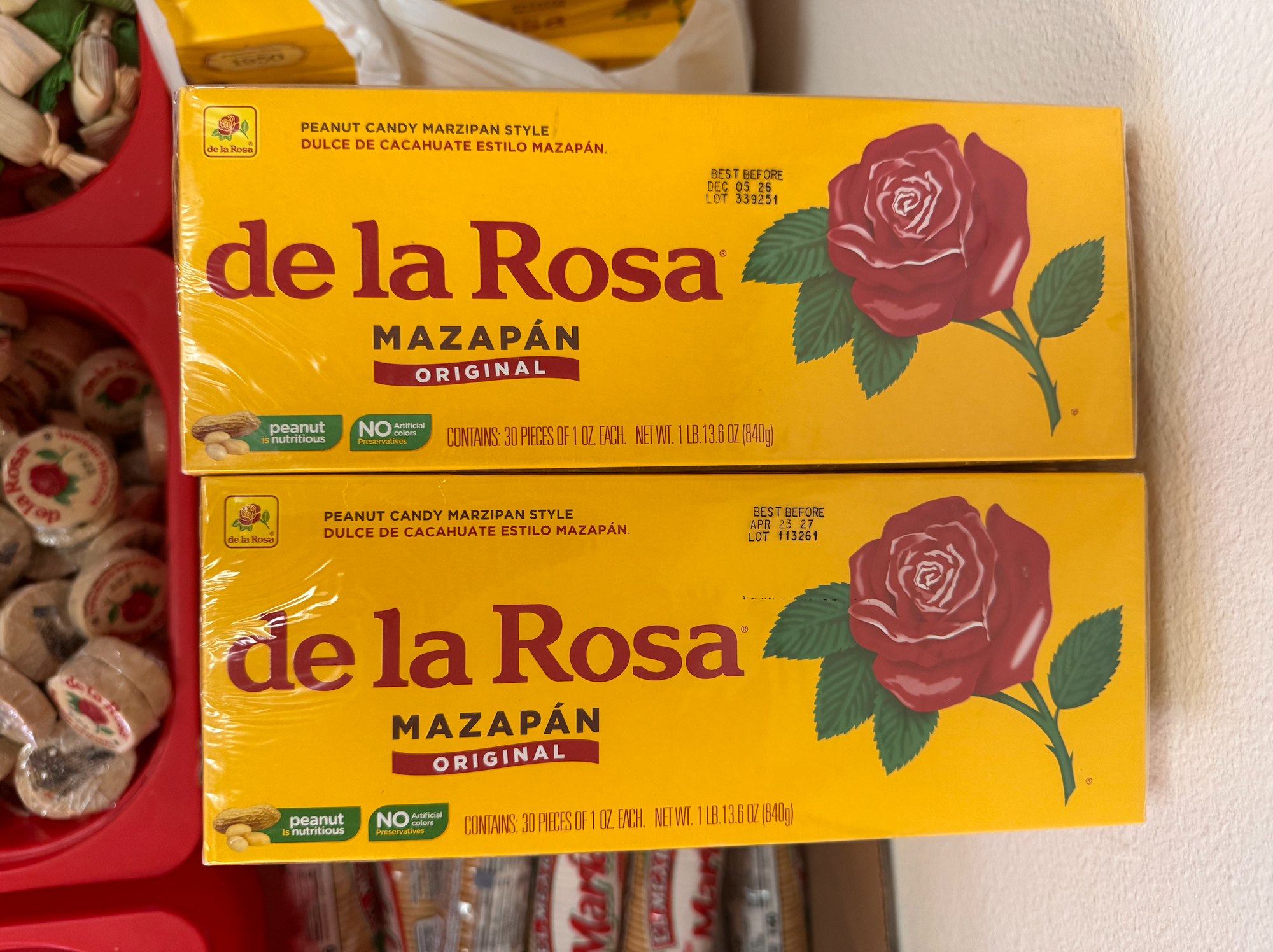
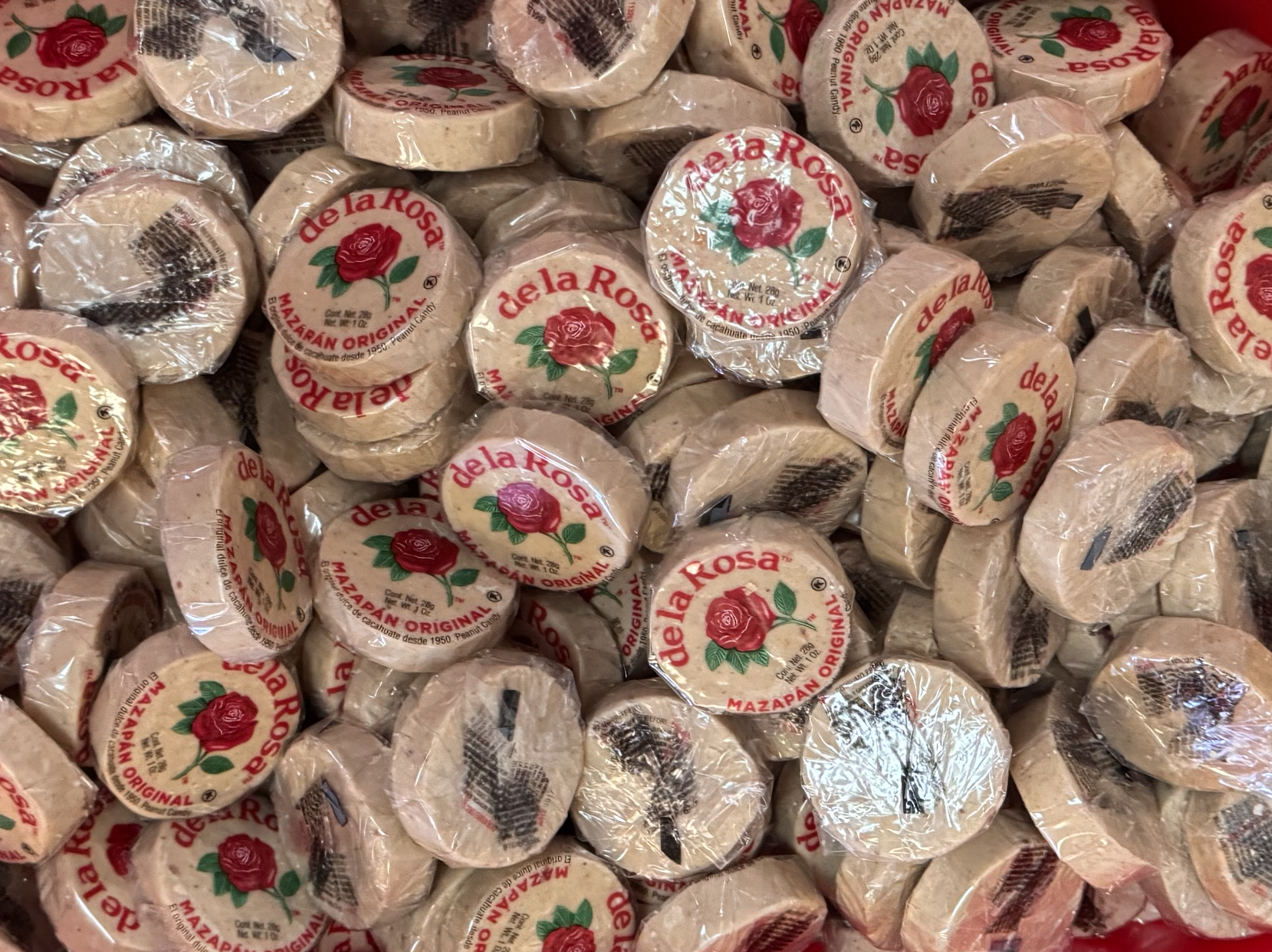
Herrera is about to turn 75 and tells me that he's transitioning to retirement. He's lost four relatives and six colleagues over the last year. "I tell my kids, ‘Mom and I are gonna be next.' My day is gonna come, just like anyone else."
I've made a few trips out to see Herrera over the last few months. Satisfied with our conversation and photos, I prepare to head off for the last time. Then he invites me to come back again. "You need to see what we do here," he says with a wry smile.
The Cutting Room Floor
As the familiar black gate slides closed behind me, I'm led inside by an autopsy technician and given a pair of blue surgical booties to cover my Crocs. I'm told the floor is kept clean, but during an autopsy you "never know". I'm taken into the room that stunk of formaldehyde on my first visit – this morning it smells like a stale hospital ward.
In the corner, a naked body lies on an autopsy trolley.
Another assistant wheels the body into the middle of the room, where it's placed on the main fixed autopsy table. The table has a raised perimeter rim so nothing slops onto the floor, and a moat trails around the edge so blood and other fluid don't pool around the body.
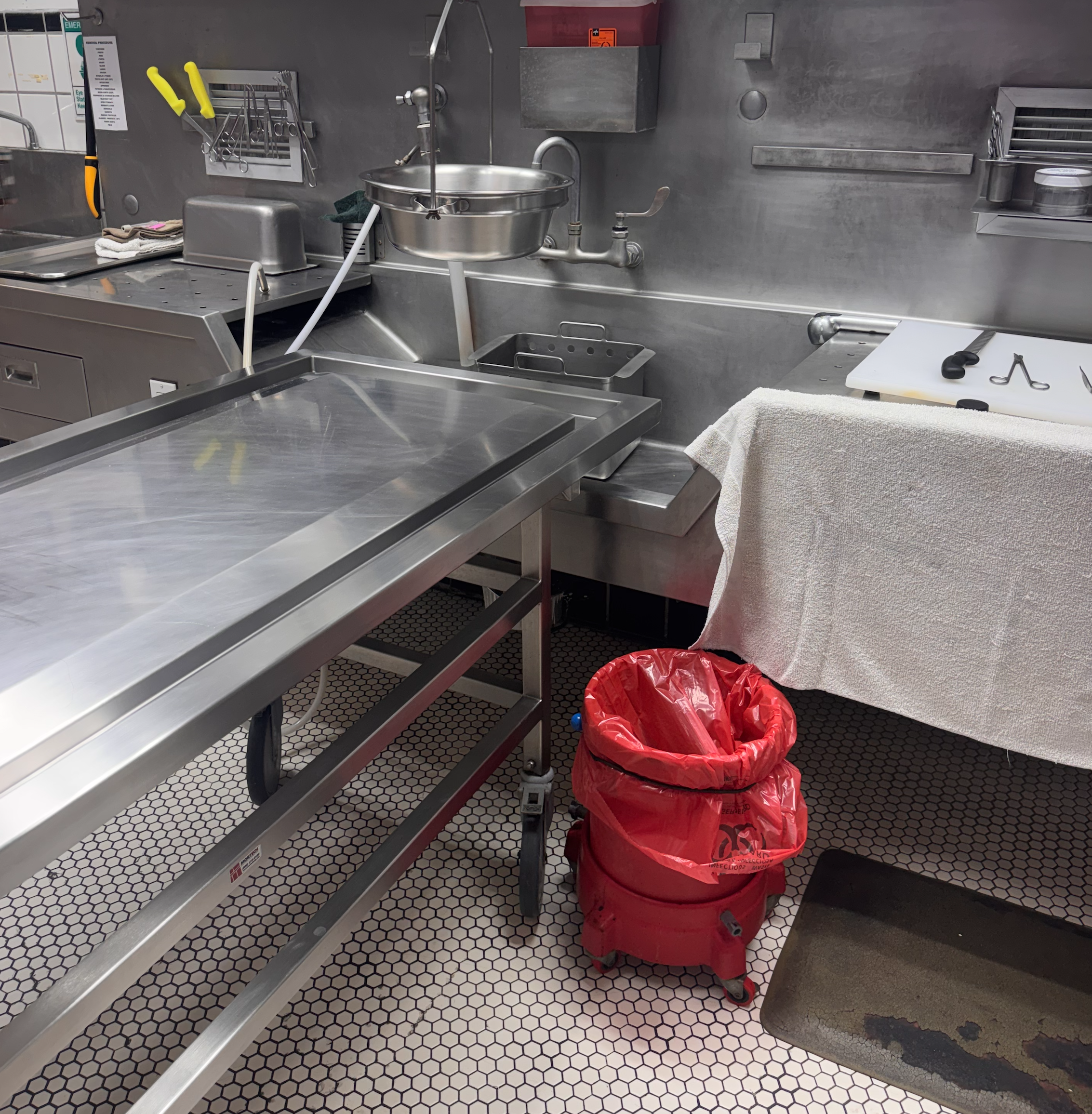
I'm struck by the feeling that I'm not meant to be here. It feels either too clinical, or too personal. I can't decide which. I assume they've asked the family's permission for me to be here, but I also don't want to ask.
The body looks like the body I've seen in 1000 crime shows – but the face makes it difficult. This is a person, not a prop – and I can see every hair, pore and pimple. The dead person looks like they were kind. There are so many details about this individual seared into my mind, but I'm limited in what I can write. Their gender, age, and medical history make them too identifiable.
What I witness over the next few hours are more graphic than I expected. Everything is just so wet and damp. It strikes me that the inside of a body is normally pitch black, but here the most intimate details of these hidden places are suddenly exposed with alien fluorescent lighting.
All three people performing the autopsy are respectful, and incredibly eager to share their knowledge – especially the lead pathologist. They're all clearly passionate about their job.
They cut through the skin and fat to open up the chest, followed by the abdominal cavity. They explain each step, and what they're learning along the way about the possible cause of death. "It's like a box of chocolates. You don't know what's inside," the pathologist tells me.
"Forrest Gump," I reply. He looks confused.
Suddenly, somehow, I become the student. I'm handed a pair of what look like gardening shears, and told to cut through the rib cage. I realise this is exactly how the technician next to me would have learnt this stuff. There's no course to become an autopsy assistant – you learn on the job. I do as I'm told, and in the small room of stainless steel and tiles the crunch is very loud. The world wavers.
Piece by piece, organ by organ, the body becomes hollow. Every fleshy, soft, wet piece of what makes a human is extracted, prodded and weighed. I feel a combination of awe and disgust. As various liquids pool and move, a hose is used to wash and clean. I remember watching my parents cook as a kid, and how they'd wash as they go. "Less mess at the end," my mum would say, smiling.
I've been worried about the head, and eventually it's time.
The tech makes a careful incision from ear to ear, the scalp peeling back like a banana skin to reveal a shiny white skull. A handheld oscillating saw cuts through the bone, and a section pops out like the lid of a tin can. I take a moment to sit down, the world swimming around too much for comfort. The brain – now out of its cage for the first time ever – is offered to me. It's much softer than I imagined it to be. It's weighed and dissected, samples quickly placed in a tissue cassette.
When the autopsy is complete, the bag of organs that have been accumulating in a bucket on the floor are sealed in a plastic bag, which is then placed inside the body cavity. Everything that arrived with the body leaves with the body: Some religions require it, plus they're saving on biohazard disposal fees. The gaping torso and scalp are folded back into place and sewn up with thick brown twine.
From here, the body will head to the mortuary. If there's going to be any kind of viewing, the mortician will work their magic and make it look like none of this had ever happened.
99 Ways To Die, Choose One
I ask the room if the job has changed the way they think about dying and mortality. "I think it's going to happen when it happens," comes one reply. "It's shown me we need to stop making death so taboo. This is what happens when you die, this is blood, this is trauma, accept it. It's literally gonna happen to all of us."
The other tech – in this job for the shortest time, two years – says it's definitely changed her. "I used to have a fear of it, of death. But now I'm like, 'It comes for us all.' I don't really fear how I'm going to die, or family members if they die. She pauses. "But it does desensitize you, like, I will say I've changed that way, too. And I'm not sure if that's a good thing or a bad thing. I used to be more empathetic, I think."
The pathologist has been listening, and finally speaks up. "I've been doing this for 35 years, 17,000 cases. There are so many ways to die. It's almost endless." He says this in an undeniably chipper voice, like a man talking about his baseball card collection. He tells me he has a story: "I call it the case of the man who wouldn't die."
He says it happened when he was working in the coroner's office in Pittsburgh.
"There was a young man, he was in the suburbs in his house. And when he sees his friends, he starts talking about his terrible depression. He lost his job, he was divorced, he was not eating well, and he was depressed. So, he said, 'You know guys, I think I'm just going to kill myself.'
So he picks up a bottle of valium, and he takes the beer and drinks 50 valium. And then his two friends go, 'What the hell?'
And he got really pissed because he's not dying. It takes time, it has to digest.
So he's pissed, so he pulls out his shotgun, puts it up to his chin, pulls the trigger, and he blows his face off. But it doesn't go into his brain. So he blows his face off. His tongue, his eyes are gone. And now he's even more pissed, because he's still not dead, but he's in massive pain.
So now his friends go, 'Holy shit, we better call 911.' So they call 911, they send a helicopter, they get to him in like four minutes, put him on the gurney. And he's flinging his arms, he's screaming, and he finds that big steak knife and he stabs himself three times in the chest and leaves the knife there.
So now this guy's got a knife in his heart, and his face is blown open. They get him to the emergency room, and they put an endotracheal tube down, and 20 minutes later or so, he dies. From a valium overdose."
He tells me he uses it as a teaching case for his students. He shows them the damage, piece by piece, asking what the cause of death is. No-one guesses it was the valium.
It makes me think of what Vidal Herrera told me at the start of all this: "The body will tell us what happened."
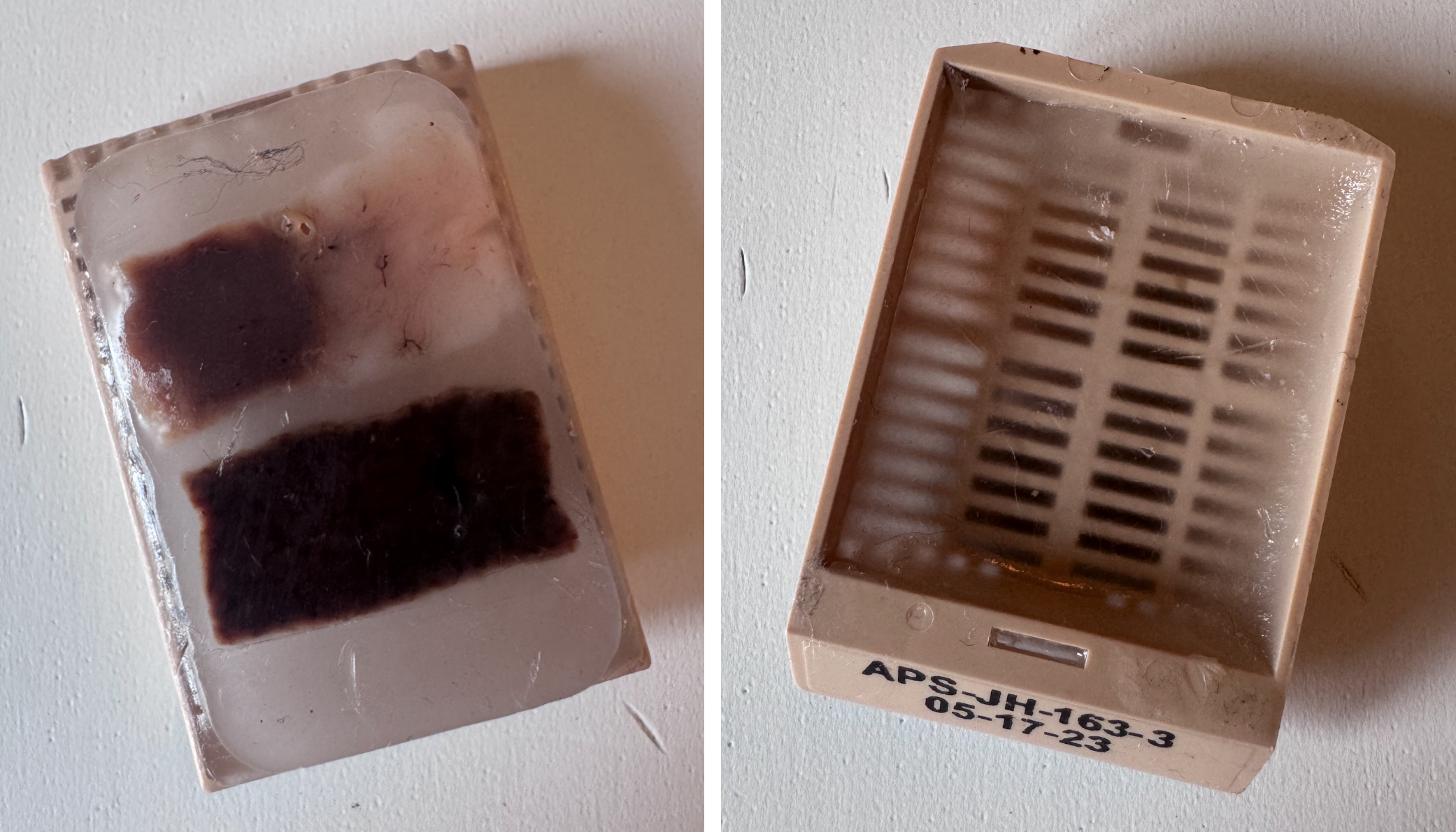
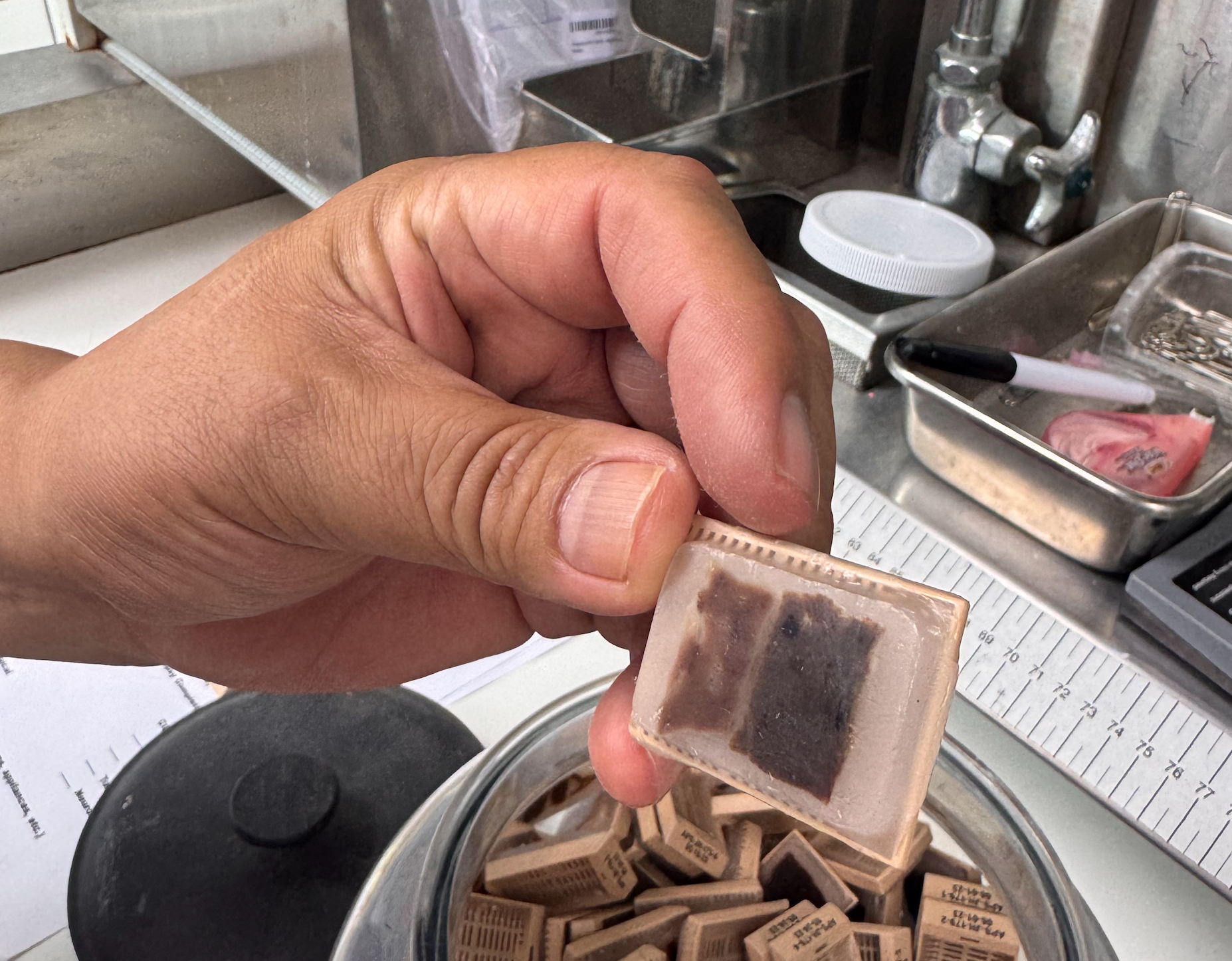
The last time I'd seen him, he'd handed me a small object to take home. At the time I hadn't fully understood what it was, but after seeing an autopsy I realised it was one of the tiny tissue cassettes they send off to the lab. The one Vidal had handed to me was sealed in wax – but you can still see the tiny slice of human flesh inside.
I'm not sure if the last few months have eased my fears about dying. If anything, I've been reminded of the myriad of terrible ways in which it could happen. The one comfort I've walked away with is that people still care about the dead. The fact autopsies exist is somehow a comfort. Even if the surrounding corridors are adorned with Saw posters.
I don't know who the tiny slice of human flesh belonged to, and I don't know how they died. But it sits here next to me at my desk, reminding me of what's coming, and that people care.
It's almost endless.