Zach: Folie à Deux
Before Claude & ChatGPT, New Zealand had Zach. Webworm revisits the key players.

Hi,
Five years before we’d ever heard of ChatGPT, New Zealand was going bonkers over its own miracle AI, Zach.
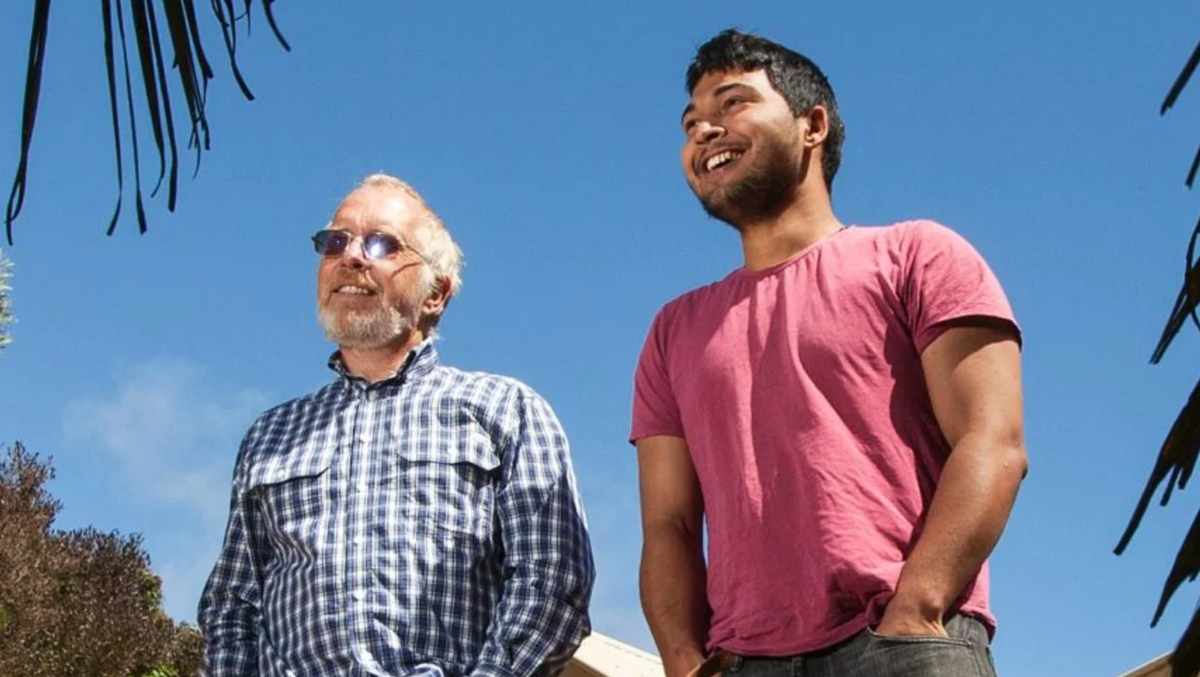
It started in 2017, when New Zealand’s biggest online news outlet Stuff wrote a gushing piece about 25-year-old Kiwi entrepreneur Albi Whale, who’d allegedly spent $60,000 to “barrel roll a car” and planned to give away “millions” to charity.
Towards the end of the article, Stuff threw AI into the mix:
Whale says he has been up all hours training his new digital assistant – an artificial intelligence system which will be his next big thing. An Apple Siri that really works.
[...]
Codenamed Project Artemis, Whale says it is so human-like in its learning capabilities.
Adding validity to Albi’s invention was his father, David. David Whale was often found on the boards of the various companies his son had created, and would go on to back his son’s claims about what his AI could achieve.
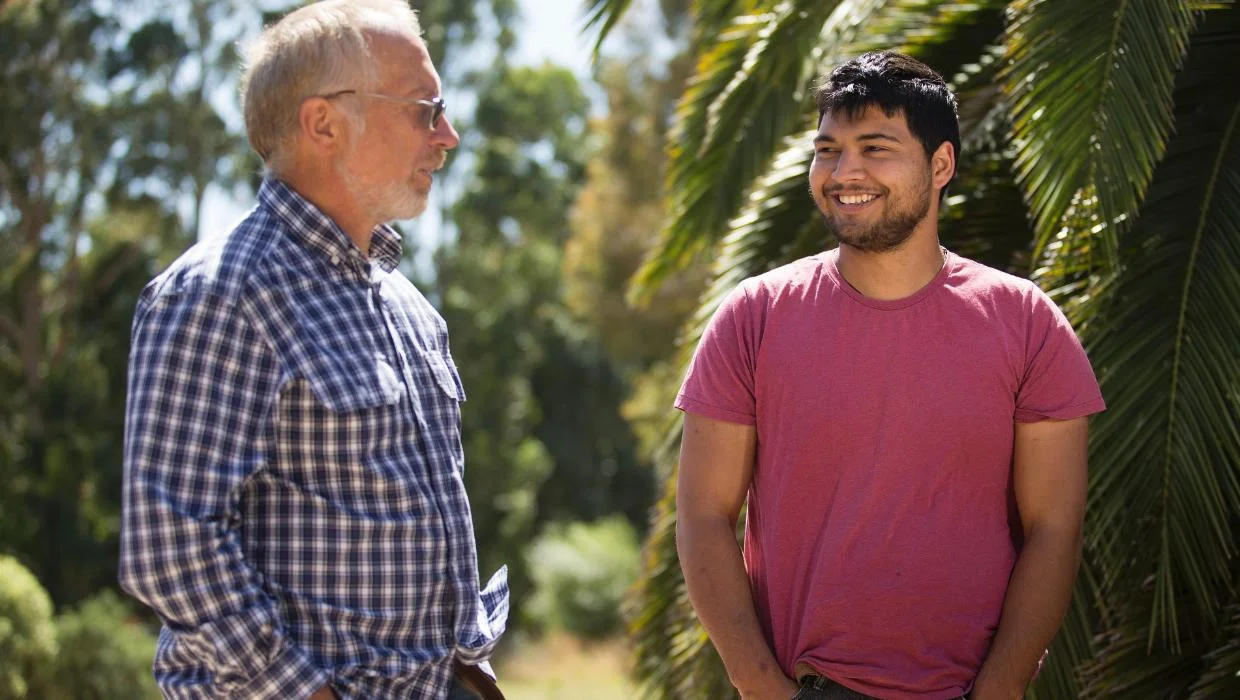
Six months later, Stuff wrote a second piece about this AI system from the father-and-son team. By now, “Project Artemis” had a more human name: “Zach, a supercomputer that can hold conversations, is coming to Christchurch.”
The article following that headline was also quite gushing:
It runs an international company, helps manage a doctor's office on the side - and soon "Zach" will be the face of artificial intelligence (AI) in Christchurch. Zach is billed as one of the world's most powerful supercomputers, an AI system that interacts with people like they do each other.
Reading the article in 2026 is surreal, as it could just as easily be talking about the generative AI of Claude or ChatGPT. But this was 2017 – and I was deeply suspicious.
At the time, Zach was being trialled in a doctor’s office – listening to patient consultations, and making summaries: “He can listen to the consultation, capture the very essence of the words and record them in a recognisable form. It works," Christchurch GP Dr Rob Seddon-Smith told Stuff confidently.
I didn’t buy it.
During 2018, I wrote two articles for The Spinoff (this was before I’d launched Webworm) – here and here – digging deeper into these AI claims, talking to Seddon-Smith about this AI he was supposedly talking to:
“The initial project was to see if Zach could create clinical notes, from just listening to a consultation. Which is pretty amazing when you consider no other technology can do anything like that,” he enthuses.
“We start by getting patient consent. We explain this is this really weird thing we’re doing, and do they mind? And as long as at the end of the consult myself and the patient agree that the patient is non-identifiable, we upload [the consultation] to the machine… and the machine returns notes.”
Seddon-Smith tells me it’s his job to “train” Zach. So when patient notes come back with errors, he feeds back tips and reference material to Zach, and Zach will learn. “It cannot just do analysis of data, it can apply judgement, according to how it’s trained."
I ask what the interface looks like. How is he interacting with Zach?
“Oh, email.”
“Email? You just email it?” I ask.
“Yeah, you email it.”
I was stunned. The AI would often make spelling mistakes, and take varying amounts of time to reply: Sometimes it was 20 minutes, sometimes it took a day.
In my mind, it was very clear the doctor was just sending stuff to 25-year-old Albi Whale, who would process the notes himself, and send back his thoughts.
I was alone in my skepticism.
A source in the healthcare system told me David and Albi Whale had “impressed many senior health professionals in New Zealand”. The Canterbury District Health Board confirmed their interest. They are “yet to meet with them, but are planning to.”
Dr John W Pickering, an associate professor at the University of Otago, was also working with Zach. “Last Friday I sent my first email to an intelligent machine called Zach. Zach is a distributed machine running on custom silicon and software,” Pickering wrote on his blog late last year. “We aim to teach it to perform another common task, namely that of interpreting the electrocardiogram. If Zach can interpret these as well and more consistently than most physicians it could be a useful tool for the busy physician.”
I got Professor Pickering on the phone and confirmed he had a research group working on it. He rejected any skepticism that he was in the process of teaching an intelligent machine how to interpret patients’ ECGs. “I am absolutely using it and thrilled to be using it,” he told me.
When I told Pickering that it had crossed my mind he might be emailing back and forth with a person, he responded by asking if I was a conspiracy theorist. I told him I wasn’t.
Meanwhile, Seddon-Smith was trying to get more money out of the board.
“The board didn’t originally believe it could be used in the healthcare space. I have had to demonstrate that it can,” says Seddon-Smith, who estimates a quarter of his time is spent dealing with Zach.
“So the board is on board now?” I ask. “Oh yeah. They’re on board now. They’re supporting it. They’ve granted us – I can’t say how much – but millions of dollars worth of access to the system. To develop this. It’s not cheap. This isn’t something you can run on a Raspberry Pi. It’s several hundred tonnes of liquid nitrogen cooled supercomputer.”
Custom Silicon. Several hundred tonnes of liquid nitrogen cooled supercomputer. Zach was a colossus.
Of course, all this turned out to be a big load of hogwash.
Following my two articles, a two-year investigation by Internal Affairs found that the Whales had engaged in “serious wrongdoing”, with the trust providing “inconsistent, misleading and untruthful answers”.
David and Albi Whale’s office was found above a bike shop in Christchurch at the time, nonsensical mathematical equations scrawled on the windows for all to see.
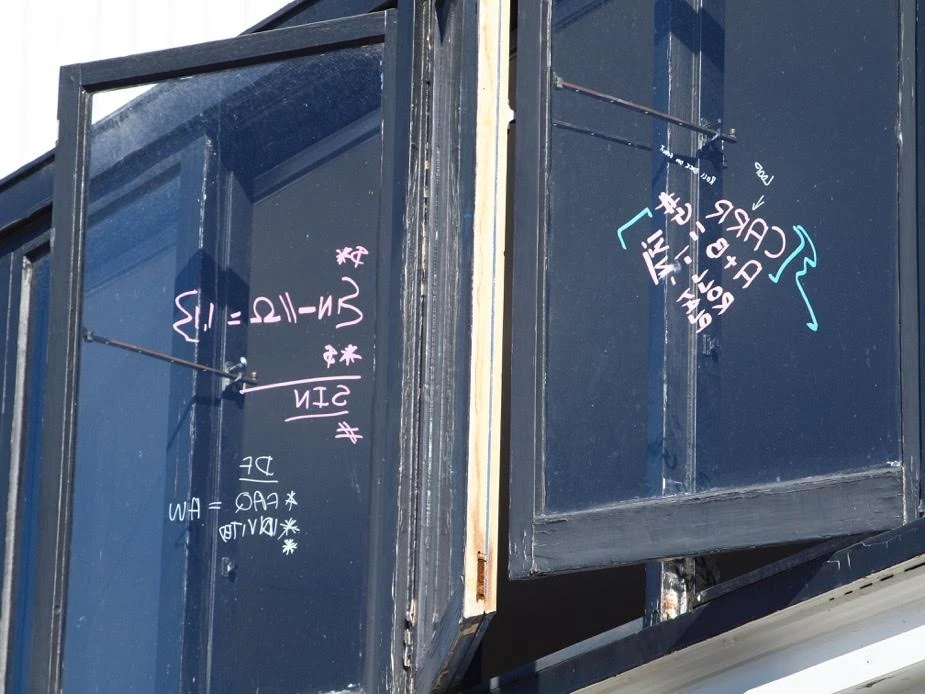
The Internal Affairs investigation was riddled with comedy and chaos, as David and Albi Whale told investigators a “sentient AI” was involved in the investigation, saying many of the emails IA's were receiving in response to their inquiries were now coming from Zach.
Investigator: So in regards to the emails from the artificial intelligence, we have noticed similarities between your email communication and the artificial intelligence emails. Can you explain?
Albi: Without showing me I don’t know.
Investigator: There’s a lot of um, similar wording and phrasing, spelling mistakes, the artificial intelligence is quite emotional, um and quite angry.
Albi: Again, again without showing me I can’t really tell you.
Investigator: So if we were to challenge the validity that you actually have [an] artificial intelligence …
Albi: Well feel free I don’t mind.
Investigator: But how do you prove to us you do?
Albi: I don’t know to be perfectly honest. Frankly I’m not really that worried.
A great deal of Internal Affairs’ final report consisted of calling bullshit on the Whales' claims.
Buried in their report, I also discovered what Zach convert Seddon-Smith thought of me: “He’s not frankly the sharpest deck in the pack is our David Farrier,” the doctor told investigators.
“I do believe he’s genuinely well-intended. He has emailed me trying to persuade me. He believes what he’s saying. I don’t hold anything personally against him though he might find a ton of horse manure delivered to his house.
Just as a joke.”
Looking back on this AI-scam is surreal in the light of 2026, where Zach now essentially exists, for real. I’m not entirely convinced today's LLMs are much more helpful than a 25-year-old furiously typing back responses. In my mind, it’s simply a different kind of con.
But I was curious what the players in the Zach story made of things now, nearly a decade on.