"DyingToServe" Doug Has Died
Doug Ruch has died in NZ - a tragic end to a tragic story.
Hi,
I'd rather not have to be sending this particular Webworm today – and I've gone back and forth on it – but I think it's important.
Doug Ruch, the man I wrote about in December last year, has died in New Zealand. I knew this myself back in January (it's now officially listed here), but was hoping to find more details before passing this information on.
But yesterday, The Guardian published what I think is a really good, nuanced piece about Doug's death – which I suggest you read.
I am still processing it.
Journalist Ramon Antonio Vargas states what I just stated: We don't know how Doug died, but we know it happened on December 17 (New Zealand time) – the day after I published my piece exposing Doug's extensive history of raising money on GoFundMe.
 David Farrier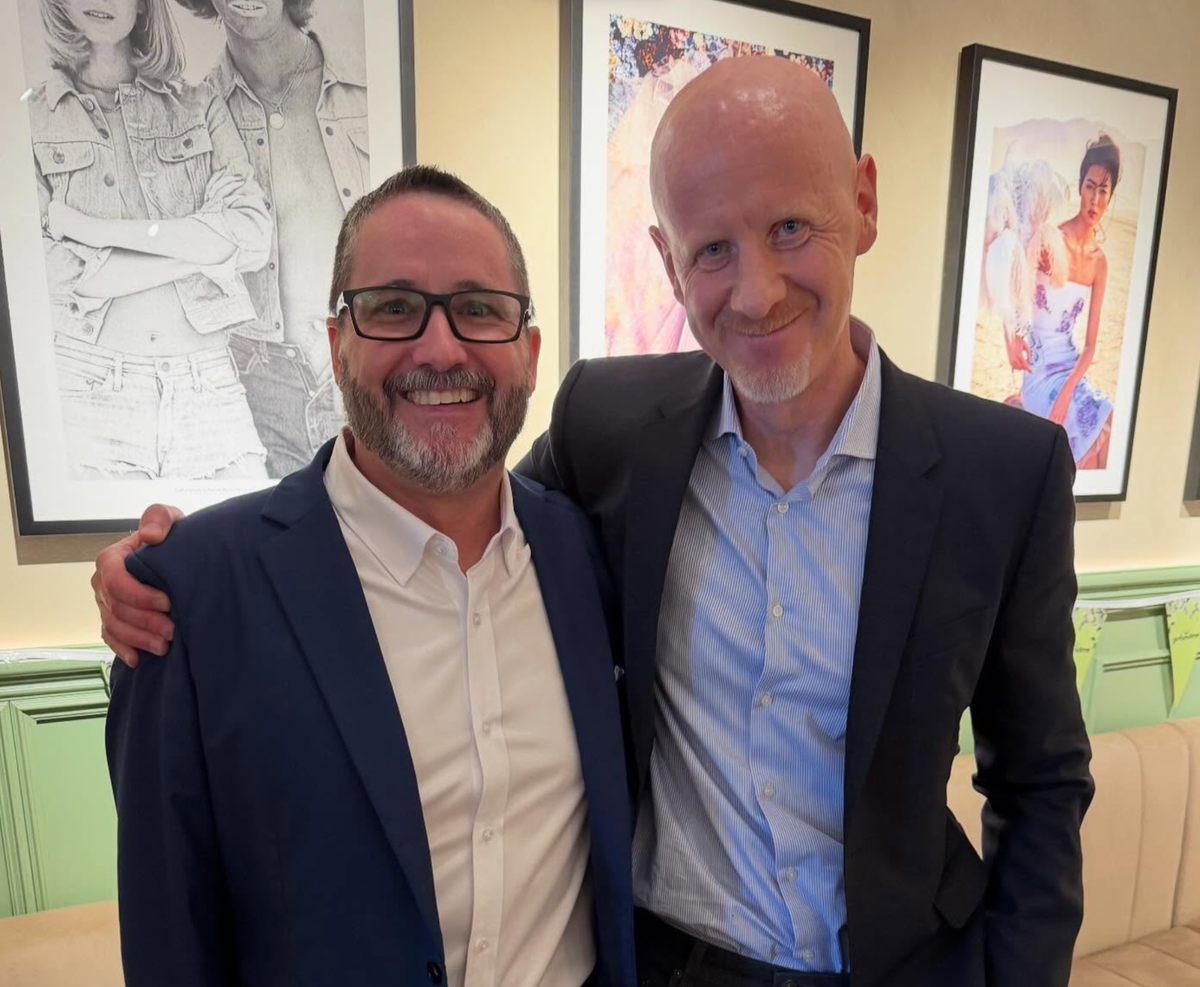
Vargas wrote about how The Guardian had reached out to Ruch after initial scepticism about his latest GoFundMe campaign had surfaced online (and before my piece was published):
The Guardian contacted Ruch in early December [2025] about his response to the allegations which called to mind the infamous Scamanda cancer hoax. Ruch was also asked about his alleged terminal cancer diagnosis.
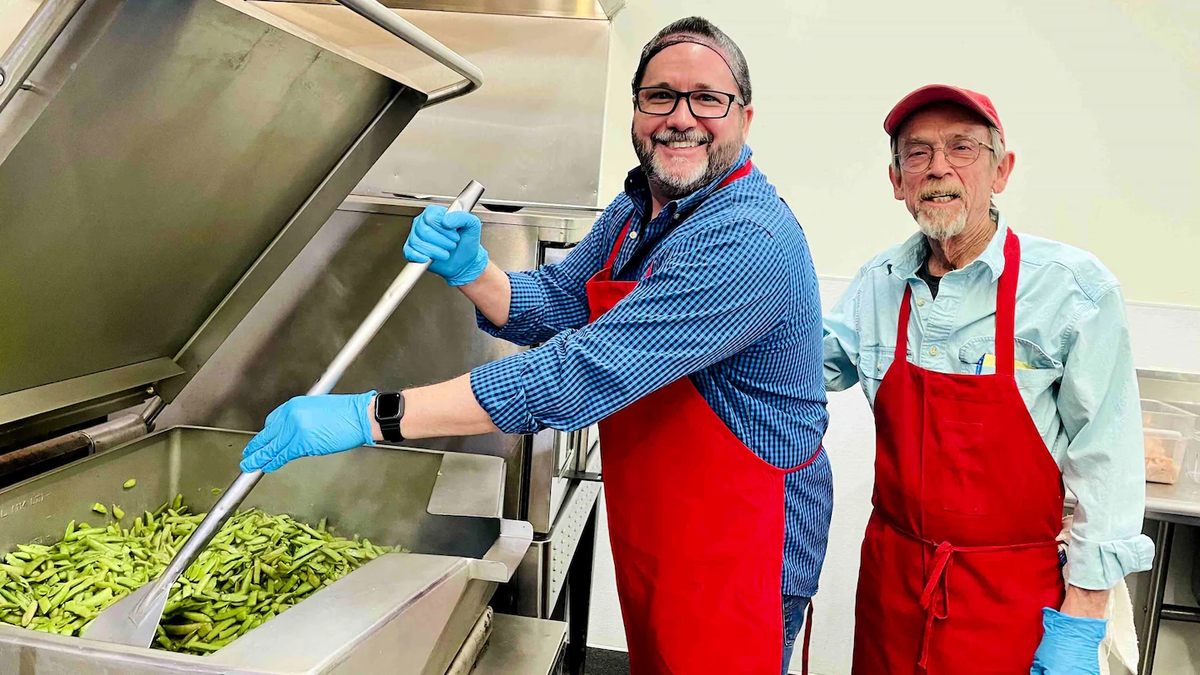
He replied with a series of text messages maintaining that he indeed had cancer, could die within a month to a year, and used the money raised on GoFundMe as promised. He added that would die with his “head held high” after he said he helped 35 non-profit organizations in 32 US states.
But he said “fuck no!” to sharing any diagnosis records, writing: “I don’t owe any of these haters anything and refuse to bow to the bullshit.”
Shortly after Doug had said that to The Guardian, I published my story – 'Beware of Doug' – detailing his history of dicey GoFundMe fundraisers. I thought this was important, given he was coming to New Zealand next. I thought it was important that people knew his history, given he was asking for money. I still think that.
That doesn't change the fact that this is objectively horrible news. It's horrible when anyone dies. Doug obviously had a troubled history. While estranged, he had a family.
Doug was 56. He was cremated last month, his ashes laid to rest at the North Shore Memorial Park cemetery.
Questions Remain
I imagine The Guardian covered Doug's death because they were one of the big outlets who promoted Doug's last big GoFundMe campaign in the first place.
I can understand why they covered it: It was a positive, feel good story. We need that. Add to this the fact GoFundMe often actively promotes stories like this. They back them. And GoFundMe is, historically, quite trusted. They are perceived as doing good work.
Doug's campaign went on to raise over $134,000 USD – money which ended up getting Doug to Australia and New Zealand last year.
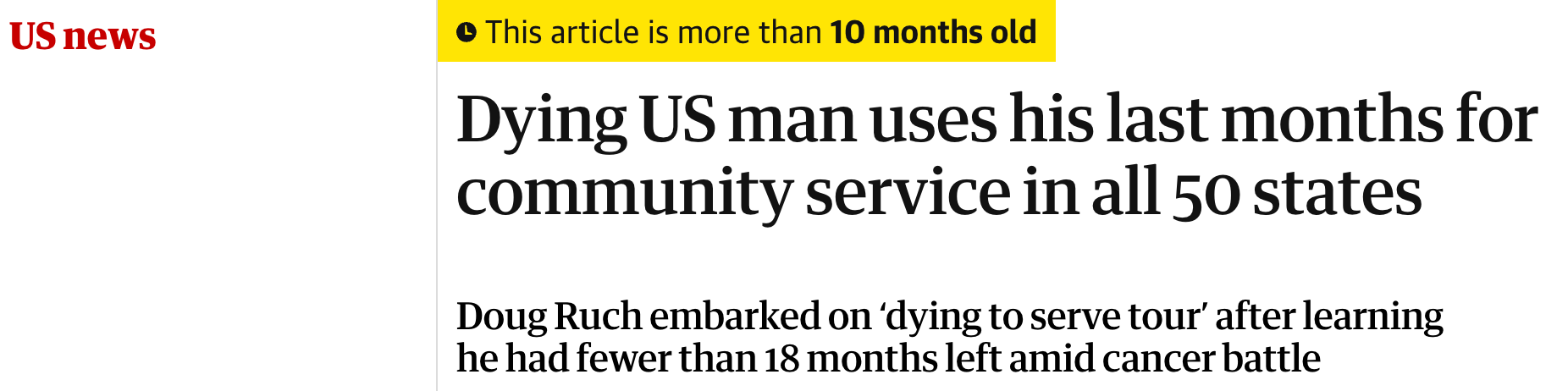
In yesterday's story, Vargas went into some more details about The Guardian's interactions with Doug Ruch:
Some of Ruch’s last correspondence with the Guardian mentioned strained family relations, mental health struggles and past “suicide attempts” unprompted and without elaborating.
“I’ve never claimed to be a perfect person,” he said in one message. “I have many regrets in life, but what I’ve done since [the start of the tour] isn’t one of them.”
That brings to mind correspondence I had with one of Doug's former victims, which I published on Webworm on January 10 (before I knew Doug had passed away):
"I was scammed by Doug in 2022. I was relocated by my company in 2020 to Texas, during Covid. In early 2021, I randomly was matched with him on Match.com. We never talked, texted or dated – and a week later I removed myself from the site.
He then added some videos of the storm that hit Texas in 2021, along with the ice and water damage that people were experiencing. Based on his videos, his entire apartment was damaged with water, and he was moving back to San Antonio.
Fast forward to April of 2022, Doug posted on LinkedIn that he was sick and needed help to survive but could not work. My daughter’s father passed away from cancer in 2017, and it was a trigger for me to want to help. I ended up donating $1000 and he thanked me on LinkedIn.
A few days later he contacted me directly and we began to talk via text message. At that time, he indicated that he lived in Bryan, Texas.
During our conversations, he stated that he was so sick and could not work. He was trying to see his kids, but his ex-wife would not allow it. He said that he was “let go” from his job as a contractor due to him not being able to work.
I am embarrassed to say, but I did believe him at first, and I did send him money via Venmo.
After about a month I began to question him on a multitude of things related to the diagnosis of cancer. He did not take well to the questions and became very rude and disrespectful. At that point, I stopped talking with him and blocked his calls. He then somehow got other numbers to reach out to me from and harassed me for money and would send pictures of himself trying to kill himself.
He would not leave me alone, and indicated that he was going to drive to my house and not leave. He asked me to loan him an additional amount, and I felt so terrible that I gave it to him. The total that I gave is so humiliating, I hate myself for believing him and thinking that a human being needed help. I hate myself for taking away from myself as well as my kids, to provide for him, thinking he really was sick.
On December 15, I found an old number that I had for Doug and sent a text indicating that I have contacted the FBI. He sent rude pictures and derogatory text messages.
I can’t be 100% sure it was actually him, the person indicated that they just got the phone recently and didn’t know what I was talking about. In my opinion, I feel it was him, based on the rude, inappropriate pictures, then comments."
Yesterday's Guardian story also stated they'd reached out to GoFundMe following my story – asking about the legitimacy of Doug's fundraiser.
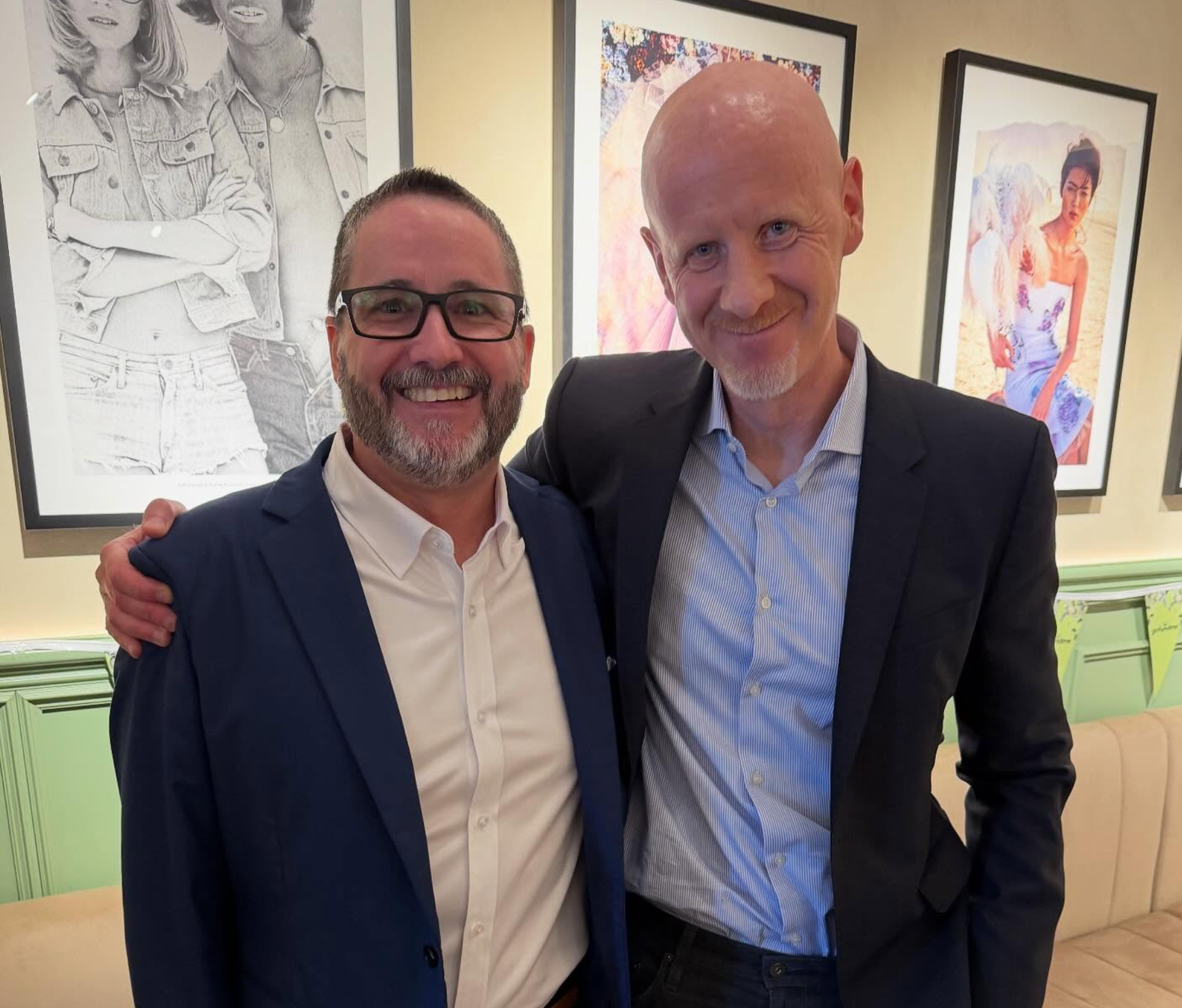
The Guardian also asked GoFundMe to address the allegations about Ruch in Farrier’s piece, which contained a photo of GoFundMe’s CEO, Tim Cadogan, smiling next to – and with an arm around – Ruch, reportedly at an event in Sydney, Australia, in mid-October.
GoFundMe has yet to respond to any of Webworm's questions: Questions about the $134,000 raised in Doug's last campaign, his history of dicey GoFundMes, or their CEO cozying up to Doug at an event in Australia last year.
GoFundMe has a big part to play in all of this: In the ease in which bad actors can elicit sympathy on the platform, and their reluctance to refund users who've been scammed.
On a positive note, one Reddit user was more successful in getting a refund after my first Webworm story came out:
"I was finally able to get a refund from GoFundMe re: Doug’s Dying To Serve US Tour. From the time I filed a new claim, to the time I got an email letting me know I was getting refunded was 69 minutes. A totally different experience from when I attempted a refund this past December.
I wrote an explanation and in that same box, included links [...] I also sent screenshots of all of the info in the links as one of the articles is behind a paywall. I believe GFM is finally doing the right thing because they are most likely doing damage control now that the whole situation has escalated."
Still, I wonder about the individual that gave $25,000 to the "DyingToServe" campaign, and the thousands of others who probably don't even know about any of this: People who just read an article about a dying man fundraising around the world, and gave.
And gave to what? We still don't really know. But there are clues to be found on places like Reddit, where people who'd donated to Doug also met up with him.
At the time, some of these meetings seemed odd. In hindsight, users are reflecting on things and seeing them in a different light.
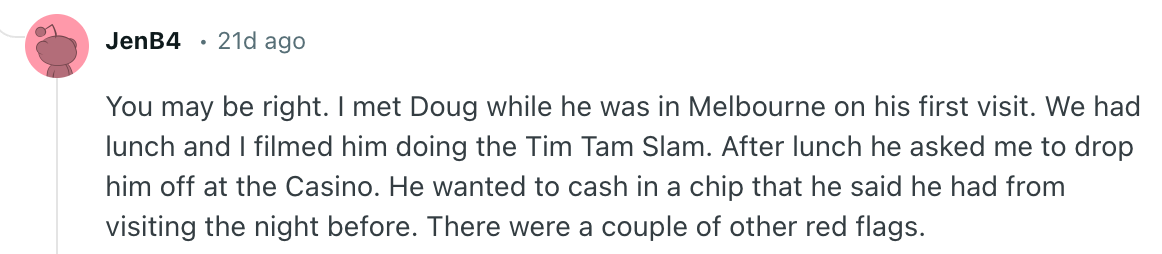
Like nearly all the elements of this story, they paint a story of a tragic, sad existence that ended in a tragic, sad way.
I'd like to be able to leave on some kind of positive reflection, but I'm not sure there is one. I hope GoFundMe does the right thing and tightens down on what it enables people to get away with on their platform – especially when they have been made aware of it.
I think the behaviour observed in people like Doug could at least be curbed.
But I don't have much faith in that either.
GoFundMe are incredibly quick to throw their PR power behind "feel good" stories, especially in light of America's horrific healthcare system which has rendered GoFundMe campaigns for healthcare treatment as totally normal.
If James van Der Beek's family can raise $2.7 million (yes, it's that high) following his death from cancer – then "normies" like Doug are small fry.
And yet when their system is abused – GoFundMe's PR team goes dead quiet. They won't even answer my emails.
David.