Nick Mowbray, The Billionaires, And Our Elections
What role could Nick Mowbray & the billionaire class play in our elections?


If you wish to contribute to Webworm's legal defense fund, the best way is to come onboard as a monthly or annual paying subscriber.
Hi,
New Zealand Billionaire Nick Mowbray has been covered by Webworm before.
The first time was for suing job-review site Glassdoor to find the identities of former employees who dunked on his toy company, Zuru. His second outing was for boosting the posts of far-right figures online.
And now I want to feature Nick Mowbray as an illustration of a larger problem: that billionaires can buy practically everything.
Nick Mowbray’s toy company Zuru was most recently in the news for, reportedly, looking at taking over toy company Mattel - which is the owner of brands like “Barbie, Hot Wheels, Fisher-Price, American Girl, Thomas & Friends, UNO, Masters of the Universe, Matchbox, Monster High, Polly Pocket, as well as other popular properties that we own or license in partnership with global entertainment companies.”
If anything this is underselling Mattel’s dominance. Scroll their homepage and you’ll see that the brand is nearly synonymous with “toys” as a category. Not long ago, if you went into a toyshop in the Western world and picked up an item at random, there’s a good chance it was owned or licensed by Mattel.
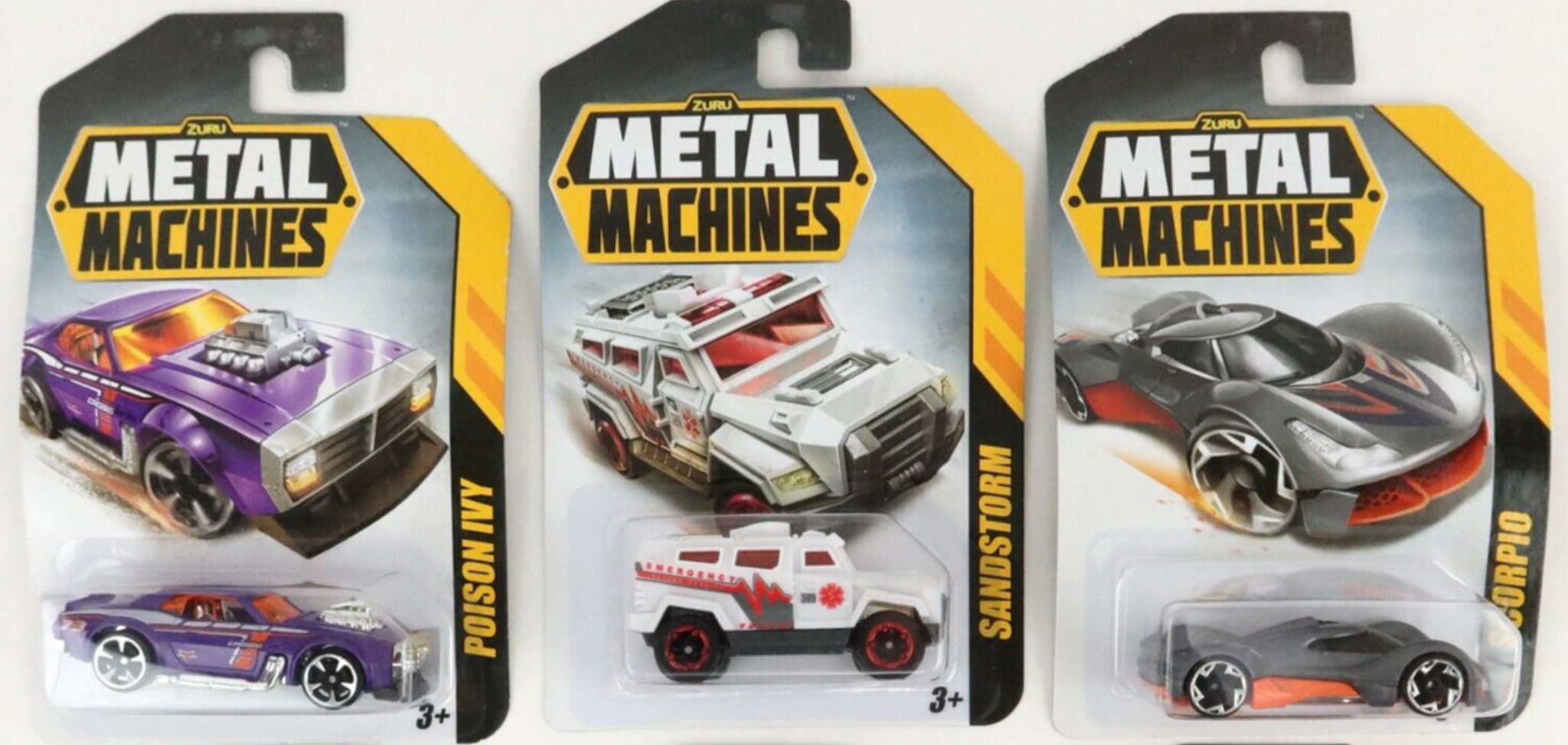
That was before Zuru, of course. Now, if you pick up something that looks like a Hot Wheels track, there’s a good chance it’s actually Metal Machines, Zuru’s like-Hot-Wheels-but-legally-distinct alternative. If a Mattel purchase goes through, it might be that buying Hot Wheels will mean you’re purchasing from Zuru anyway.
Mattel is currently valued at around $4.3 billion. That is a big, valuable company, but it might not be a lot to Nick Mowbray, who - together with his Zuru cofounder and brother Mat Mowbray - is reportedly worth about $20 billion.
That’s enough, on paper, to buy Mattel and have change left over for the other US toy giant: Hasbro - the company that owns the rights to the inexplicably popular board game Monopoly.
To be clear, I am not saying that the Mowbrays are going to buy Hasbro. Or even Mattel.
I’m saying they probably could. And if they did, they would practically own an entire category of thing. They’d own “toys.”
The fact that this is even possible is the problem. What’s another entire category that the ultra-rich could own - and arguably, already do?
How about “politics?”
In the US, occasional trillionaire Elon Musk hurls vast sums of money at right-wing politics and Republican politicians like it’s confetti. It’s not clear whether this is legal; but one thing’s for sure: he does it, and there haven’t been any consequences. Other super-rich individuals do the same thing. Of course, it helps in politics if you’re rich yourself. The present President of the United States is an alleged billionaire.
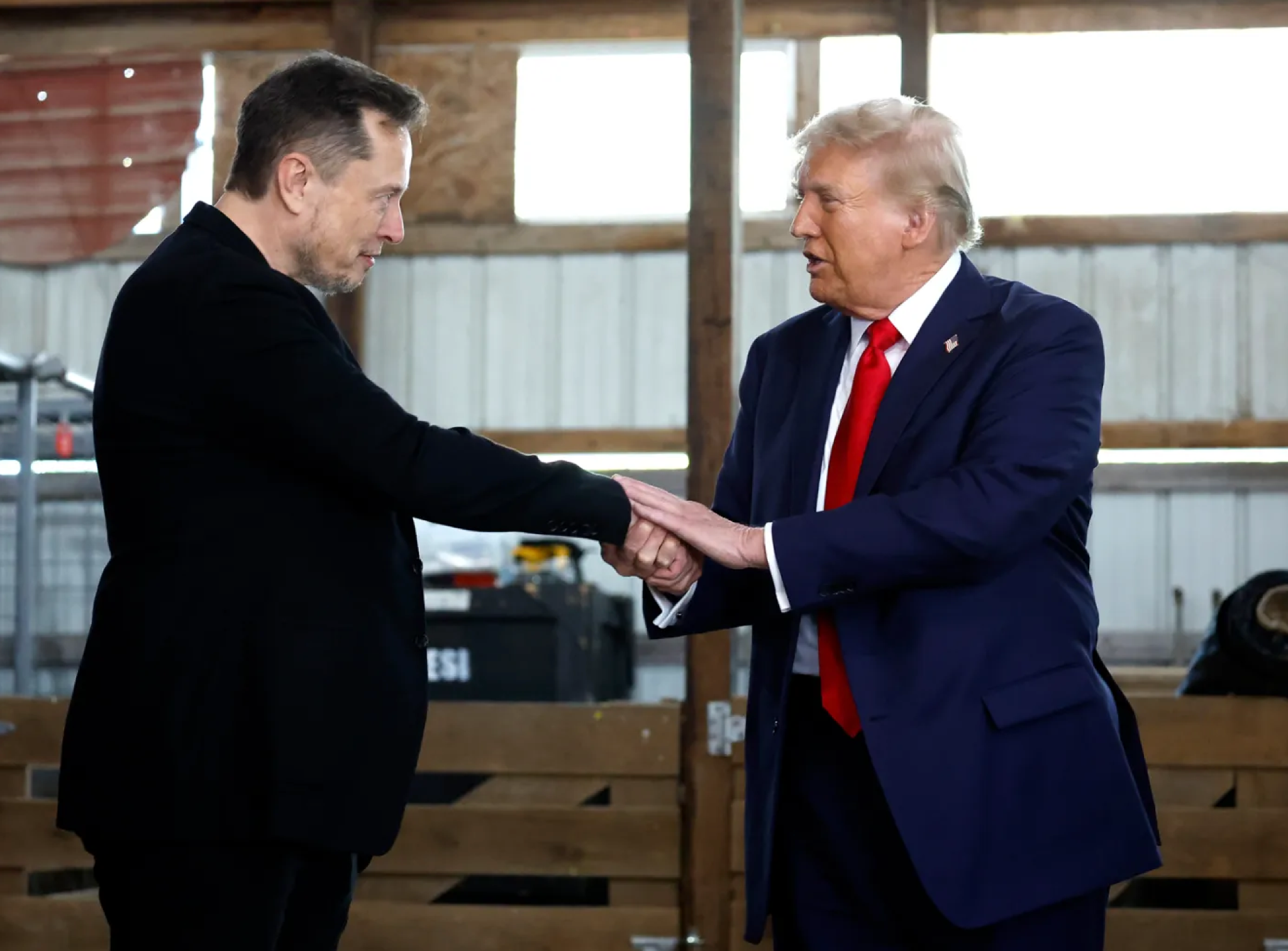
One trend is very clear. In New Zealand, the US, and elsewhere, parties to the right of politics tend to dramatically out-fundraise parties on the left. The donors themselves suggest they just love right-wing parties’ plucky can-do attitude, the way they give the little guy a real fighting chance. A skeptic might say that it is because right-wing policies tend to favour those who are already very rich and powerful.
Many democracies have taken the line that big money in politics - and the pronounced difference in donations between left and right wings - isn’t a real problem. For instance, there is no upper limit to how much can be donated to a political party in New Zealand; the only restricting rule is that donations over $1500 cannot be anonymous.
Because of this, we know that the biggest individual donor to right-wing parties in recent times is... Nick Mowbray.

However, New Zealand isn’t like the United States, which has an un-proportionate electoral system that often installs unpopular candidates. We elect our Members of Parliament under a proportional system called Mixed Member Proportional, or MMP. Voters have two votes; one for an electoral candidate (where the candidate with a simple majority of votes wins their electorate) and another for a political party. This means that our Parliament tends to be made up according to the proportion of votes that each party receives. What could go wrong?
Ask Harry Mowbray, co-founder of Zuru and father of Nick, Mat, and Anna Mowbray.
Just like a cunning businessman spotting a gap in the market for plastic toys that look a lot like but are legally distinct from other company’s toys, Harry Mowbray has seen a gap in MMP. He noticed that Te Pāti Māori (the Maori Party,) a small party with diminutive funding that campaigns for votes from New Zealand’s indigenous people, has suggested that Maori voters give their electorate vote to Te Pāti Māori candidates and their party vote to another left-wing party, which might mean a couple more MPs on the Left.
Harry Mowbray recognised that if a large number of right-wing voters were to split their votes between the right-wing National party (for their electorate vote) and the even more right-wing ACT or NZ First parties, it would create an “overhang,” in which Parliament is expanded, and the right-wing Coalition that currently runs the country continues to do so “for the foreseeable future.”
Permanent majorities are, arguably, the kind of outcome that MMP was designed to prevent, but that doesn’t matter. It’s a design flaw. A bug. A gap. Why shouldn’t people exploit it? Harry Mowbray’s “Split Your Vote” website argues precisely that.
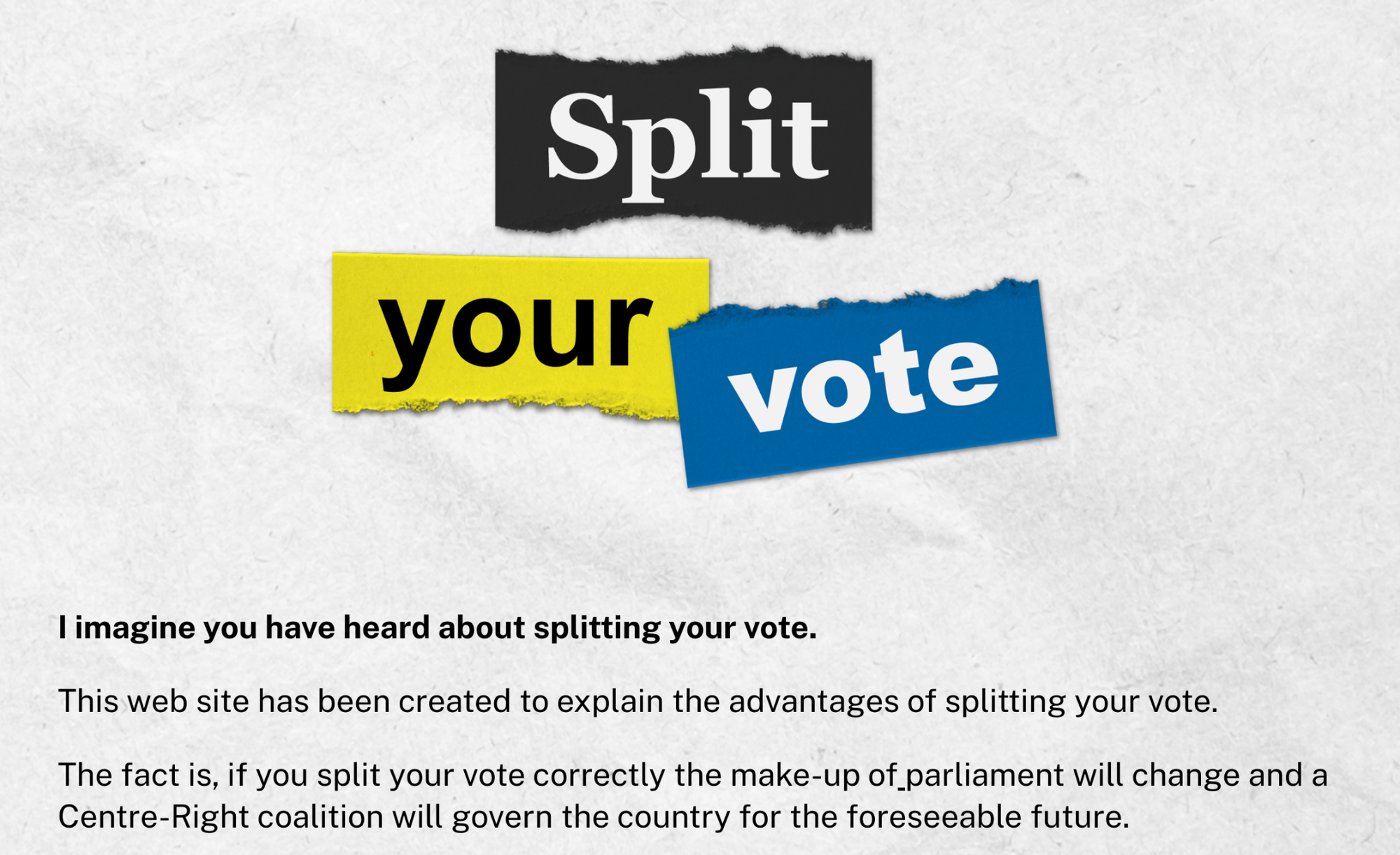
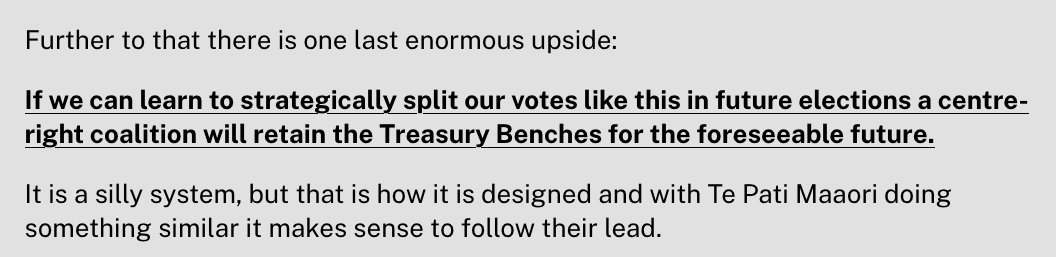
And billionaire son Nick is posting his support for the strategy on X, the same place where he posted in support of far-right figures like Tommy Robinson.
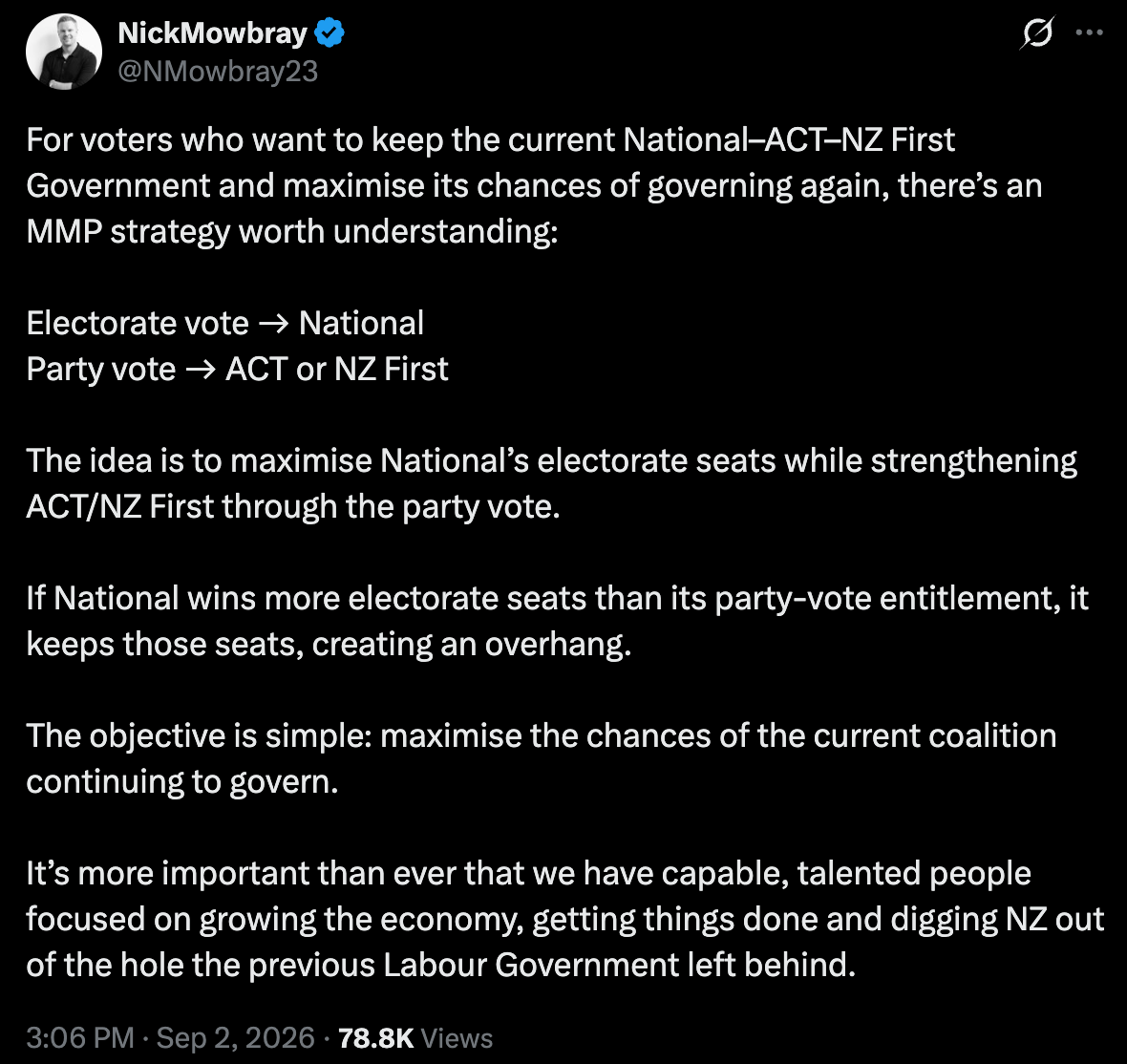
Political analysts in New Zealand argue that it probably won’t work. Perhaps not. A lone website promoting a political strategy previously known only to the most niche New Zealand election nerds might have a minimal effect. But what if they spent a lot of money on it? Unimaginable sums of money, relative to what usually gets spent in New Zealand politics?
Because they could. There’s almost nothing that could stop them.
The problem with billions of anything, including money, is that our brains are not equipped to handle numbers that large.
A billion is a thousand million, and I’m already losing a few people, because brains switch off when big numbers get chucked around. A million is big enough. Sure, we’re a bit more used to millions than we used to be, with a lot of house prices in New Zealand hovering at around a mil, but for most people a million dollars would be a life-changing amount of money. If a house is a million dollars made real, then a billion is a thousand houses - a town. Twenty billion is twenty thousand houses. A small city.
Let’s look at it a different way
This year, according to RNZ, Nick Mowbray has donated a total of $445,000 across two of New Zealand’s right-wing parties, ACT and National. It’s one of the largest donations by an individual in New Zealand’s history, only just surpassed by... Nick Mowbray’s earlier political donations. The $225,000 Mowbray donated to the ACT Party is just 0.001 percent of his estimated $20 billion wealth.
Again, that number doesn’t tell us much, so let’s make a comparison everyone can understand. According to one of NZ’s biggest banks, Westpac, the average New Zealander has about $2700 in savings. (One third of Kiwis have less than $300 saved.) 0.001 percent of $2700 is about three cents.
In the scheme of Nick Mowbray’s net worth, his total donations are about as financially consequential as the average New Zealander spending five cents.
Here’s a fun game, depending on your definition of fun: This website shows the wealth of the population of the United States - to scale. I’m able to view my own wealth, and probably the wealth of most people reading this, without scrolling. The bottom 95 percent of the graph - which includes wealth of up to $5 million! - is visible by scrolling upwards for about a second, on my phone.
To get to the Mowbrays’ $20 billion, in half-million increments, takes about twenty minutes of scrolling.
Many will argue that billionaires deserve their wealth. That they’re smart and work hard. I don’t dispute this. But if hard work and being smart were the sole predictors of power, nurses would run the world. There must be something else going on. Could it be an interest in power that is not shared by the average nurse?
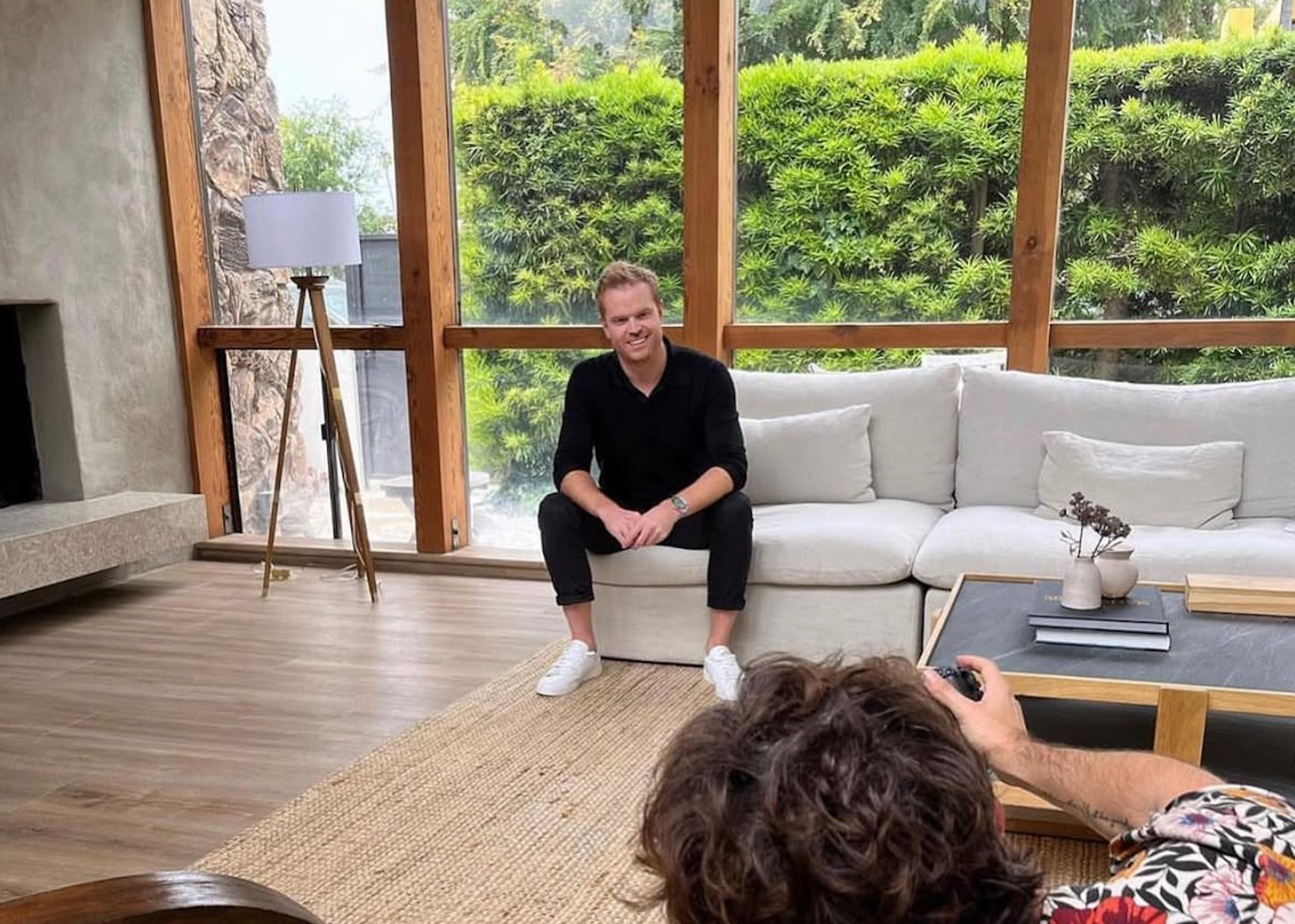
To be very clear: the Mowbray family’s political donations and leanings are legal, and public knowledge. It is legal to support and donate to right-wing parties. It is legal to have public opinions about tactical voting.
But I will argue that the sheer wealth of billionaires makes their political opinions disproportionately influential, in a way that is contrary to the idea of democracy itself.
Wealth is power.
And wealth is not just “created” as billionaires would like us to think. Every dollar symbolises a fraction of Earth’s finite resources and productivity. In other words, capital. This is the reason money has value at all.
Democracy is, loosely, the idea that a majority of people - the dêmos - should dictate how power is apportioned. Many democracies decided, around the end of the Second World War, that the form of power called capital should not only be hoarded but shared; that states should fund infrastructure - like healthcare or travel or housing - to be accessible to most, or even all. Individuals could still be wealthy, very wealthy, but not to the extent society now permits.
Democratic states started spending on public assets and infrastructure, often funded by taxes on the wealthy, and it created a kind of Golden Age. In many countries like New Zealand or the UK, ordinary people could get healthcare without going bankrupt, or own their own home because the State helped them buy it. States built roads and rail and post and telecommunications infrastructure, stabilised and regulated financial systems, and enabled citizens to have stable lives and disposable income. All this was the foundation that billionaires would build on.
But now many billionaires seem to despise the tax-funded, stable liberal democracy that made their wealth and power possible. They’ve looked at their vast wealth - more money and power than has ever been possible, unimaginable by even history’s great monarchs, and said: more please.
Attempts to tax billionaire wealth, like the initiative currently underway in California, are being met with manipulation and disinformation. Many billionaires, like the United States’ Koch brothers, or New Zealand citizen Peter Thiel, have seen the growth of democratic initiatives to place limits on resource consumption - limits designed to prevent the Earth from burning - and are, as detailed in journalist Gil Duran’s book The Nerd Reich, doing their utmost to subvert democracy itself.
Other billionaires express their opinions in other ways.
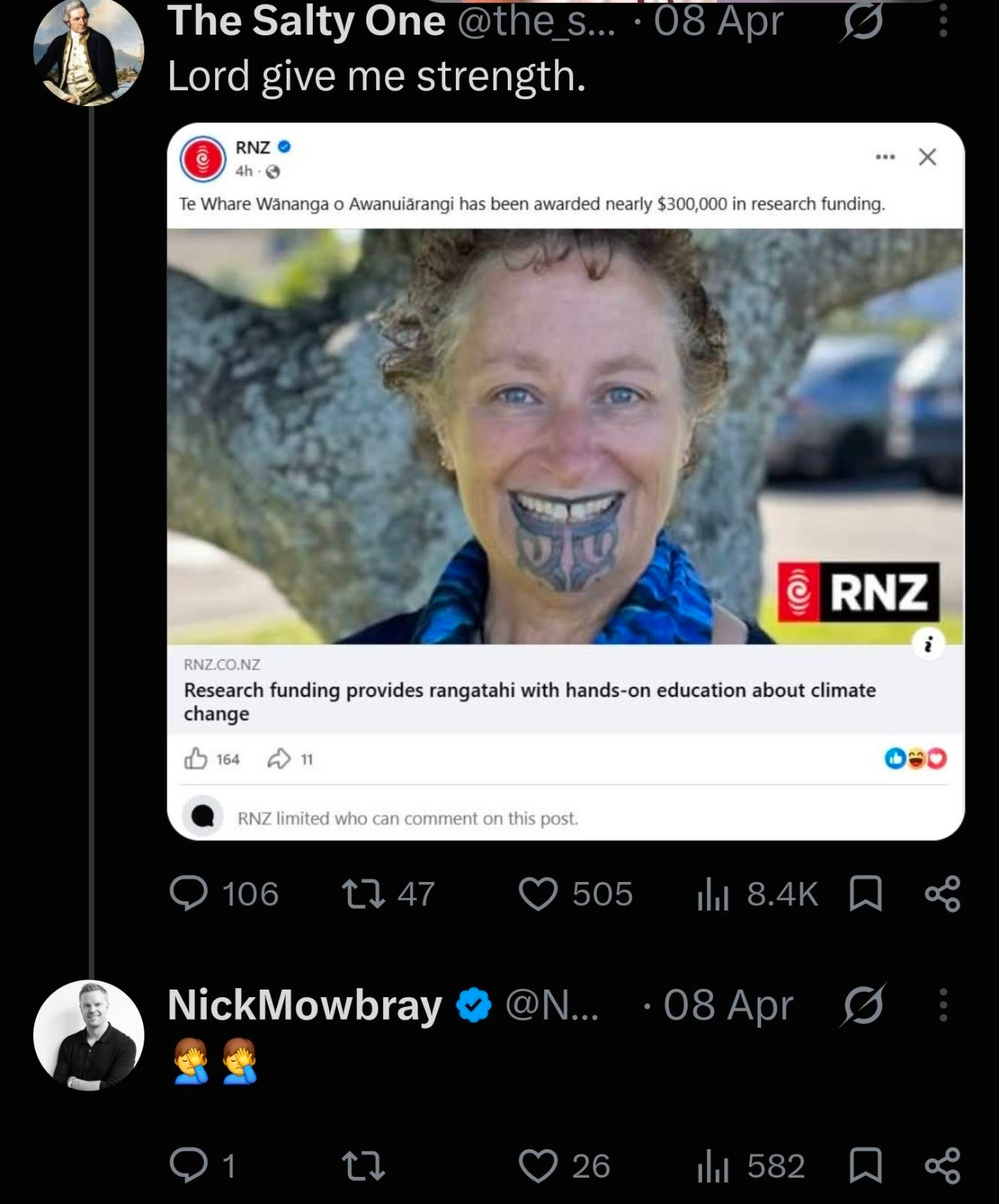
In 2000, there were 470 billionaires. In 2010, the number had more than doubled, to one thousand billionaires total. Together, they controlled around $3.6 trillion in capital.
16 years later, there are over four thousand billionaires, controlling around $20 trillion in capital between them. Global GDP - everything, produced by everyone - is estimated at about $125 trillion. On these figures, billionaires directly account for about a fifth of the entire world's wealth, and indirectly control or influence much more.
The most powerful billionaires functionally own and jealously guard vast monopolies that form entire industry categories. Amazon has a giant chunk of “shopping.” Elon Musk owns a big chunk of “space”. And the giant tech and AI companies are even now making their play for owning “all past and future creativity and knowledge.”
The Mowbrays, if they feel like it, might end up owning “toys.”
For power and wealth like this, politics is less than pocket change.
Afterword:
This piece was edited by David Farrier, and written in conjunction with other Webworm writers who wish to remain uncredited for the reasons cited below:
"I realised, to my shame, that I could not risk putting my name to it. I’m not afraid that anything here is wrong. The facts are a matter of public record. And my opinion that “a tiny group of people should not run the entire world” is shared by a large majority of people. I have never written an anonymous article before. I have been proud to put my name to everything I write.
But now, for the first time, I am consciously terrified of the gravity that billionaires exert. It is like peering over a precipice directly into a black hole, like watching something eat the world. I am horribly aware that the accuracy of my facts or the honesty of my opinions might not matter. A billionaire can sue for defamation, however baselessly, with the flick of an email. And in New Zealand - unlike the United States - the onus is on the defendant to prove they did not do any defaming. It’s a form of guilty until proven innocent. Just by alleging defamation, a merely wealthy person - not even a billionaire - can completely ruin a normal person’s life.
This frightens me, and it makes me wonder: what else are we all too afraid to say about billionaires?
And how, if billionaires are allowed to carry on in what seems like a quest to own the entire world, will all of this end?"
Webworm stands by this piece: Features like this are part of the reason Webworm exists. Thank you to all our paying members who make this writing possible.
You can are this piece using this link: www.webworm.co/elections
Welcome to any new paid supporters who have come on board.
To all of you: My eternal gratitude for letting Webworm exist.
What Else Is On Webworm Lately?
 David Farrier
 David Farrier
 David Farrier
 David Farrier
 David Farrier