This Could Change The Way Victims Get Justice
“Tika” is also very bad news for those who have caused sexual harm to multiple people.


Hi,
I sometimes think back to Webworm’s Arise church series, and how difficult that story was to report. Here was a church, with hundreds of victims – and yet somehow, no-one wanted to talk about it. It was the same with Tickled: There were so many victims, but no-one wanted to talk. It was the same with Mister Organ.
You get the idea.
Over my relatively short time in a field I’d loosely call "investigative journalism", I’ve learnt that it’s incredibly difficult for one person to speak up about something bad, alone. Especially if they are scared, uncertain about what happened, and have had their trust violated in the past.
I’ve also learnt what makes people more likely to share their story: When they know that other people have been through it, too. When people know that they are not alone, and when they feel safe. Then you start getting somewhere.
No-one knows this much better than Alison Mau, an award-winning journalist who’s about to launch something sort of amazing.
“The thing won't work without survivor trust. Trust is the taonga. Trust is the thing that's going to allow the entire system to work,” she says. She looks determined when she says it.
I’ve known Alison Mau for ages.
When I was working at TV3 news doing light entertainment reporting 20 years ago, Mau was reporting and hosting shows for the competitor, TVNZ. I was smallfry; she was a powerhouse – one of the heavy hitters of Aotearoa’s TV news scene. In 2018, she led a team at Stuff.co.nz – New Zealand’s biggest online news outlet by far – telling stories based around the #MeToo movement. She was tireless, fearless, and took special care to make all her reporting survivor-focussed.

Three years ago she left Stuff.co.nz.
Despite having broken so many important stories, she left that newsroom feeling incredibly disheartened: What had really changed in the post #MeToo world? Had the needle even shifted for victims of sexual harm?
“It’s completely new. It's never been done like this.”
Mau knew she wanted to figure out another way to help people get justice – and she discovered how when she met up with Zoë Lawton, a barrister and researcher who specialises in the law around sexual harm.
“In 2023, when I left Stuff, we had a cup of coffee together and really just a bitch session about the fact that all of our awareness raising – all the work – had not moved the reporting rates at all,” Mau tells me.
“We were being a bit hard on ourselves, you know: “Has it all been for nothing?” But if you look at the most recently reported stats, they have moved a little bit as people have gotten a greater understanding of what constitutes harassment and criminal sexual assault.
But it's not enough.
Everybody should feel comfortable to report what has happened to them.”
Over that coffee three years ago, Lawton shared an idea she’d had to help survivors. Mau’s eyes lit up at what Lawton was saying. “It is completely new. It's never been done like this,” Mau tells me.

That idea in 2023 became “Tika”, which means “justice” and “putting things right” in te reo Māori.
Due to launch this Thursday, Tika is a lot of things. At its most simple, you could describe it as a website. But it’s also a technology, a charity, and a law firm. And they all work together so victims can get justice against repeat offenders.
In short, victims enter details about what happened to them via a secure portal on the Tika website. They also enter who their alleged abuser was. In a country of just over 5 million people, this is more common than you may imagine: “95% of people in this country know their perpetrator's name,” Mau says.
After those key details have been entered, the Tika system then matches names and details to find out whether other victims have reported that same perpetrator.
This is when the legal arm of Tika kicks in: A small team of real lawyers (not ChatGPT or Claude) assess the case, for free. If the case is legally sound, then the victims essentially get a free lawyer.
Mau says a big part of what makes Tika so unique is that it allows victims to feel safe, and it will mean that they potentially feel much less alone.
“At the moment, most people have to walk into a police station and speak to a uniformed officer behind a piece of plexiglass. And you know, the guy beside you is probably reporting a stolen toolbox.”
This is a big part of why reporting rates are so low – only 16% of survivors ever report what happened to them, and those stats drop much lower in minority groups. “What we've tried to do is build something, looking at it from the survivor's point of view,” Mau tells me, before switching to the POV of a survivor who is using Tika.
“I want to report online, but I don't necessarily know whether I want to.”
Or, “I'm ready to make a formal police report. And I'd like to keep control of the process. And I'd quite like some other options. Like, my perpetrator was a teacher. I don't necessarily want to see that person in jail, but I would like to make sure that they're not in front of a classroom ever again.”
Or, “I don't want to go through a criminal process.” Or, “I want to pursue compensation with my group.”
Some people are looking at restorative justice, and we can make community referrals to restorative justice. Some groups might just wanna meet each other and support each other, and maybe have a facilitated counseling. So the provision of options – and the fact that people retain agency and control all the way through – sets us apart from any other 'Alternative Reporting Options' that exists. Plus, you get a free lawyer.”
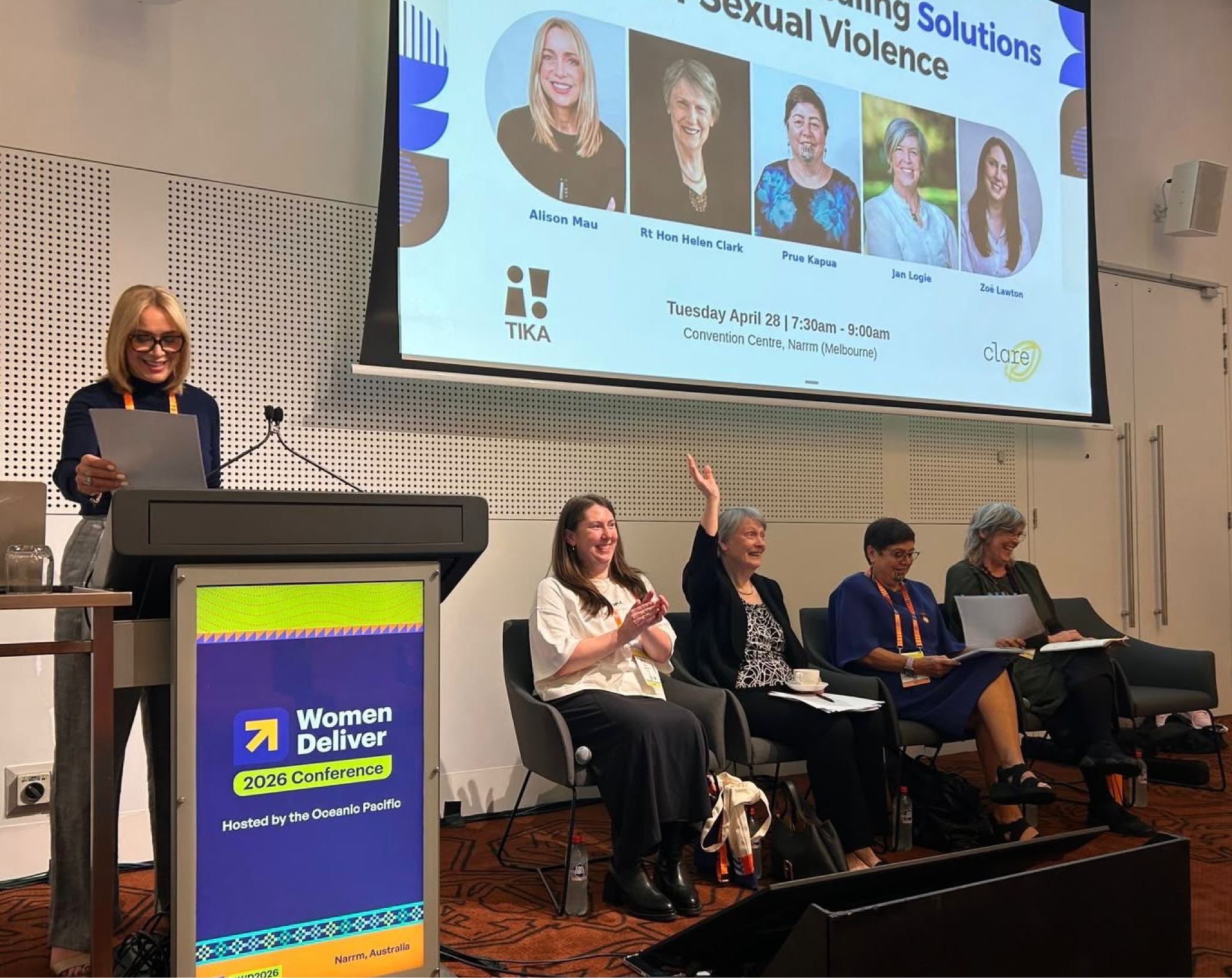
One crucial aspect of this side to Tika is that it provides fully independent legal advice. It’s not attached to police or law enforcement of any kind, or any government agency. Mau says this is crucial for trust.
“Not having access to legal advice is a huge barrier that stops victims sharing what happened to them. Most people don’t know the repercussions if they come out with allegations – or if they even have a case.
Many victims don’t even know if what happened to them was wrong. 75% of people can't actually name what happened to them. They know something bad happened, but they certainly can't place it within the Human Rights Act, or under the criminal code. The other barriers are shame and self blame, isolation – often by design of the perpetrator. Fear of not being believed is a huge one, and a lack of confidence stepping into the legal space unsupported.”
I ask Mau how this system would look in reality.
“You register by giving [Tika] your name and your email address. And at that moment, when you tick the little terms and conditions box, you get immediate lawyer-client privilege – which is really important for the safety and privacy of any information you give us after that.
You give us a little bit of information about yourself, what happened to you – and the perpetrator. You can save your work, and go away for three months while you think about it, and come back. You know that choice is left in your hands.
Once you press “submit”, your report goes into the pool and the system [a large language model] starts looking for other people who've named the same perpetrator. When a group of three or more is formed, the system flags it to a human lawyer. And that human lawyer very carefully checks all the information to make sure that it actually is a match. And then you get individual legal advice."
She pauses.
"Oh, and you're not introduced to each other at that stage: You're told there's 10 people in your group, say, but you're not told who they are.
You're given individual legal advice on your options, and then the group votes on their favorite option. And of course, at that stage, larger groups may split apart. If you don't agree with what the rest of the group wants, and you're in a group of three – we can help you go to the police immediately, or you can just park yourself and wait for others to join in the hope that you might form a group that has a different view.
Once the group has decided on its course of action, then a Tika lawyer supports them all the way to the resolution of whatever legal pathway they've chosen.”
You Are Not Alone
Real, breathing lawyers are a key part of the system, but the other parts of the puzzle – including the “lightbulb moment” for Mau – are more holistic.
"So the idea is that you not only have the support of lawyers, but you have the community. Transformational, really. It certainly was for me: The knowledge that other people have experienced what you've experienced, and will stand alongside you.”
I tell her that I’ve felt that in my own reporting. That often, it’s about strength in numbers. She agrees.
“From my work as a journalist, I knew that there's always more than one. And once a survivor knows that there are other people, they generally feel more confident to step forward.
I also think there's a big misunderstanding amongst a lot of people that there's some kind of statute of limitations on abuse. Like childhood abuse or assault… there's no time limit. So we're open to people like me who hadn't told anybody for 40 years, you know?”
During her time as a journalist, Mau learnt there was another key motivator in people speaking up. And it was this aspect that made her realise, “Holy shit, Tika will work.”
“Almost every single person I had interviewed told me, “It might be too late for me, but I don't want this to happen to anybody else.” And that was when the light bulb went on for this project.
Because I thought, “Even if you report into the Tika system and walk away, and never do anything about it – even if we find a group and you decide, “Nah, I don't want anything to do with formal legal action,” then you still know that you've done something to make the community safer.
That's a huge driver for so many survivors. I mean, it's what drives me.”
“Oh it's not me, I'm not going mad.”
Mau says raising money for this project has been a massive undertaking. It was after 18 months of fundraising – little bits of cash here and there – that they finally caught a break.
“Zoe and I worked for no pay for a year, which was lean times. And then we got the seed funding from Clare foundation. It’s one of only a handful of funders in the country that gives specifically to women and girls. Jan Logie is a former parliamentary undersecretary for domestic and sexual violence, and knows this issue inside and out.
So they gave us our seed funding, and that allowed the technology to be built.
Beyond that, we are funded entirely by women – and we have a small handful of high-net-worth individuals that contribute regularly."
It’s been hard, for reasons that are depressing – but probably not surprising.
“We have had no luck at all with the contestable funding community. And I just thought I was really crap at it! And then last November, there was some research released by 'Fundsorter' – and they looked into 2000 contestable funding opportunities in the country, and then they ranked them by issue.
And [the issue of] domestic and sexual violence rated dead last, at less than 1% of contestable funding opportunities – which was devastating. But also I went “Oh it's not me, I'm not going mad!”
We had one funder tell us that they didn't know whether they would be comfortable taking this issue into the boardroom.”
That potential funder – who didn’t end up funding Tika – was male.
Is There Anything Else Like This?
Mau pauses. We’re on Zoom – her in New Zealand, me in the USA. Someone is at her door, and she goes to let them in. I pat Alan, who has been staring at me this entire time.
As we get back into things, I ask if there were any existing websites or systems they looked at while they developed their idea. She talked a little bit about AROs – 'Alternative Reporting Options' – which are sometimes found on police websites overseas. Mau says they leave a lot to be desired.
“The bulk of them are police interview forms slapped online. So they're not particularly survivor focused. They don't feel particularly supportive, and they can be re-traumatizing.”
Historically, there have been exactly zero ARO’s in New Zealand. That changes when Tika launches.
Unlike the police examples, there were other overseas projects that were motivational and inspiring. She refers to one in the USA called 'Callisto'.
“The one we looked to most when we were developing the concept was something that operates across all of the college systems in the United States – so it covers about 20 million people. Everybody who uses that has a '.edu' email address, including the perpetrators. It’s been operating in one form or another for about 10 years.
But… they just announced last month that they're gonna have to close, because they can't find the funding. Even in the US, they can’t find the funding.”
She’s right – a July 22 post on Callisto’s website says “funding for survivors is disappearing. And (sadly) so is Callisto”:
We want to be honest about why, because we think it matters beyond just us. Sexual assault funding often falls into a gap. Criminal justice funders see it as a mental health issue. Mental health funders see it as belonging to criminal justice. And most sexual assault-specific funding is already committed to trafficking or child sexual abuse, leaving adult survivors of sexual assault without a clear home in anyone's portfolio. We don't say this to blame any one funder. We say it because, if organizations like ours keep disappearing for the same reasons, that's a pattern worth naming. We are heartbroken, and angry, and we understand if you are too.
As I talk to Mau, I sense this has been playing on her mind.
“It is not cheap. Originally, we started with the idea that the legal service could be provided pro bono. There is quite an appetite, even among the larger firms, to do more pro bono work. I think that once we've been going a couple of years, that is a really viable option for us – because we'll be making it easy for them: "Here's the prepared file, go ahead and execute the thing!"
But it's not sustainable as a launch strategy. At launch, we have to have a smallish number of in-house lawyers who will triage the reports as they come in, and give the initial legal advice to the clients.”
She says they are also thinking bigger, knowing the technology powering Tika could be used by specific organisations.
“We realized about 18 months ago that we can't operate long-term as a charity. And we have an asset: The technology.
We've developed a social enterprise model, so that justice entities can enter into a contract for services, for example. And the profits will help fund our work."
She hopes that after Tika has proved itself in Aotearoa over the next few years, the system can be used globally. Why limit what they’ve created just to New Zealand?
What About All The “Lying Women”?
As I talk to Mau, I’ve been thinking about what criticisms will come their way. I can almost picture a sea of people – mostly men – rising up with their pitchforks and beers, rallying against a perceived inevitable tide of disgruntled, lying, untrustworthy victims out for revenge.
Cue the “innocent men” clip.

I’m curious what Mau has to say about those devious groups that will get together to abuse the system.
“We've played out all of those scenarios and affected for them. The first thing is, we don't want bad actors trying to get into the system.
So one of the protections against that is that it’s not an anonymous reporting system. You do have to verify your identity, as you would in any relationship with a lawyer.
Normally that would be done in person or over Zoom if you're employing a lawyer. We do it like AML technology. So you take a picture of your driver's license or your passport, and then you take a moving picture of yourself. So you have to be a real person, and be willing to identify yourself as a real person, to get access to the platform."
Mau pauses.
“We acknowledge that you can't completely avoid false reporting. However the Tika system does not increase the likelihood of false reporting. What do I mean by that? Well, first of all, false reporting is incredibly tiny anyway – between 3% and 8%.
All reports are checked very carefully by experienced lawyers. Lawyers who have broad experience in this area of law, and most dodgy reports would be flagged at that point.
But also, we're not the ones investigating and prosecuting these cases! So you report into the Tika platform, but let's say your group chooses the police processes – the police process remains completely unchanged.
All we are doing is saying to New Zealand police, “We have a group of 12 people. They've made allegations about the same person. Here it is.”
We transfer it in a safe way, and then they do their thing. We don't interfere with that thing. We certainly don't conduct the investigation. We don't make the choice about whether the case is carried forward or not. We're not the ones assessing the Solicitor General's prosecution bar to see if the case is carried on.
I will be very interested to see who objects and what the basis for that objection is, considering that we will only surface serial perpetrators. So, quite hard to argue against.”
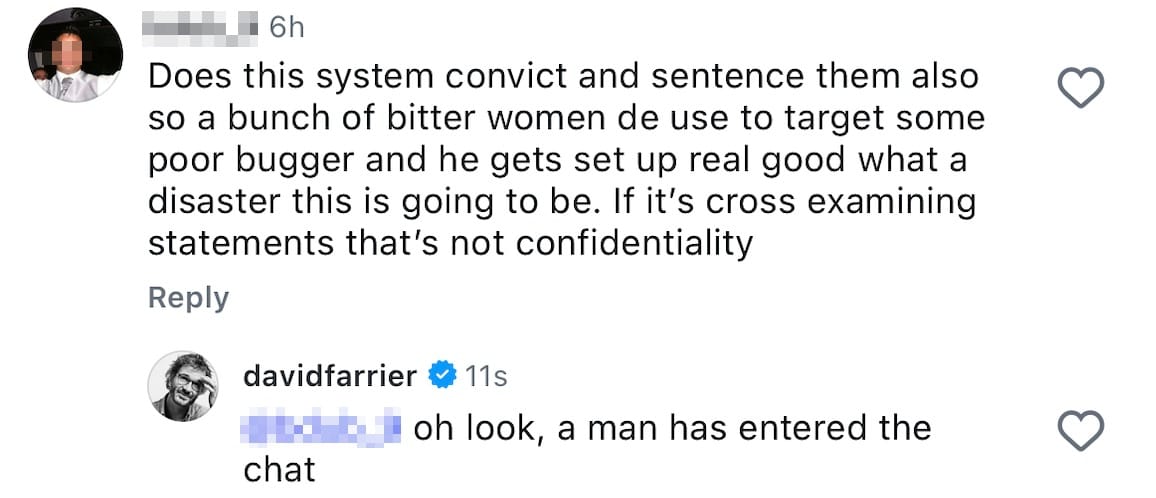
I’ve also been mulling over something she mentioned earlier about the technology, and how it makes a match using AI. I get the feeling she’s prepared for this criticism, too.
“It's a large language model that's sealed and learns only from the information that is inputted by survivors. So by the essence of the way it works, it won't work unless people trust us.
I've had a bunch of people tell me, “Oh, why didn't you just vibe code it? Why didn't you just build this in Claude?” I’m like, “We are taking the most sensitive information that people could ever reveal, and they're terrified to reveal it – which is why most people don't report – you can't vibe code something like this!”
It had to be an enterprise grade platform with the most insane security. I will never see inside the platform. I will never be able to see the information that is in there, because only lawyers can. And they have a multi-factor login chain that they use.
Not vibe coded! I just have to hold my tongue.”
I ask for confirmation that Tika isn’t built on the back of something like ChatGPT or Claude.
“No. It's a bespoke model that's been built for us. It's really important that we use as few third party applications as possible. And also, back to trust: If we were using a generative AI that exists outside of our system, I think that that would really harm the trust.”
"We're sitting on the clifftop right now."
There was a fairly large chance Tika wouldn’t be launching this month.
They had the technical aspects ready – the code was done, the product ready, the website turned on – but they still didn’t have all their operational costs covered. Mau tells me the only reason they can launch this month is due to a one off, much larger contribution “from overseas” that just came in.
You can probably guess the gender of the person who gave it.
Now Alison Mau, Zoë Lawton and their small team are ready to hit “Go” on Tika, today.
“We've literally chewed over every possible outcome, and fish hook, and possibility that could trip us up – and what we've got is a really highly developed polished product that is ready to go and feels safe for people to use.”
There have been giant hurdles and learning experiences – and smaller ones, too.
“Everything in this sector, every single website is purple! Every single one, I think. So we decided we were going to steer away from that. So our colours, our branding, our website looks quite radically different.”
As I talk to Mau and get a preview of the site and functions, she strikes me as incredibly proud of what they’ve built. She’s chuffed.
“If it works well, we will not only change the landscape for survivors, but we'll also see more early guilty pleas – which not only saves the justice system the cost of several different trials, but stronger evidence means more likelihood of an early guilty plea.
You hardly ever see that. Ever. And that saves the survivors the retraumatization of a trial.
And you will see more convictions, and it will have a preventative effect. That's what I want in the end.”
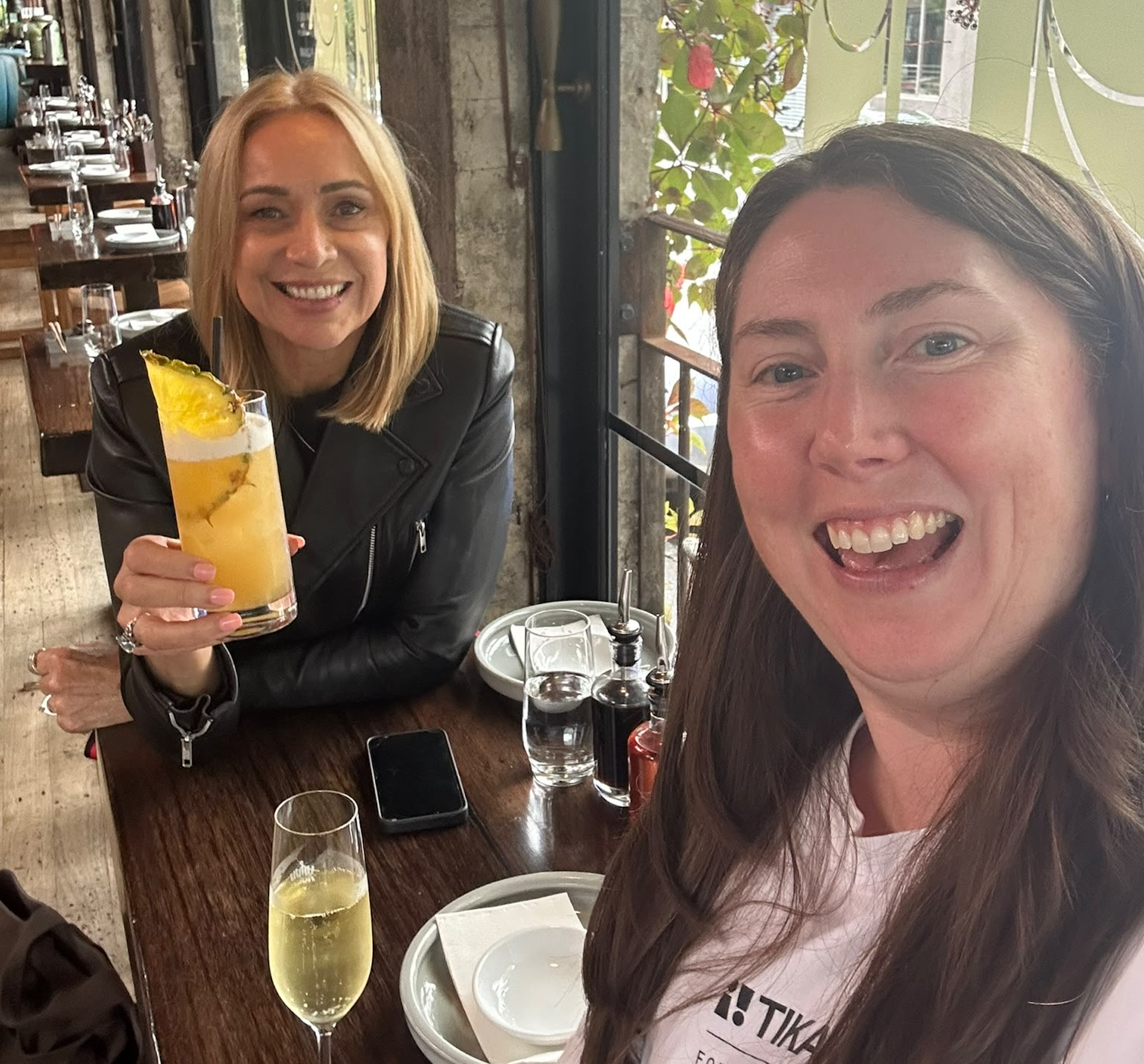
In her years of #MeToo reporting, Mau always struck me as having a solid grasp on the bigger picture. While I tend to get weighed down in the muck of each story, she always seemed to be able to always rise above it, and see the larger landscape.
To me, it feels like Tika is, perhaps, the ultimate extension of that.
“We are looking to sever the chain of harm that is created by perpetrators. Because we know from our work that most perpetrators... they don't stop at one person. They get away with it, and they do it again because they isolate the person, and the person doesn't feel that they can speak up.
So interrupting that chain of harm, and holding that person accountable, means greater rates of accountability. That's the dream, because that will have knock on effects and keep everybody safer. And that's that goal.
We're sitting on the clifftop right now; on the precipice. Let's hope that it works.
I think it will.”